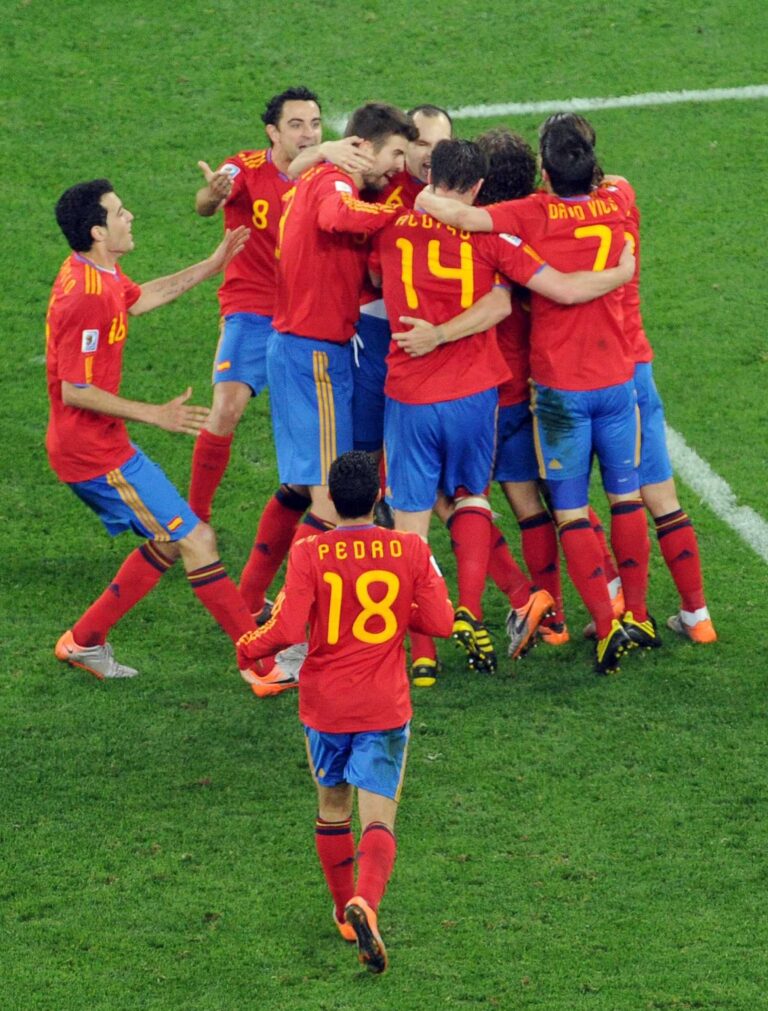

Over its 96-year history, FIFA has built its World Cup into the largest sporting event on the planet. The 2026 tournament will be the biggest by every measure, with more hosts (three), more teams (48) and record-breaking estimates of ticket sales and commercial revenue. It will also be FIFA’s most finely tuned tourney. The pitches will be immaculate; the filming and editing frictionless. Every match will look beautiful. It will be easier than ever to absorb content and information about a sports tournament and highly likely that the final will be the most-watched event in human history.
What FIFA cannot control is the soccer itself. And while the infrastructure and architecture of the World Cup have been steadily improved and expanded over the decades, the action on the pitch has had a much more varied and interesting history. It does not function in a vacuum; it is always subject to the political, cultural and even military forces of the day. These external pressures have resulted in different ages within the tournament’s style and tactics that have variously promoted discipline, individualism and, most recently, an arch-pragmatism. Let’s go back to where it all began.
The Early Years (1930 — ’62)
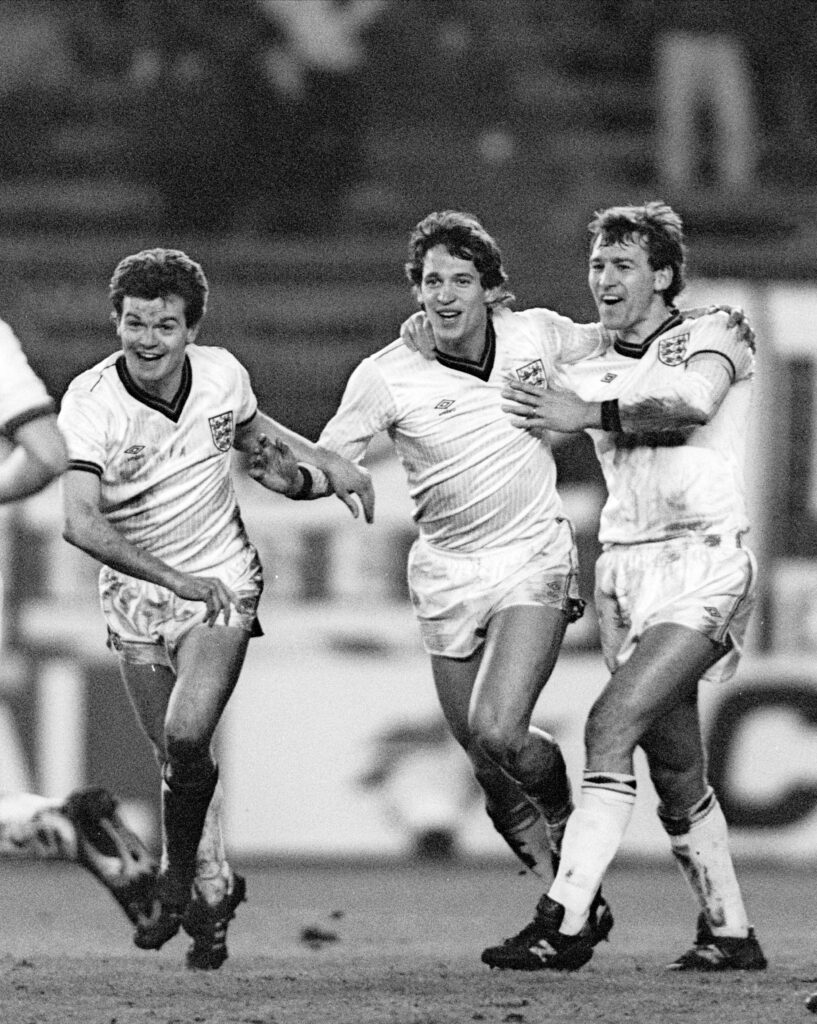
The World Cup’s nascent tournaments were amateurish, lacking clear structure and rules. The first tournament, held in Montevideo, Uruguay, in 1930, featured 13 teams. Seven were from South America, as FIFA struggled to persuade European countries to commit to a long and expensive journey across the Atlantic. Egypt, the one African team invited by FIFA, was delayed by a storm and missed a connecting boat in France. The teams that did make it to Uruguay faced haphazard conditions. Snow turned pitches into bogs, referees’ timekeeping was unpredictable. There is a story about the two finalists, Uruguay and Argentina, disagreeing about which ball should be used and the referee deciding to play one half with each. It may be apocryphal, but it fit the circumstances of the age. Four years later, both Austria and Germany turned up for their third-place playoff in white kits and refused to change.
Success in the early years of the World Cup depended primarily on organization. Prior to the 1930 tournament, for example, Brazil had not played an official international match for five years, whereas the winning Uruguayan team lived and trained together for two months. Italy’s victory in 1934 was part of a long-term plan by Benito Mussolini to use soccer’s burgeoning popularity to project political power. Mussolini built stadiums, hired an innovative coach in Vittorio Pozzo and whipped up a hostile environment for Italy’s opponents. (It has also been repeatedly suggested without definitive proof that Mussolini handpicked the referees for Italy’s matches.) The foundations of that team were so strong that Pozzo and four of his players repeated their victory in France in 1938.
This period also showed that the World Cup would never accommodate sentimentality. The last match of the 1950 tournament saw hosts Brazil play Uruguay in Rio de Janeiro. That edition had an unusual round-robin format. Previous results meant that Uruguay had to win, while Brazil just needed a draw. The whole tournament had been designed as a coming-out party for Brazil as a country of the future. The local press treated the result as a foregone conclusion. It is no exaggeration to say that Uruguay’s 2-1 victory created nationwide trauma in Brazil.
Four years later, Hungary was the romantic choice. Its coach, Gusztav Sebes, succeeded Pozzo as the premier tactician of the age. Hungary won gold at the 1952 Olympics and caused a sensation by beating England 6-3 in a non-Cup “game of the century” the following year. At the 1954 World Cup, the Hungarian team scored 25 goals in four matches. But they lost a sodden final against West Germany, despite being 2-0 up within 10 minutes. In a sequence of 51 matches over six years before and after the final, it was Hungary’s only defeat. The result was such a shock that numerous explanations were put forward, including alleged doping by the Germans and a dodgy offside call from one of the linesmen. But in keeping with the theme of the World Cup’s first era, when organization and innovation rather than skill determined success, West German players had one legitimate advantage: a German company called Adidas that had persuaded the team to fit its boots with screw-in studs for extra grip. During a match played in heavy rain, such an organizational detail may have been crucial.
The Systems Revolution (1966 — ’90)
The 1962 tournament was a grim affair. The most memorable match was between the hosts, Chile, and Italy, and was so aggressive it was dubbed the Battle of Santiago. European teams had begun to develop a tactic known as pressing, whereby when opponents win the ball, the defending team closes down the attackers quickly to try and take it back. Pressing can be a conduit to more attacking play. Or, as was often the case in the ’60s, a way to strangle and intimidate more skillful opponents with crude tackling and fouls. A negative, anti-soccer had taken hold.
The man to see a way through this and into a new paradigm was an Englishman, Alf Ramsey. As a player, he was on the side defeated by the Hungarians in ’53. He knew that the English team he coached in 1966 would not be the most talented in the tournament, but realized it could be the fittest and the most tactically disciplined. Ramsey understood the futility of relying on moments of individual skill or deft footwork; flair players would either be suffocated by an effective press or kicked out of the game. So he dropped his wingers, adopted a narrower formation and instructed England to tire out their opponents by moving the ball quickly. Striker Geoff Hurst became the first player to score a hat trick in a World Cup final, in a 4-2 defeat of West Germany, but England’s win was a true team effort by “the Wingless Wonders” and the first in which the system took precedence.
Other tactical ideas proliferated. Several Italian coaches had experimented with catenaccio (the chain). This typically involved sacrificing a midfielder for an extra defender who would mop up loose balls and look to launch attacks. This system was often very secure but risked curbing a team’s attacking potential. The Italian team at the 1970 World Cup did not concede a goal in its three group-stage matches but also scored only one itself.
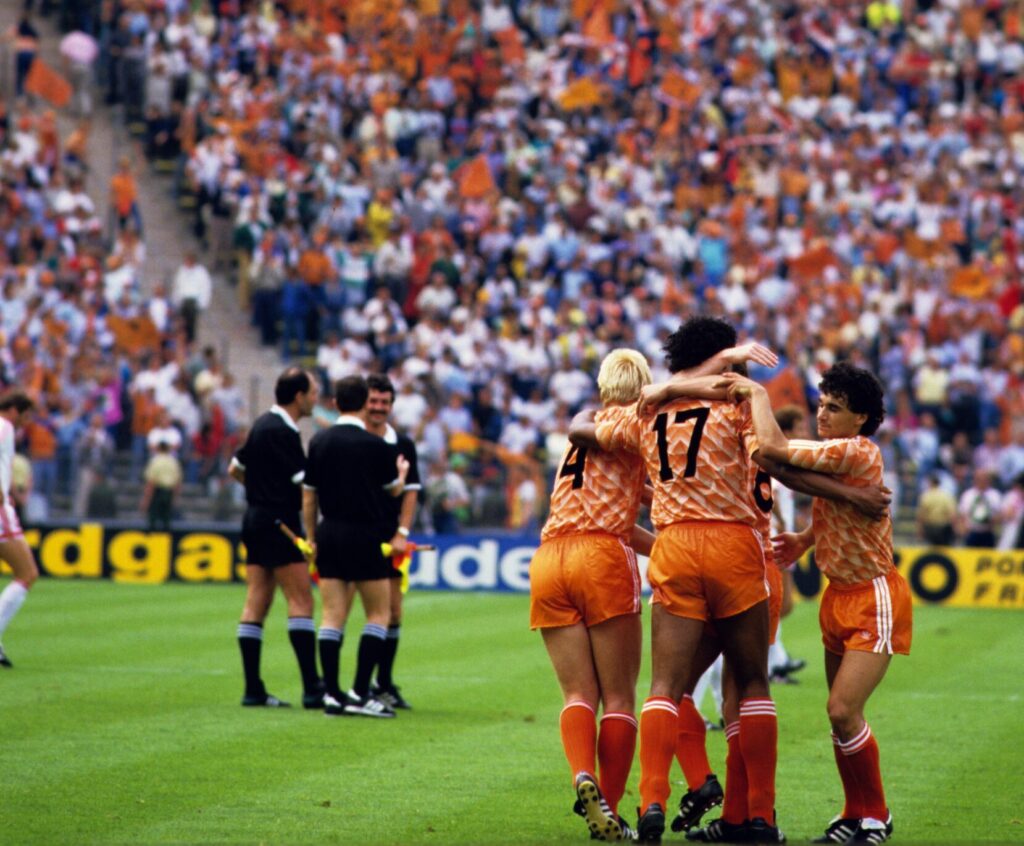
Most famously, the Netherlands emerged from nowhere to become a major soccer power using the idea of totaalvoetbal (total football). The central idea was that players should constantly search for space, which would allow them to move around the pitch interchangeably. Attackers should be as comfortable dropping back to defend as defenders were confident in pushing up. The system was made possible by the on-field orchestration of playmaker Johan Cruyff and the coach, Rinus Michels, who took the style he first implemented at an Amsterdam club, Ajax, in the ’60s and imposed it on the national team, resulting in consecutive appearances in the World Cup final in 1974 and 1978.
Soccer Goes Global (1994 — 2006)
In 1994, FIFA took the World Cup to a non-soccer country for the first time: the US. That it was a huge success put the World Cup on a path to a very different future. Strong performances from several smaller teams, including Saudi Arabia and Bulgaria, confirmed to FIFA that it could increase the number of teams from 24 to 32. And the interest generated by hosting the tournament in a new market confirmed to the governing body that it was possible to take the World Cup around the globe.
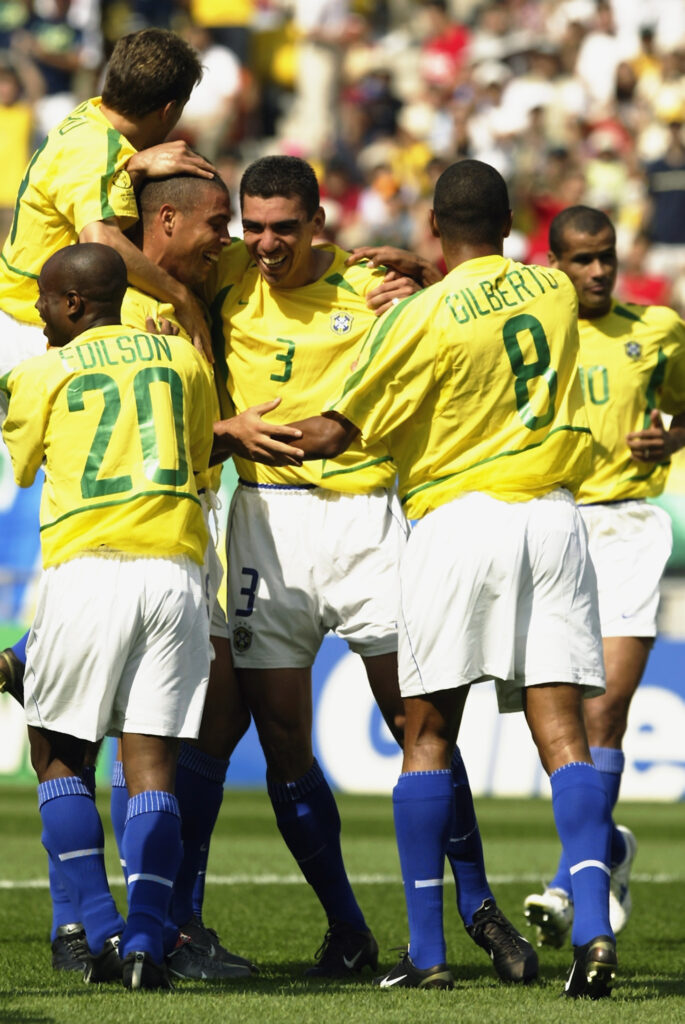
More than any other period in World Cup history, this was a time when coaches allowed star players the freedom to work their magic. The winning Brazilian team of 2002, for example, had three star forwards in Ronaldo, Rivaldo and Ronaldinho, who were allowed to do whatever they liked, and two buccaneering fullbacks in Cafu and Roberto Carlos, who functioned as auxiliary wingers. To balance the team, coach Luiz Felipe Scolari picked three central defenders and two workhorses in central midfielders. In 2006 France ran its entire team through Zinedine Zidane and the squad that beat them in the final, Italy, consisted of a team of runners tasked with getting on the end of passes from Andrea Pirlo.
The 2002 quarterfinal lineup appeared to herald a new future for soccer. France, Italy, Argentina and Uruguay (which, combined, had won eight of the 16 World Cups) were knocked out, in favor of Senegal, South Korea, Turkey and the US. Although the depth of global soccer was undoubtedly improving, 2002 proved an illusion. Rising television rights for European football leagues in England, France, Germany, Spain and Italy made clubs in these countries into concentrated centers of talent. Young European players benefited from growing up alongside stars from around the world (all five of Brazil’s stars from 2002 had long club careers in Europe), and this improvement was felt internationally. The semifinalists of the next two tournaments, Germany (twice), Italy, France, Uruguay, Spain, the Netherlands and Portugal, showed that order had been restored.