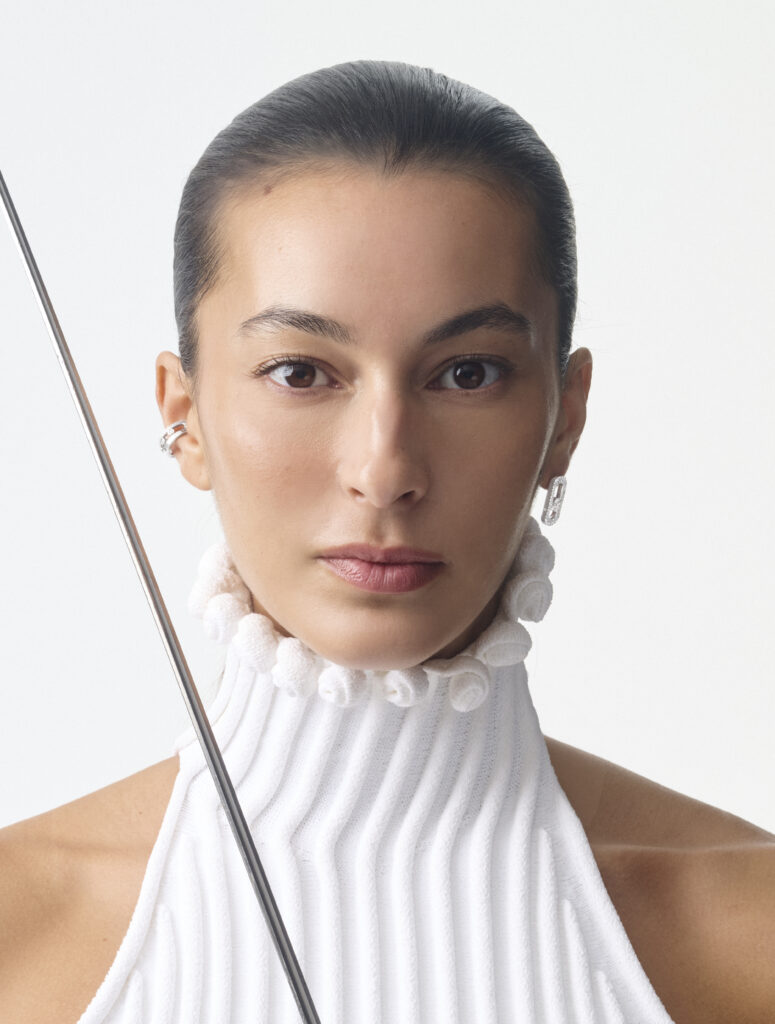

What people don’t often know about fencing is that it’s tactical, said Sara Balzer, calling from her home in Paris. Fencing is sort of like chess. Before making calculated moves, a fencer analyzes an opponent. Deception is involved. Both rhythm and pace are important. A fencer has to be agile and strong, but these traits alone won’t win a match. “It’s a complete sport,” said Balzer. “It’s a really beautiful sport, really elegant.”
Tall at 5’10” and left-handed, Balzer, now 30, has ranked No. 1 in the world of women’s fencing — twice over. She is a master on the piste, or the playing strip. But new challenges and goals present themselves constantly. After a lunge attack left her with a torn ACL in 2017, Balzer’s confidence was shaken. “I stopped doing attacks and lunges and completely changed my way of doing fencing,” she said. “My body didn’t want to do this movement. It was really, really hard. My fencing was no good. I was still afraid to get injured.”
Her only option, she decided, was to fence for the sport of it. Back in competition, she told herself, “Let’s just play.” And then she won. “It was completely crazy. Without doing lunge, without attacking. And I was like, ‘Okay. You can do it. Trust yourself.’ [It was a] really important moment in my career.” No matter how strong your body may feel, she learned, it’s strength of mind that wins. “If your mind is blocked and you’re afraid to do something, it doesn’t work.”
We caught Balzer not exactly at rest but at the beginning of a training season: fresh off the highs of winning at this year’s World Championship, the August holidays and last year’s epic silver-medal win at the Olympics.
AT FIRST, IT WAS SUMMER CAMP
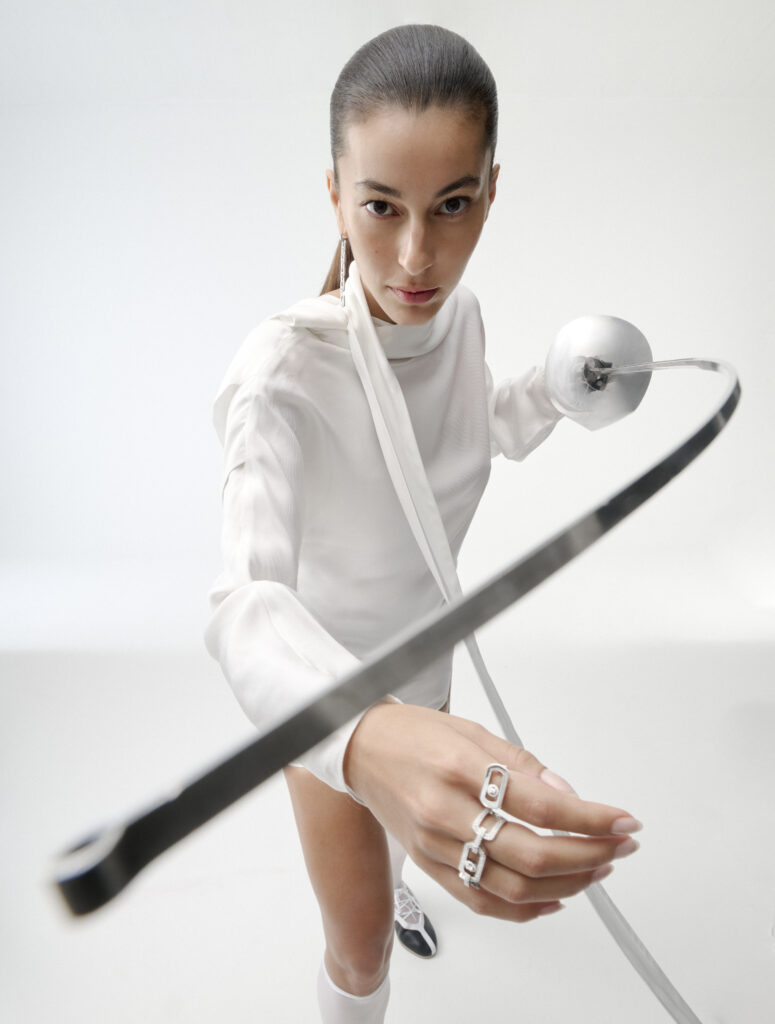
Balzer wanted to be like her older sister. Everything her sister did, Balzer wanted to do, too. So, when her sister found fencing at a summer facility in Strasbourg (sort of like a summer camp) and was singled out by a coach for her ability, naturally, Balzer wanted to fence, as well. “I immediately liked this sport,” she said. “It’s really special. You can be physical or strategic or technical. I found myself in it.”
The two girls continued fencing together until, roughly four years later, Balzer’s sister decided to focus on her studies. By then, Balzer had locked in. She’d competed, been inspired by the 2004 Olympics and spent weekends on the tournament circuit.
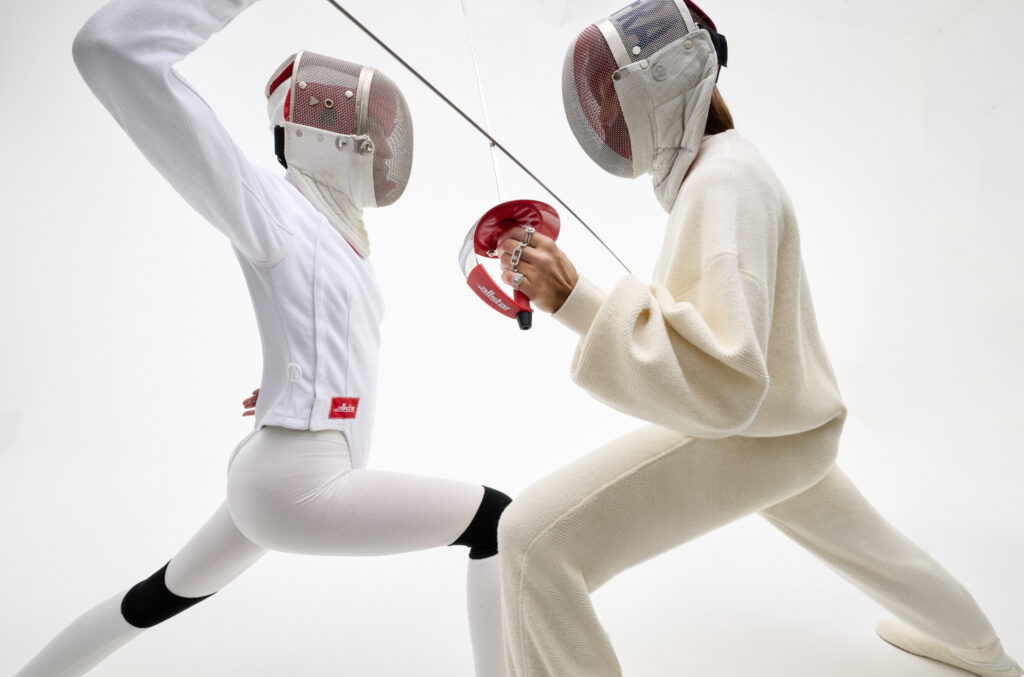
With its roots in antiquity, fencing as we know it is linked to the European Renaissance, when schools began to pop up in Italy, France and Spain. The sport emerged from what had previously been lessons in combat. The terms used in contemporary fencing are French words, owing to the country’s contributions to the sport’s development: It’s played on the piste, positions are taken with an en garde, and sparring commences with prêts? Allez! When a fighter is hit, touché is called.
One of five sports to have been represented at every modern Olympics since 1896, it was a nationally cherished pastime in France when Balzer came to it, but it wasn’t necessarily popular among people her age. The attraction to it, and aptitude, was her own. In 2008, Balzer watched on TV as a man from her fencing club competed in the Olympics. He came back with a medal. Balzer listened on the day he visited the club and talked about his experience. She even got a chance to spar with him. “And I said, ‘Okay, that’s what I want to do: I want to do the Olympics and I want a medal,’” she said. From then on, competing in the Olympics was her goal.
SETBACKS, OR PARRY AND RIPOSTE
It was in 2012 that things heated up for Balzer. At a training camp, she beat all the older girls in attendance, under the gaze of a coach from the National Institute of Sport, Expertise, and Performance (INSEP). “The coach said, ‘I want you to come next year, to be part of the team.’” By 2013, Balzer was at INSEP, in Paris, training six hours a day.
By 2021, she had qualified for the Tokyo Olympics. “I was the happiest girl in the world,” she said. “It was a dream come true at the moment.” It was also a turning point. In the Olympics, unlike in other fencing competitions, the rules for substituting players are stricter. The four members of a fencing team don’t swap places on the piste unless there’s been an injury or the chosen fencer is doing poorly. Balzer was not on the piste. She was at the Olympics, she’d made it, and yet, she realized, she might not actually get to fence, which would mean she would not return with a medal either. It would be as if she hadn’t competed at all. The thought sent her spiraling.
She realized then that she had to accept the situation and see past it to the next goal, the next Olympics, the next opportunity. She might not fence, she might not win a medal, she might not be the best, but whatever happened, she would be happy. “I was not afraid anymore. My mind was free,” she said. “I wasn’t stressed. I wasn’t afraid.”
And then, she was called to the piste.
She went home with a silver medal and a new mindset. The following season, she said, “I completely exploded. I won a lot of competitions, and I was number one in the world.”
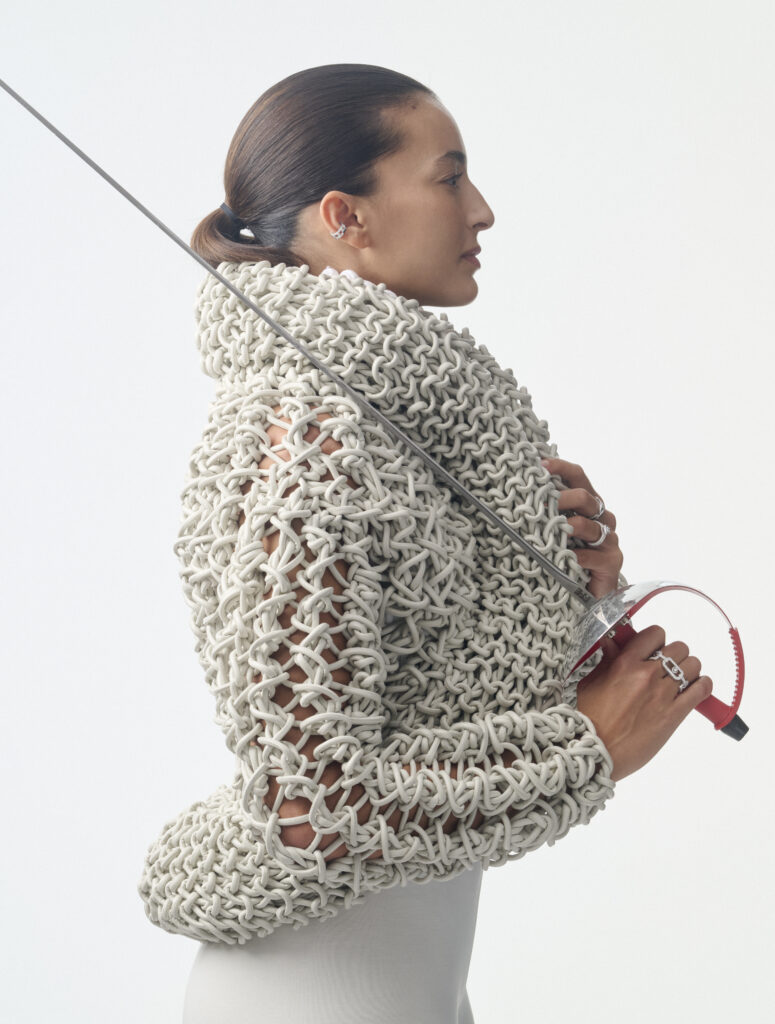
PARIS 2024 AND 8,000 SEATS TAKEN
Meanwhile, Balzer found herself at the forefront of another comeback: the popularity of fencing. Seeing steady growth in the US since the 1980s, its visibility was increasing as fencers built social media presences that attracted eyes across the globe. When the Paris Olympics were announced, yet another wave of interest pushed the tide higher. Balzer had qualified, and the pressure was on.
Not only was she the number one female saber fencer in the world, she would be playing on historic turf, in Paris. The fencing matches would take place in the reopened Grand Palais; the nave, clothed in white to keep the sun from pummeling crowds beneath the glass windows, looked majestic. Tickets sold out almost immediately. All 8,000 seats were taken.
The intensity of the scrutiny was palpable. “It was the biggest moment of my life,” said Balzer. “Everyone watching me, expecting to win. And if I wasn’t [getting a] medal, it would be completely a mess and really stressful.”
By the time she’d won the semifinal, knowing she would leave with a medal, the gravity of the moment started to hum in her head. “I tried to stay focused, but for sure my mind was like, ‘Oh my God, you’re in the final of the Olympics — in France.’”
Winning silver as an individual this time, rather than as a team as she had in Tokyo, was another dream come true that came with lasting lessons. “It was really hard. I’m really proud of what I’ve done,” she said, but she recognized that something had to change. She was pushing herself too hard. “I am a perfectionist; sometimes I win and I am not happy. So I said, ‘Come on, you cannot be like this.’ I am trying to be more gentle and kind. And I think I can get even better results. I want to be more empathetic with myself.”
THE BUSINESS OF SPORTS
Another skill Balzer has been nurturing is her facility with social media. “I immediately loved social media,” she said. “I remember putting all the filters on Instagram in the beginning.” But it was when she got a contract with Adidas, in 2018, that she realized the important role social media would play in her career. “I do post naturally, and I post what I want and love and never change my way of posting, but I understand it can help me to have contracts and make money,” she said, which has shifted the way she thinks about her social media presence. “Fencing is not like a professional sport; there is not a lot of money,” she added. “We have to have good Instagrams and good visibility; we need to have contracts to live. I do live from my personal contracts.”
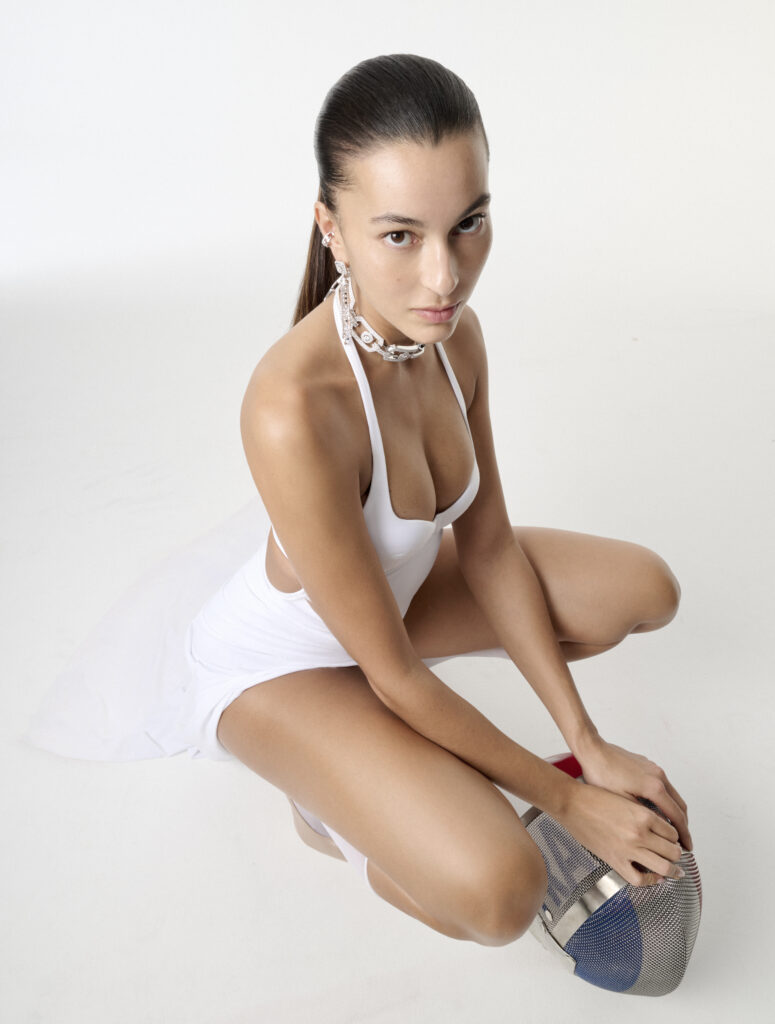
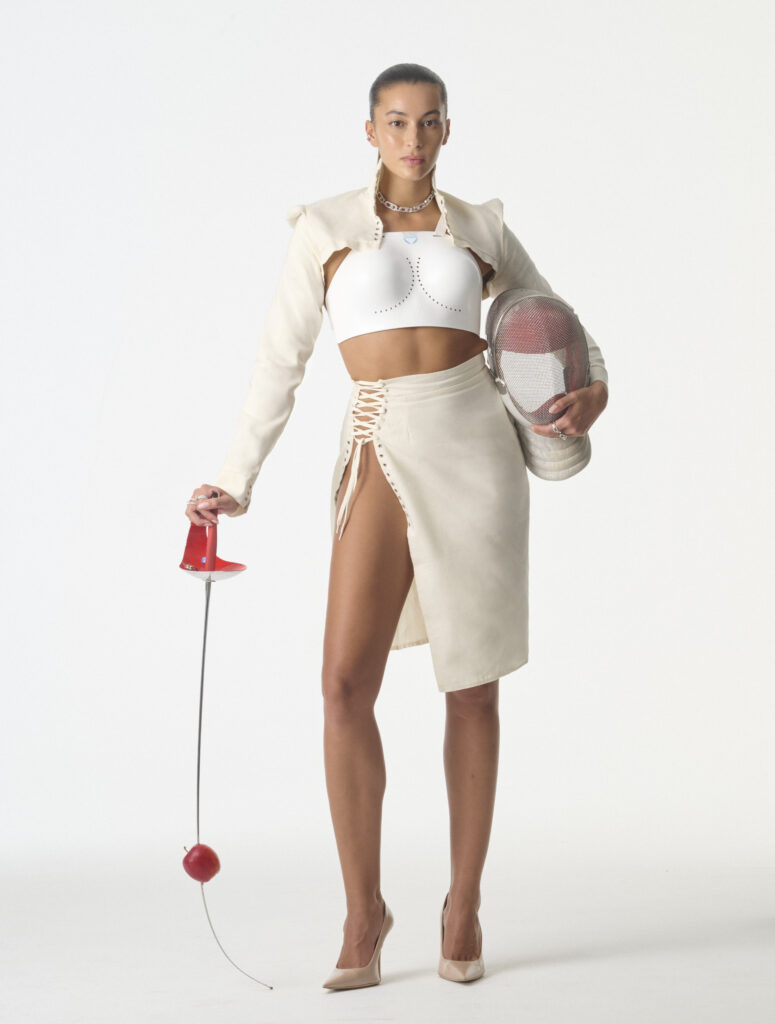
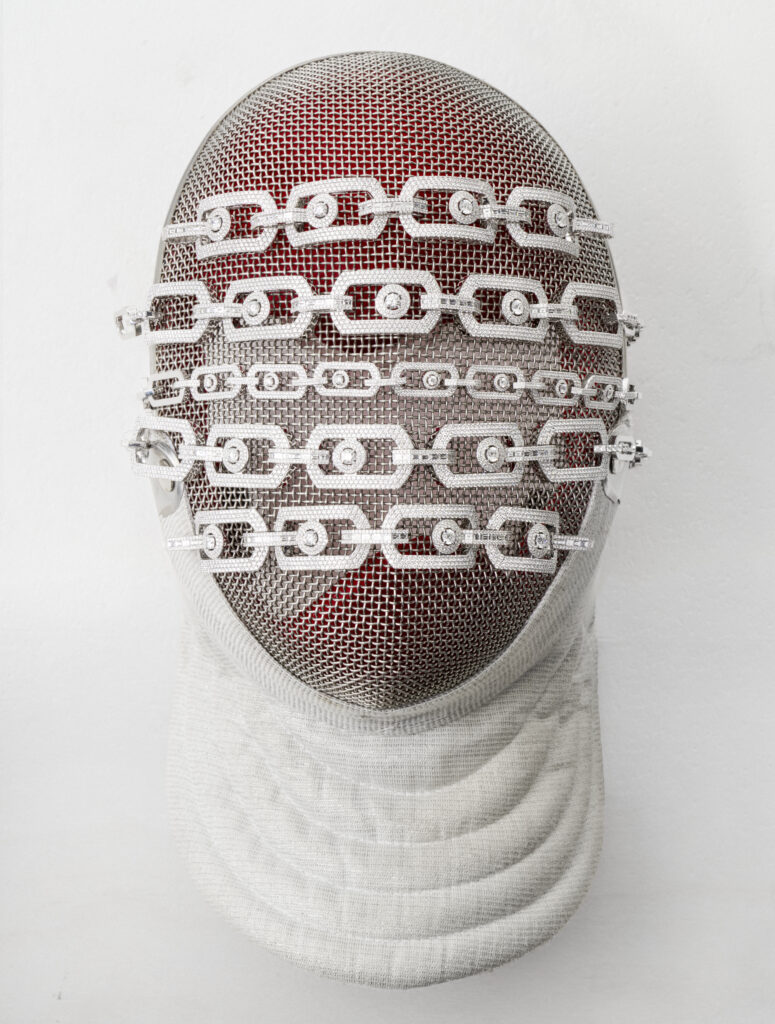
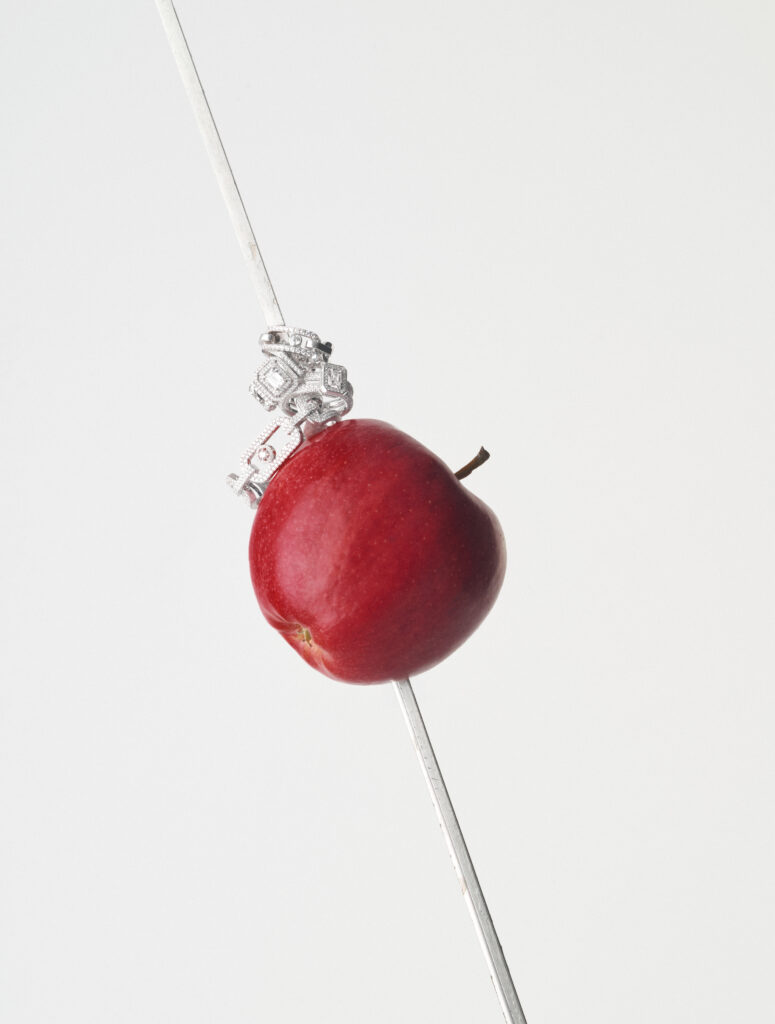
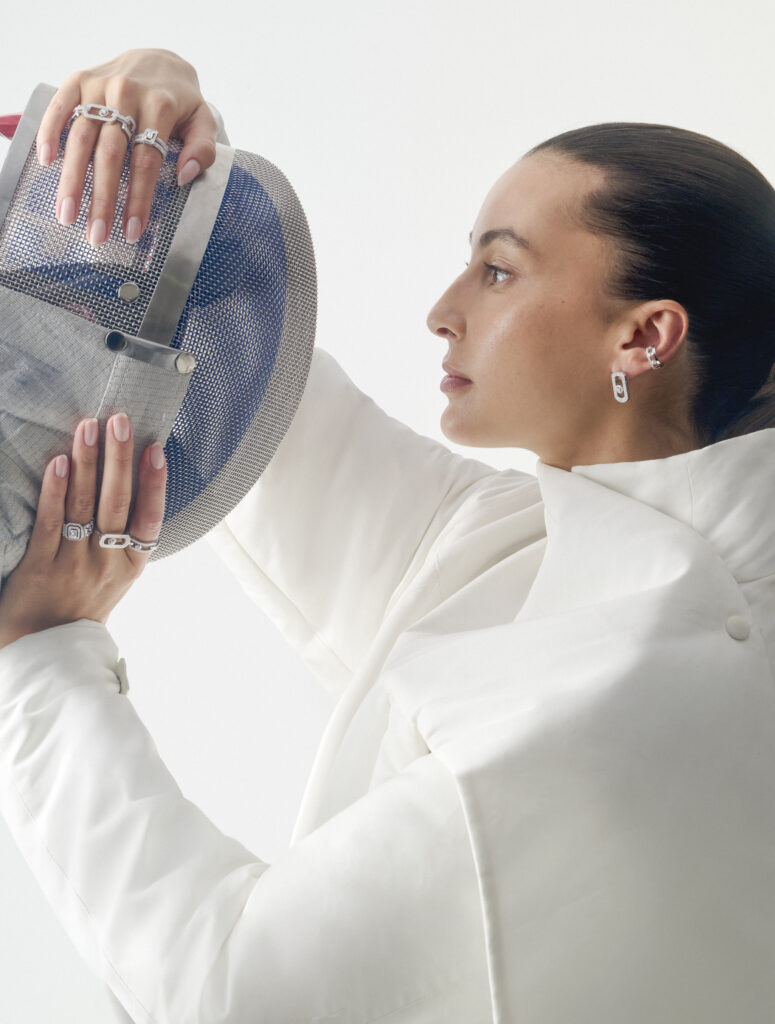
Right now, Balzer’s Instagram is full of photos from a trip to Hong Kong with Audemars Piguet, for whom she’s a brand ambassador. Recent victories are on the grid between beachy sunsets and Balzer, off the piste, looking dewy and radiant in heels, form-fitting dresses and sparkling jewelry by Messika.
“I always loved shopping and clothes,” she said. And this, too, she picked up from her sister, who has always been, said Balzer, “a fashion girl.” When she was younger, Balzer wanted to be a model. Though a series of World Cups necessary to qualify for the 2026 World Championship are what’s on the horizon — with the 2028 Olympics in Los Angeles just on the other side of it — she entertains the hope of one day walking in a show. “It’s still a dream.”
She knows, too, that she has a lot to be thankful for and a lot to celebrate. “I’m really lucky to have all these contracts with beautiful brands.” Yes, Balzer works really hard, she acknowledges, but she also feels fortunate. “I’m just really happy,” she said.