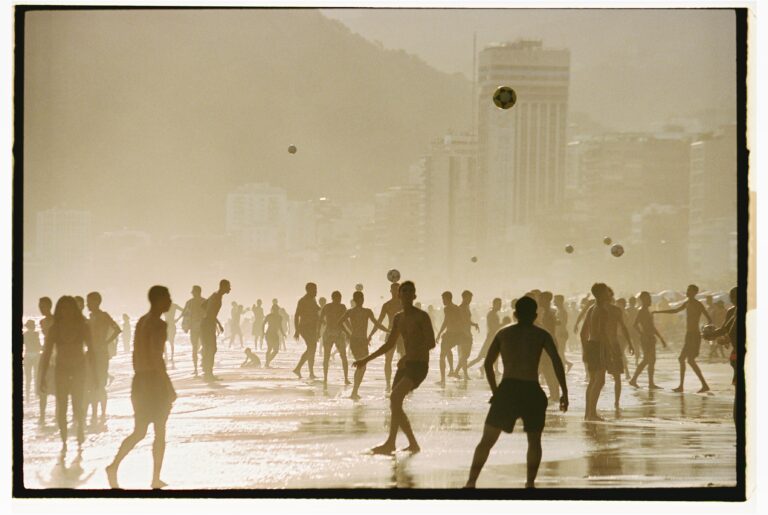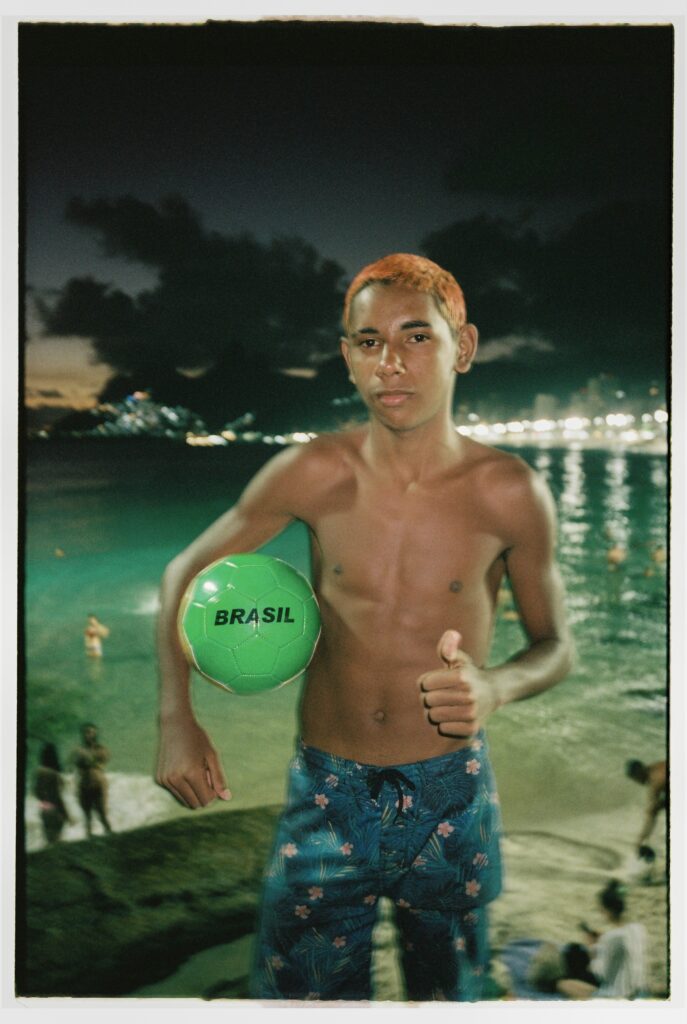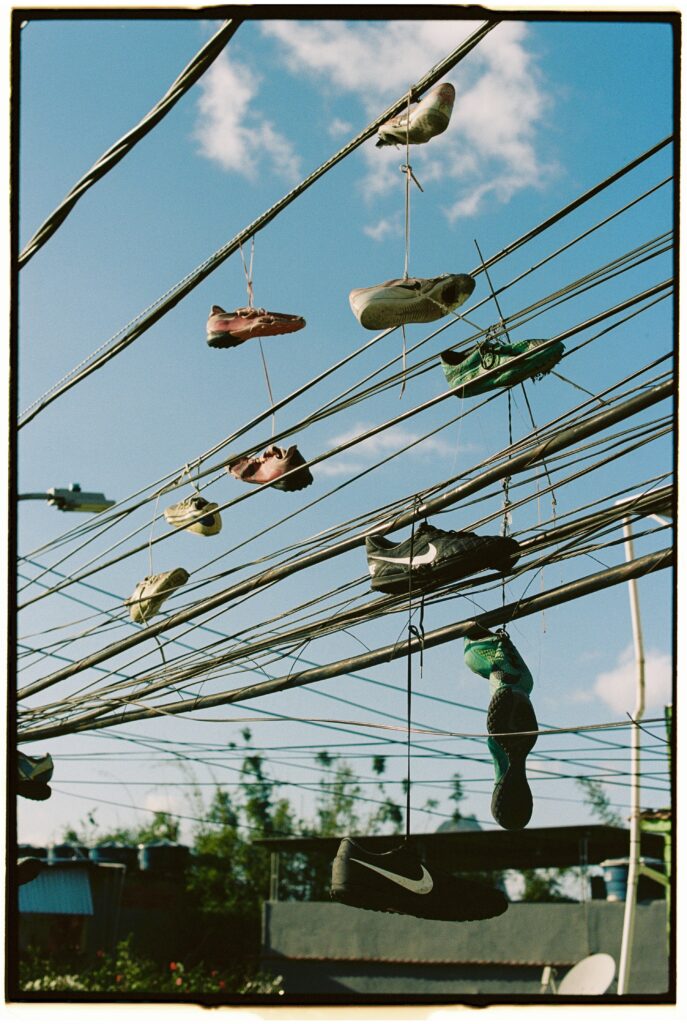

Rafael Moura doesn’t always look for subjects. They find him. The photographer’s job, as he sees it, is to wait for the world to compose itself. “I let things happen,” he said. “Most of my photos, I’m just observing.” The Rio de Janeiro-born, Paris-based self-taught photographer is a peripatetic traveler who carries a pocket camera wherever he goes, ready for whatever finds him.
On a call from an Ipanema café in April, Moura, 40, was fighting jet lag. He had just returned to Rio from Bali, Indonesia, and was drinking an iced coffee at 7 p.m. He stopped shooting digital in 2017, he explained, because it had stopped making sense to him — he didn’t feel connected to what he was shooting, and he hated being stuck behind a computer doing postproduction. He wanted to be outdoors shooting. “I decided last year to only shoot on film for work,” he said. “Unless it’s really necessary, I won’t shoot digital.”
“I think a lot before I shoot, so I frame them while I shoot and put everything in the place I want it to be,” said Moura. “I don’t remove anything. I don’t add anything,” he said. “It’s whatever way it’s going to turn out.” Moura — bare arms tattooed, glistening in the dusk with tropical humidity — appears as plainspoken as his work. But that earnestness is what makes the work hit: His images feel tethered to real life rather than polished versions of it. “When I found imperfection, that’s when I understood the meaning of what I really wanted to do,” said Moura.
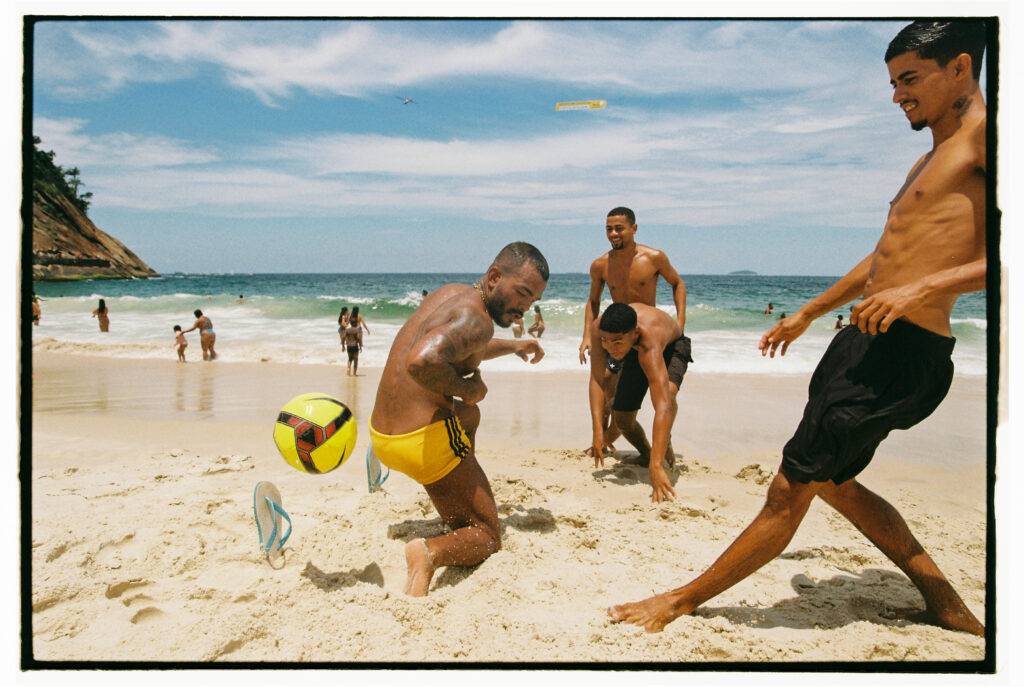
Many of his images depict his Rio de Janeiro hometown and its contradictory energy — gritty yet golden, frenetic yet languid — and so they feel intensely personal while still containing something universal. Take a woman in a bikini against the backdrop of Rio’s rolling hills, the stillness of the solitary figure against the vast landscape. Or a group of kids jumping from beachside rocks while one child watches from the foreground, the observer who exists in every group of children. Or soccer cleats hanging from electrical wires above Rio’s favelas — reminders of how deeply the game is woven into the rhythms of everyday life. People will recognize their own lives in the images. “And when you touch people in the soul, they say: Wow, this is what I need,” said Moura.
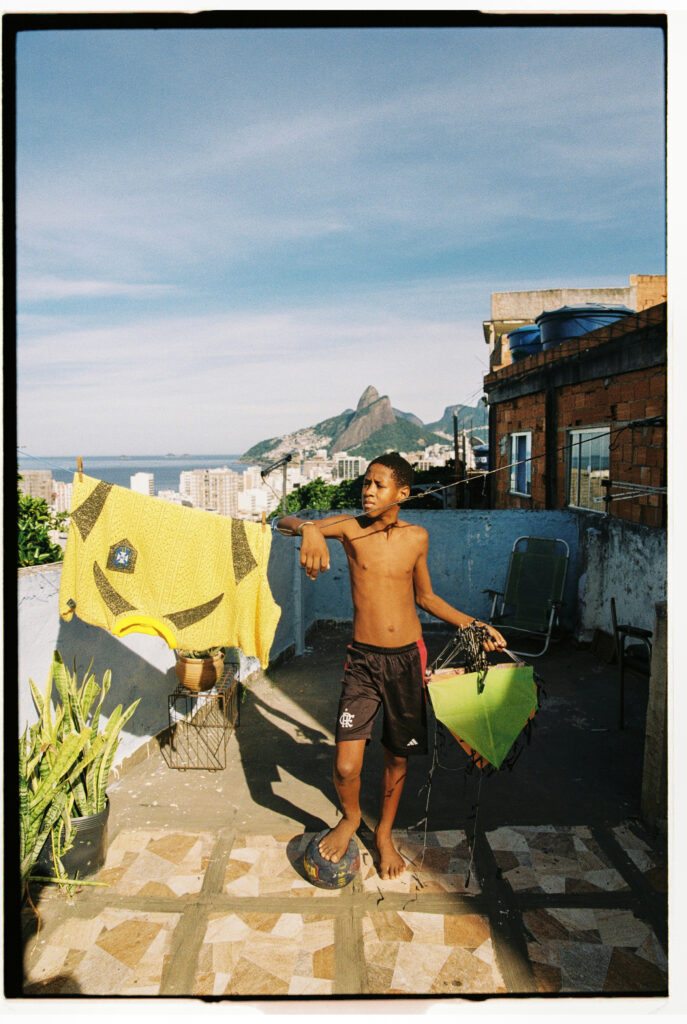
His pull toward the raw hit early, and it started with soccer. Moura’s father, Guilherme Aquino, was a journalist in Rio, which meant he had press credentials that gave him access to Maracanã, Brazil’s largest stadium. In 1995, Aquino arranged for Moura to be one of the kids walking the Flamengo players onto the pitch; Moura ran to Romário and fought the other boys for his hand. “I had photos taken by my father of this moment when I was a kid, and I was so happy,” he said. He fell hard for the game. Starting at age 12, he played beach soccer for his neighborhood team — the way many of Brazil’s best players began — and did trials for some of Rio’s top youth sides. All was going well, he said, until he got injured. He eventually returned to amateur and youth beach leagues in Rio and elsewhere in Brazil, but by then, a new dream was taking place: travel. So he did. At 21, he moved to Australia to surf and learn English, and he joined a local amateur team. The coach was so impressed, he asked Moura to stick around. But he declined.
Soccer, Moura had come to feel, was too rigid for the lifestyle he wanted. “Even though I love football, it would hold me down,” he said of the commitments required to play on a competitive team. “I’m such a free spirit,” he said. And his father had given him something else that would soon define his life: a film camera. Moura was about 16 when he started carrying it everywhere — to parties, to the beach, anywhere his friends were. “I just liked to create memories for them,” he said. He didn’t think of himself as a photographer. “I had zero talent,” he said. “I had the passion. My talent came with practice.”
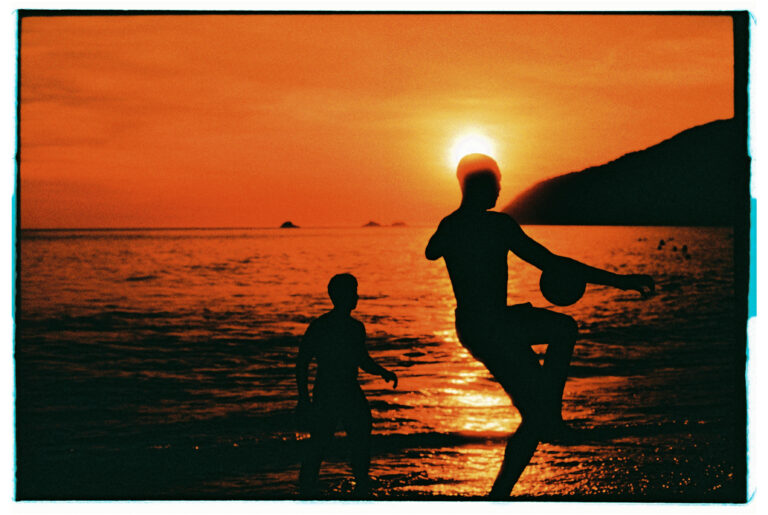
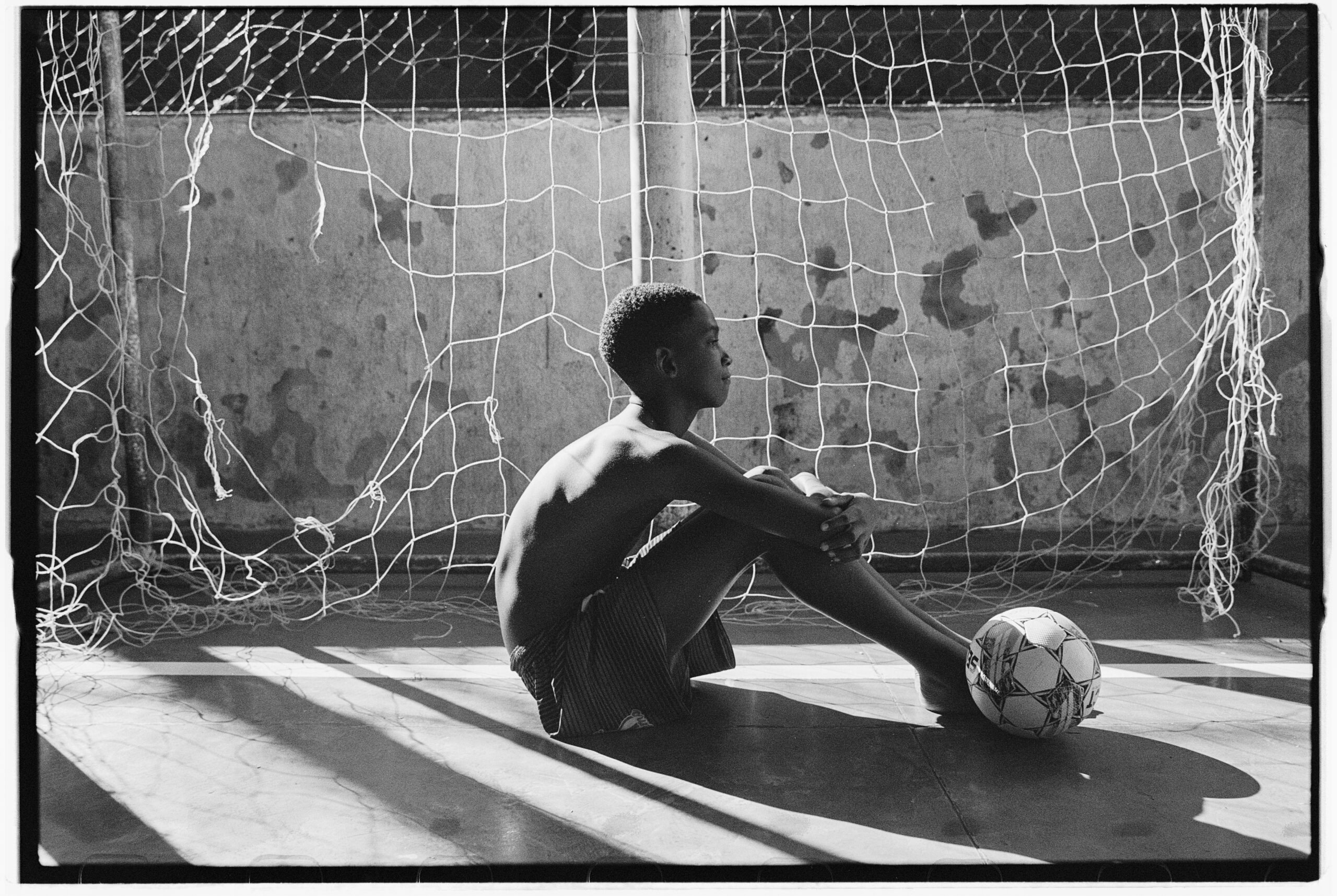
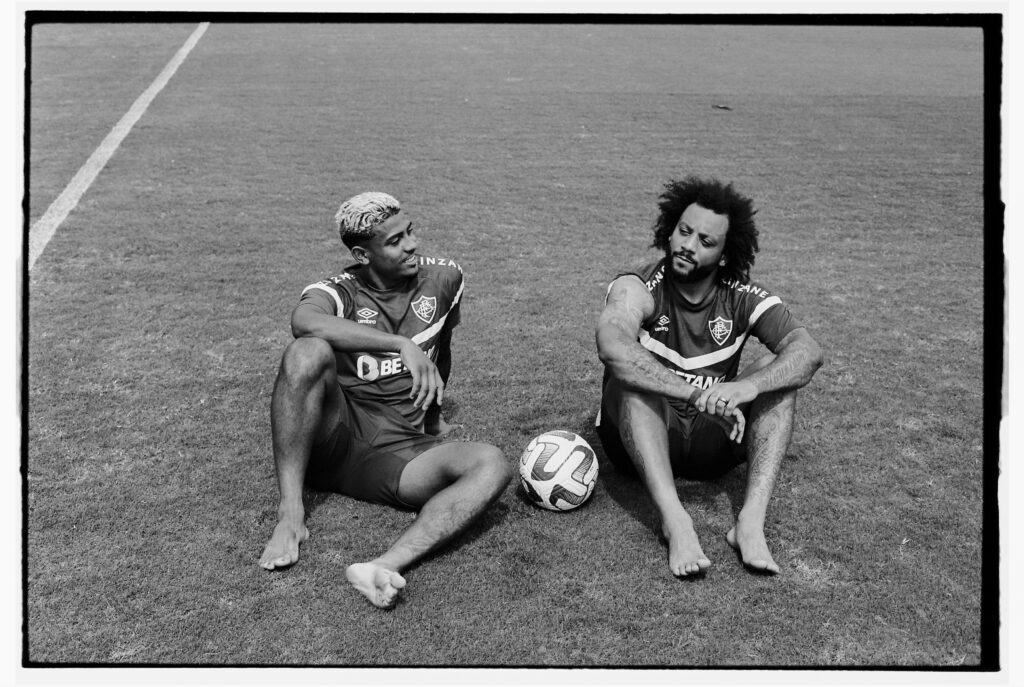
Now, years into making images on film, Moura has built a devoted following. In an era of AI-generated and polished digital aesthetics, brands like Byredo, Lacoste, Havaianas and DSquared2 are drawn to the rawness and emotional immediacy of his work — images that feel less manufactured than observed. Star players like his work too, including Marcelo and Memphis Depay, who also have become personal friends. In the next few months, Moura will finish a photography book six years in the making before hitting the road again — to Japan, Mongolia and across Africa — with a camera in his pocket, waiting once again for the world to compose itself. “I can do the same as I do here,” he said.
For PLAYER’ third issue, Moura curated a series of archival images, including one featured on the cover, that explores the intersection of real-life Rio de Janeiro and the soccer culture indelibly woven into its streets. “These images reflect who I am and where I come from,” he said. “It’s an intimate moment that feels like meditation, where I connect to my soul and go deep in my own thoughts. It’s me and my camera against the world.”