
Ahead of the 2026 Winter Paralympic Games in Milan and Cortina, Italy, it might have seemed like Oksana Masters had nothing left to prove. After all, Masters was already the most decorated American winter Paralympian ever, and one of the few athletes to win medals at both the Summer and Winter Games, including rowing, cross-country skiing, cycling and biathlon. So when she was struck by a brutal infection in her leg that threatened her ability to compete in the Games, nobody would have blamed her if she hadn’t been able to compete for further medals.
No one, that is, aside from Masters herself.
“I don’t care,” she says of her thinking at the time. “I’m missing legs. How [much] worse can it get? I’m willing to die in this sport. I just wanted to be strong and tough, and I think that mentality for an athlete is ingrained in you.”
Remarkably, Masters came out of the 2026 Games with another five medals, showing just how far strong and tough could take her. But that was merely the latest evidence from a life that has demonstrated the value of these traits since day one. It’s hard to imagine anyone stronger and tougher than Oksana Masters.
Born in Ukraine three years following the Chernobyl disaster, Masters suffered from birth defects caused by radiation poisoning, including legs of different lengths, missing bones, no thumbs and an extra toe on each foot. The first eight years of her life were spent in orphanages where she experienced emotional, physical and sexual abuse. She was adopted by an American woman, a single mother, whom she calls her hero and credits with saving her life.
The pair settled in Louisville, Kentucky, and at the age of 13, Masters first considered playing sports. But she was hesitant to try out adaptive rowing, the modified version of the sport that allows differently abled athletes to compete.
“Honestly, I hated it,” said Masters, who instead dreamed of playing volleyball with her middle-school peers. She changed her mind thanks to a very persuasive factor in the life of a middle-school girl: “There was potentially a boy I thought was cute in my class [who] was volunteering. The minute I found out he was volunteering, I was like, ‘Maybe I’ll try it.’”
At the time, Masters was processing the emotional toll of learning that she would have to have her right leg amputated — her left had been removed at age nine. She was filled with anxiety about taking off her prosthetic leg in front of people, but she soon discovered that her nerves quickly wore off once she hit the water and took control of the oars.
“I forgot about the boy, and I fell in love with that feeling,” she said.
The feeling also helped her to cope with another challenge in her life at the time: the return of traumatic memories from her days in the Ukrainian orphanages, which she’d previously suppressed.
While Masters was in art-based therapy, she craved a more physical outlet: “I needed to express all the things I felt rather than speak them, because there’s so much power in words.”
From Passion to Podium
What began as therapy became a passion, and Masters soon arrived at an even more ambitious goal than impressing a boy: represent Team USA in rowing at the Paralympic Games. Her first attempt, in 2008, was unsuccessful. Such a setback would’ve stopped plenty of young athletes. For Masters, it just fueled her motivation.
“That loss was the best thing I could have experienced,” Masters said. “I was like, ‘No, I’m going to prove you wrong.’”
Masters did just that four years later, not only making Team USA for the London Paralympics but also winning the first-ever US medal in trunk and arms mixed double sculls. Still, this wasn’t when Masters felt like she had really made it as an athlete. She faced yet another setback following the 2012 Games, struggling with a back injury that hampered her ability to row. But once again, she chose to defy the odds, taking up skiing instead.
Newer to the discipline, Masters didn’t anticipate medaling; she just wanted to prove that she wasn’t done and enjoy the ride. But at the 2014 Winter Paralympics in Sochi, she won her first individual medals, in cross-country skiing. That is when she felt like she’d really made it — and the medals felt full-circle in other ways as well.
“The person who won was from Ukraine,” she says. “I remember standing on that podium watching the Ukrainian flag being raised side by side to the American flag, my new home.”
Winning Formulas
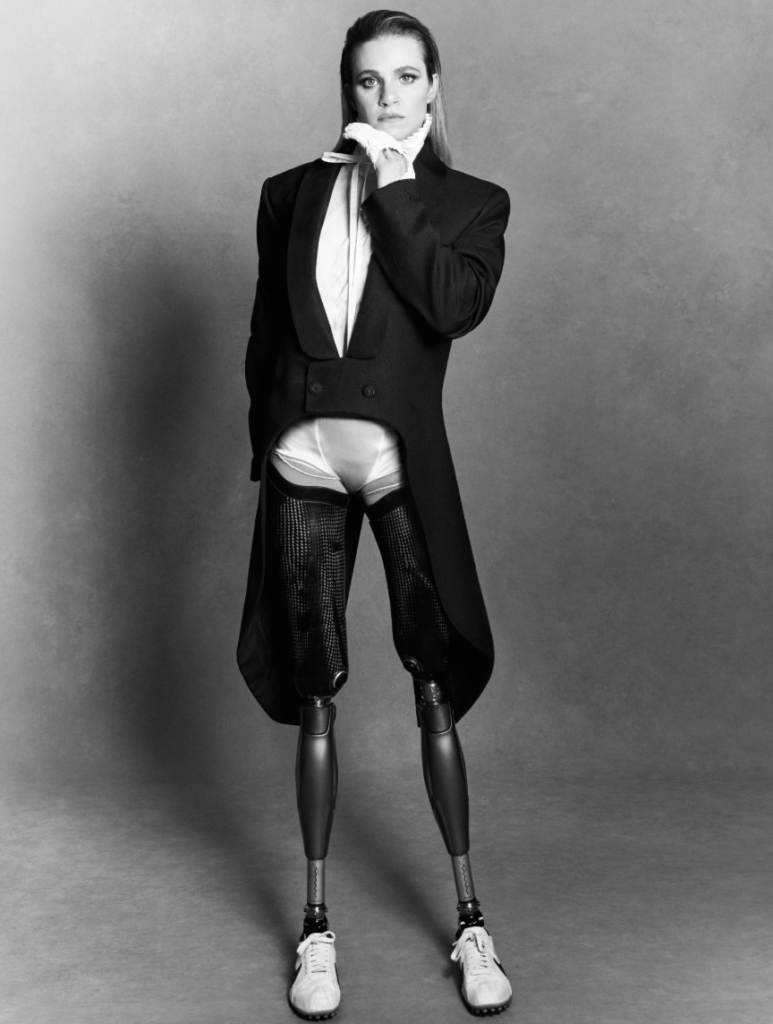
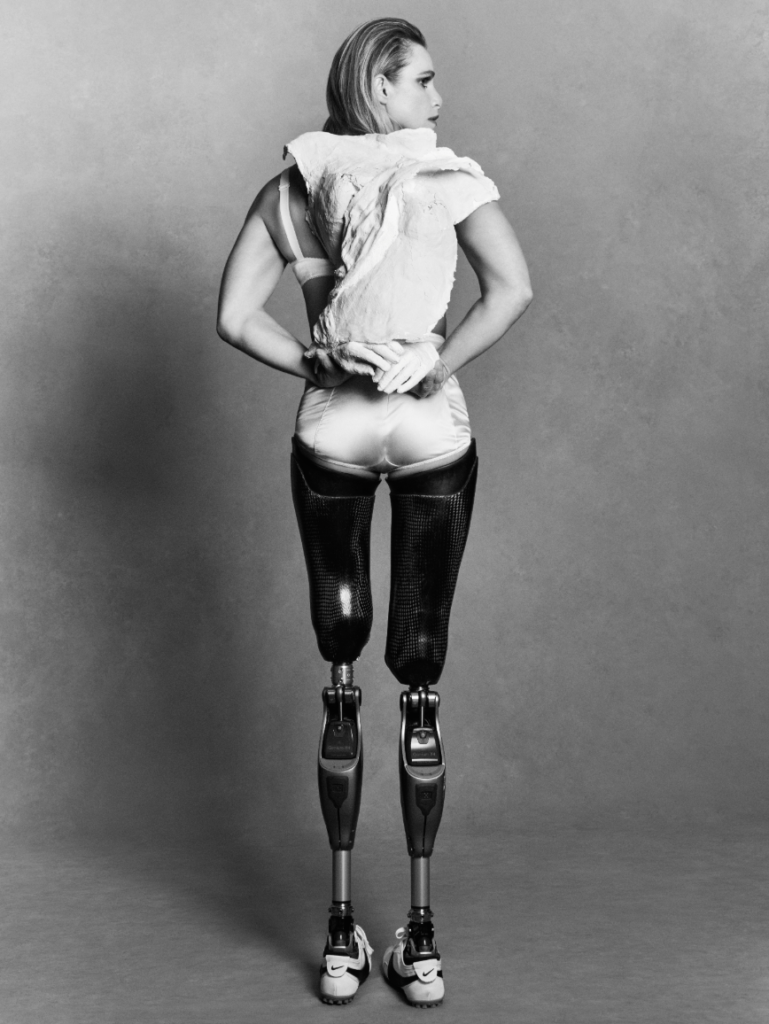
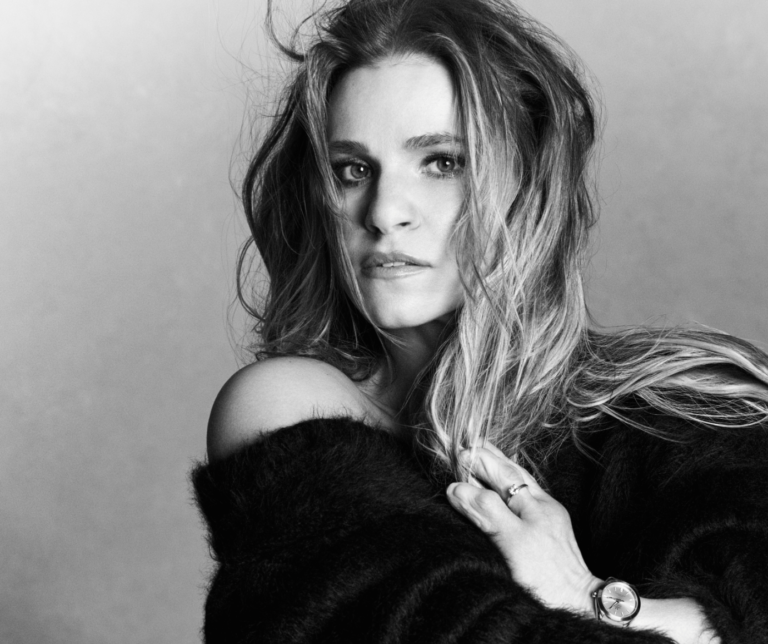
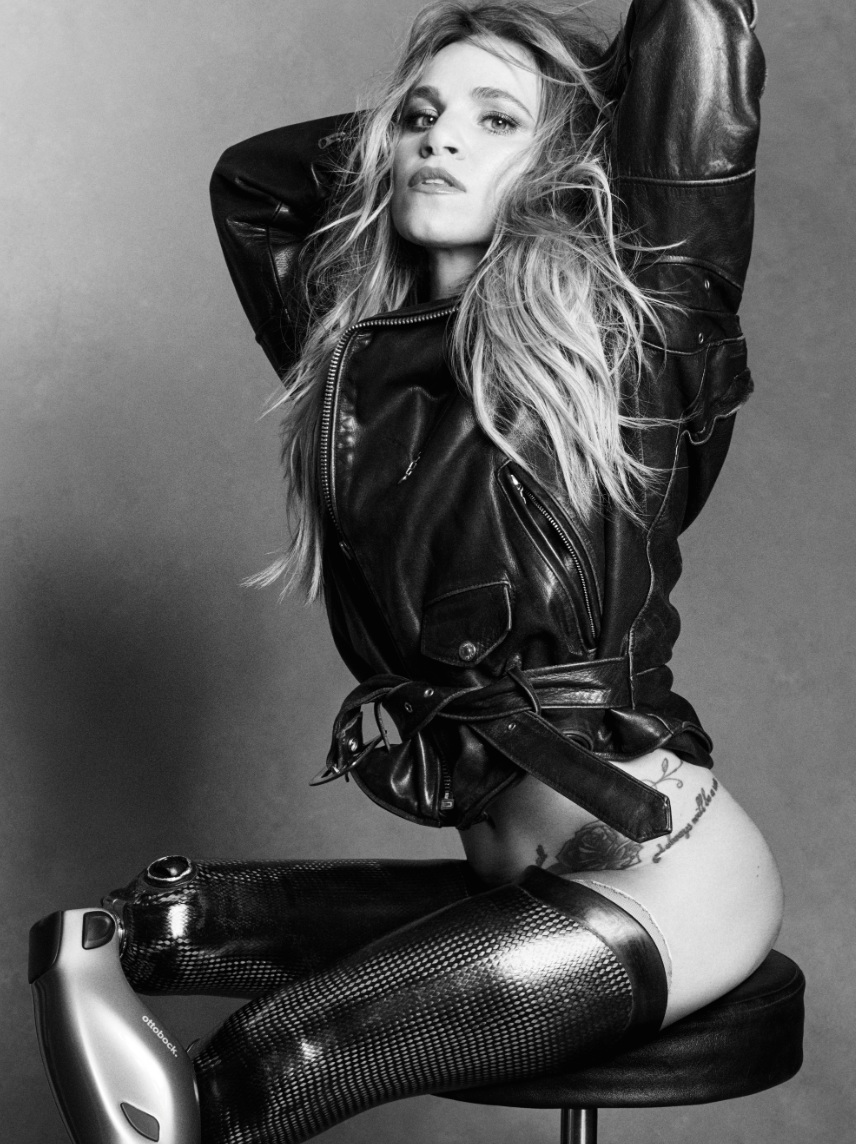
Now 37, Masters has won a grand total of 24 Paralympic medals across Winter and Summer Games. Her significance goes far beyond what titles she’s won, though. She has become one of the most visible and admired icons in para sports, starring in campaigns for Skims, Fenty, Omega and more.
“I’d never seen anyone that looked like me in any of those,” she said. By representing these brands, she aimed to prove that “strong” and “tough” could coexist with her femininity and distinctive athletic prowess, and she wanted to partner with the ones that really got it.
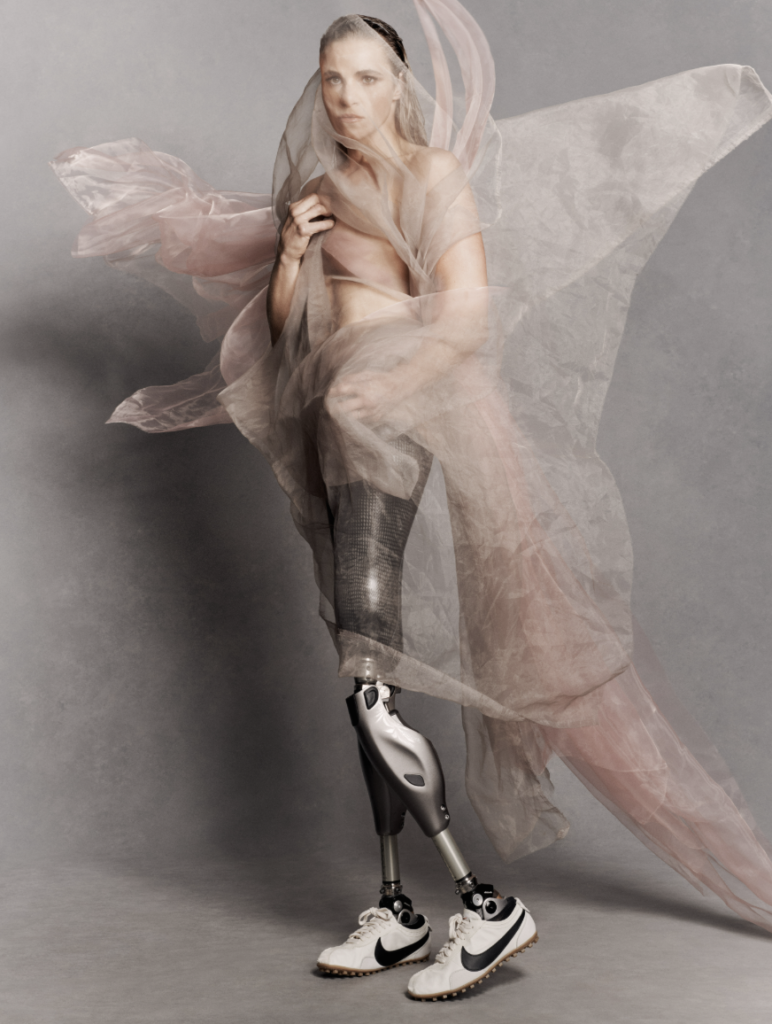
“The beauty world is that one space I feel is still afraid to veer off the recipe of what they know,” Masters, a self-confessed “makeup junkie,” said. “That’s what’s so special when you work with brands like Fenty that aren’t afraid to do that, to take those chances.” For the 2026 ESPY Awards, Masters wore a showstopping sheer Rick Owens dress that epitomized this fusion of values she hopes to represent: “I felt the most comfortable, confident, strong, sexy, powerful, elegant — and that is also winning.”
Working with Omega, the official timekeeper of the Paralympic Games since 1992, as an official brand ambassador has also been deeply fulfilling. “They get it,” Masters said of the brand’s work with para athletes. “But as a whole, the fashion world does not.”
Passing the Torch
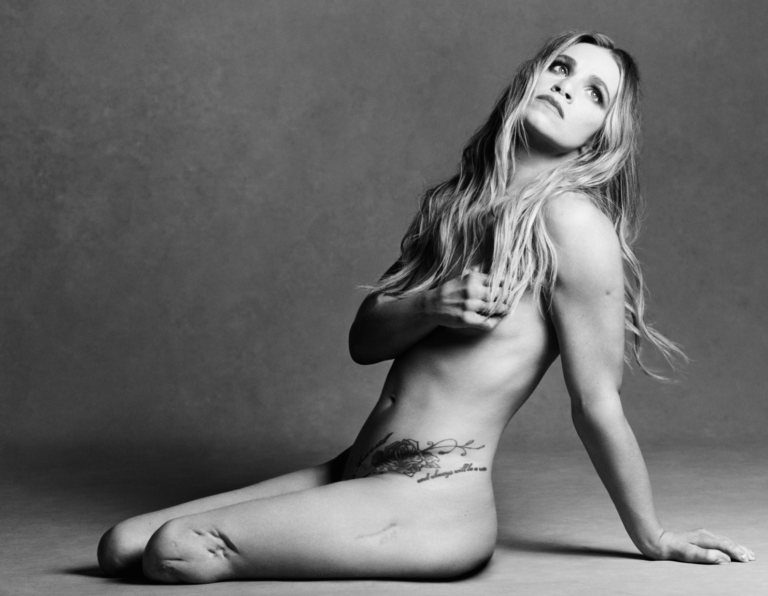
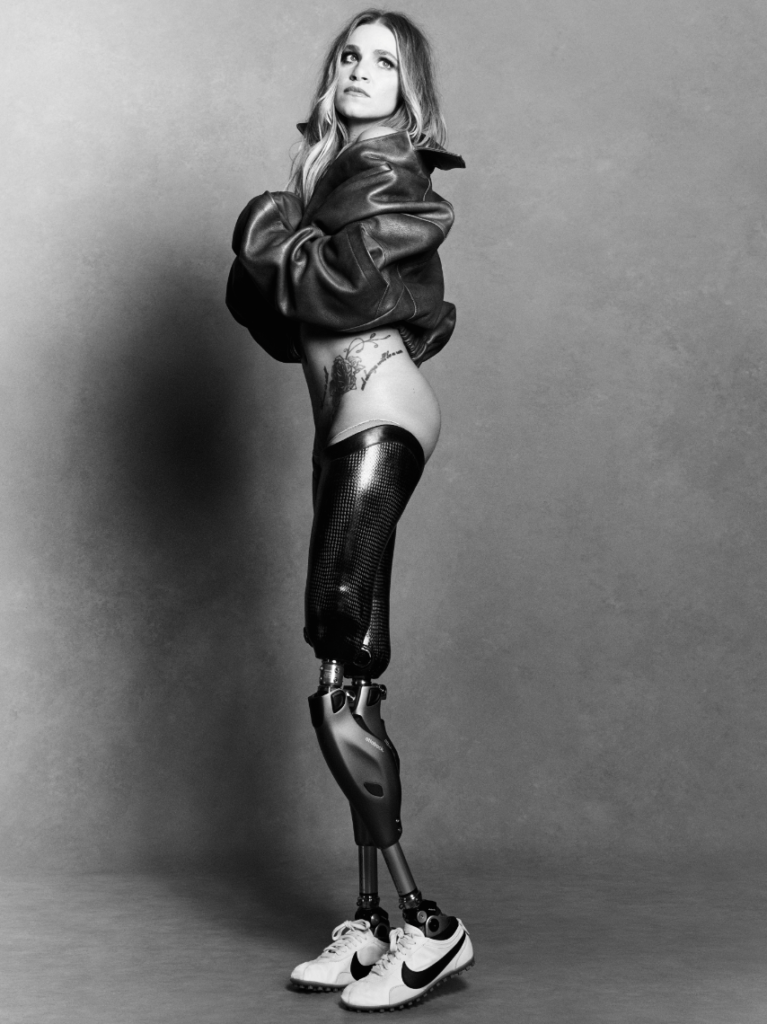
While Masters’ story has come to inspire millions around the world, she still keeps some aspects of it for herself. Her four tattoos, all but one usually hidden, have been a cathartic release of this kind, enabling her to process the terrible memories that started to arise during childhood in a way that felt natural to her.
Along one hip, a rose covers a scar from a particularly traumatic moment in her last Ukrainian orphanage. She was picking fresh stitches out of the wound the day her mom adopted her.
“Half of it is a living rose transforming into a black-and-white dying rose,” she said. Lyrics from Aretha Franklin’s “A Rose Is Still a Rose” accompany the design. “It doesn’t matter what state or stage that rose is in, whether it’s a vibrant red one or transitioning and it’s burnt-up,” Masters added. “It is still a rose.”
It isn’t hard to see how this ability to reframe the situations she finds herself in, whether it’s making the transition from a brutal orphanage to a loving home or the switch from rowing to skiing, has been key to Masters’ unprecedented success.
Masters is still weighing whether to participate in the 2028 Paralympic Games in Los Angeles, which would be her ninth. But regardless of whether or not she competes for more medals, her focus is on conveying the core of the wisdom she has absorbed from her remarkable journey to the next generation of aspiring athletes: “It’s on us to choose how we want to see bad things when bad things happen.”