
September 30, 2019, marked one of the most significant pivots in sports history. On that day, California became the first state to allow collegiate athletes to profit from their name, image and likeness, known in shorthand as NIL, via the Fair Pay to Play Act. Though the bill wouldn’t go into law until 2023, it was the first step toward changing a 113-year-old tradition.
THE NCAA’S CENTURY OF “AMATEURISM”
Since the NCAA’s founding in 1906, collegiate athletes had been prohibited from profiting monetarily from their abilities and identities while competing for their respective schools. The longstanding practice stemmed from the association’s definition of “amateurism” — an NCAA- coined term that classified a “student-athlete” as an employee and prevented players from leveraging their fame for personal gain.
Instead, their compensation primarily came in the form of athletic scholarships, which enabled athletes to compete while pursuing a higher education. This exchange was considered a sufficient trade-off that protected the integrity of college sports. Yet, being a student athlete, by and large, was a losing deal. Today, the landscape of collegiate athletics in the United States is sparse, with only 2% of high school athletes getting scholarships.
Until July 2021 — when the NCAA suspended its amateurism rules nationwide — athletes weren’t getting paid for their abilities and, by and large, weren’t receiving scholarships from the schools that recruited them to play either. Tension ensued.
And yet, according to the NCAA, Division I and II schools offer scholarships to more than 196,000 student-athletes, just over half of their total number, annually. Meanwhile, Division III was founded in 1973 to prioritize academics and participation, without offering athletic scholarships, to encourage a student-first model.
The NCAA’s commitment to its principles of amateurism and the push from athletes to get paid led to court cases, with mixed results. In one banner case, former USC football star Reggie Bush was accused of receiving money from a third-party agency. Bush settled, but the case led to a formal investigation by the NCAA. The former student-athlete forfeited his 2005 Heisman Trophy, plus USC received its own penalties. The NCAA then nullified Bush’s record from the 2004 and 2005 seasons.
CALIFORNIA LIGHTS THE FUSE
Class after class generated business for the NCAA and was left without a slice of the proverbial pie, until, finally, there was a light at the end of the tunnel: The Fair Pay to Play Act, signed on that fateful day in 2019, required that schools in the Golden State allow students who were considered amateur athletes to earn endorsement money without getting penalized.
California’s step toward enforcing what the NCAA called an “existential threat” — given the latter’s long-standing control over collegiate athletics
— became the torch-bearer act for other states and the NCAA itself. Across conferences, student-athletes relished earning money before entering the professional ranks. And though, yes, some earned significantly more than others, the perceived benefits seemed to have outweighed the concerns. The change became a lighthouse for its beneficiaries.
A BIG BUSINESS
Six years after California’s bill was passed in 2019 and four years after the NCAA suspended its NIL policy in 2021, the NIL business has blossomed into one of the largest revenue streams for collegiate and other amateur competitors. While the biggest names in college sports make millions from NIL deals, many student-athletes earn an average of $20,000. Combined with social media, athletes looking to profit from their NIL now have nearly endless ways to do it.
Of all the sports, it’s college football that sees the most profit. In part, this is due to its popularity. Gridiron stars such as Colorado Buffaloes duo Shedeur Sanders and Travis Hunter, Texas Longhorns quarterback Quinn Ewers and Alabama Crimson Tide signal caller Bryce Young are standout examples. Sanders and Hunter were the faces of the Buffaloes on the field after NFL legend and Shedeur’s father, Deion Sanders aka “Coach Prime,” took over the team and brought the nation’s eyes with him. Coach Prime took a struggling program and turned Boulder, Colorado’s games into must-see television, with celebrities such as Dwayne “The Rock” Johnson and Lil Wayne showing up to cheer their gritty team and its charismatic coach.
Ewers and Young were knighted by the opportunity to play the coveted quarterback position for well-established programs, a spot synonymous with stardom and, therefore, attendant NIL opportunities.
Outside the football field, the hardwood became the runner-up for athletes to earn in the seven-digit ballpark with their name, image and likeness. Cooper Flagg, the 2025 No. 1 overall NBA draft pick, earned a staggering $28 million during his lone season with the Duke Blue Devils.
The NIL rules allowed Flagg to earn more in college than he will in his debut season in the NBA with his four-year, $62 million rookie deal. During his time in Durham, the now-Dallas Maverick cashed in on a $13 million deal with New Balance. Other contributors to his earnings include NIL agreements with brands such as Gatorade, AT&T and Cort Furniture.
WOMEN’S HOOPS BREAKS THROUGH
Along with the NIL age came a massive boom in the popularity of women’s basketball, led by Caitlin Clark’s superstardom as the face of the Iowa Hawkeyes. The sharpshooter took ratings through the roof as she ushered her team from a city of 76,000 residents to the eyes of millions around the world.
But Clark wasn’t the only protagonist in the story of women’s college hoops, a real-life blockbuster screenwriters could only dream of authoring. Her rivalry with LSU Tiger Queen Angel Reese created an intriguing plot for fans to follow, in which contrasting characters, with different styles of play on opposing teams, vied for the crown. Clark led a team that flew under the radar to the forefront of the sport, as Reese anchored an established powerhouse into the tournament.
Clark, a sharpshooting, high-IQ floor general, was on a collision course with Reese, a stat-padding, dominant, scrappy force in the paint. With their ratings-spiking rivalry came NIL success.
Overall, Clark, Reese and standout star of the Dallas Wings Paige Bueckers have garnered around $6.4 million in NIL earnings since 2021, with the former Hawkeye making about half of the aggregate. These earnings from their collegiate playing days have granted the now-WNBA stars a cushion as they campaign for better pay in the pros, which lags far behind that of the NBA.
THE SOCIAL MEDIA EFFECT
NIL success isn’t just about athletic ability — it’s due to a player’s capacity to leverage their charisma, character and appearance. Olivia Dunne, for example, used her 5.4 million Instagram followers and 8 million TikTok followers to land deals and sell seats at gymnastics meets for LSU, bringing new fans along as her team took the national title in 2024.
Now, a determined class of collegiate stars is ready to take the baton passed by the forerunners of the NIL era and claim their spotlight — and their fortune. It’s not just conjecture: A business has been built around tallying a player’s NIL valuation, based on the deals they’ve made.
Backed by valuation data from On3, a college sports resource and insights platform, PLAYERS curated a list of the student-athletes poised to shine as NIL stars in 2025 and beyond.
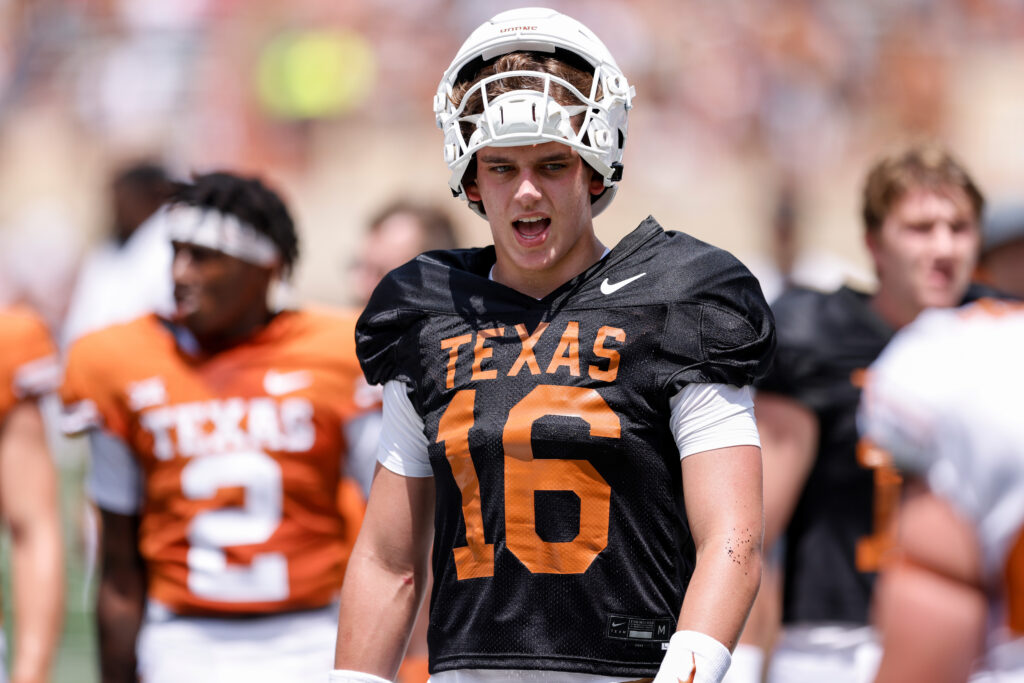
ARCH MANNING , 21
TEXAS FOOTBALL
Despite a surname equivalent to quarterback excellence, Texas Longhorns quarterback Arch Manning — Eli and Peyton Manning’s nephew — faced his share of adversity. Following a redshirt freshman season and a campaign playing second-in-command to Quinn Ewers, Manning has proven his ability via flashes of potential and resilience in pursuit of greatness.
Heading into his sophomore season, Manning is expected to have more minutes on the field. His NIL valuation is $6.8 million, courtesy of deals with Panini, Red Bull, EA Sports, Warby Parker and Raising Cane’s.
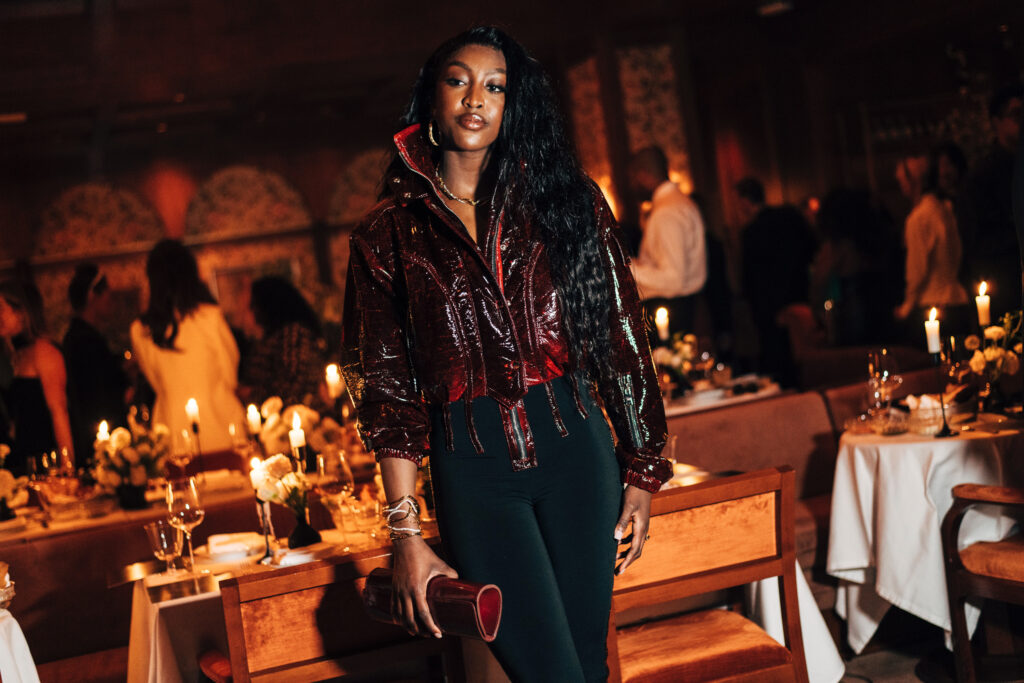
FLAU’JAE JOHNSON, 21
LSU BASKETBALL
Flau’jae Johnson’s NIL portfolio is nearly as impressive as her on-court skills. Through three seasons in Baton Rouge, the LSU star has shown dynamic scoring and position versatility, averaging 18.6 points and 5.6 boards as a junior.
Off the court, Johnson’s flair caught the eyes of Puma, Amazon, JBL, Experian, Oreo, Powerade, Samsung and Meta. The Savannah, Georgia, native has an NIL valuation of $1.5 million heading into her final season in purple and gold
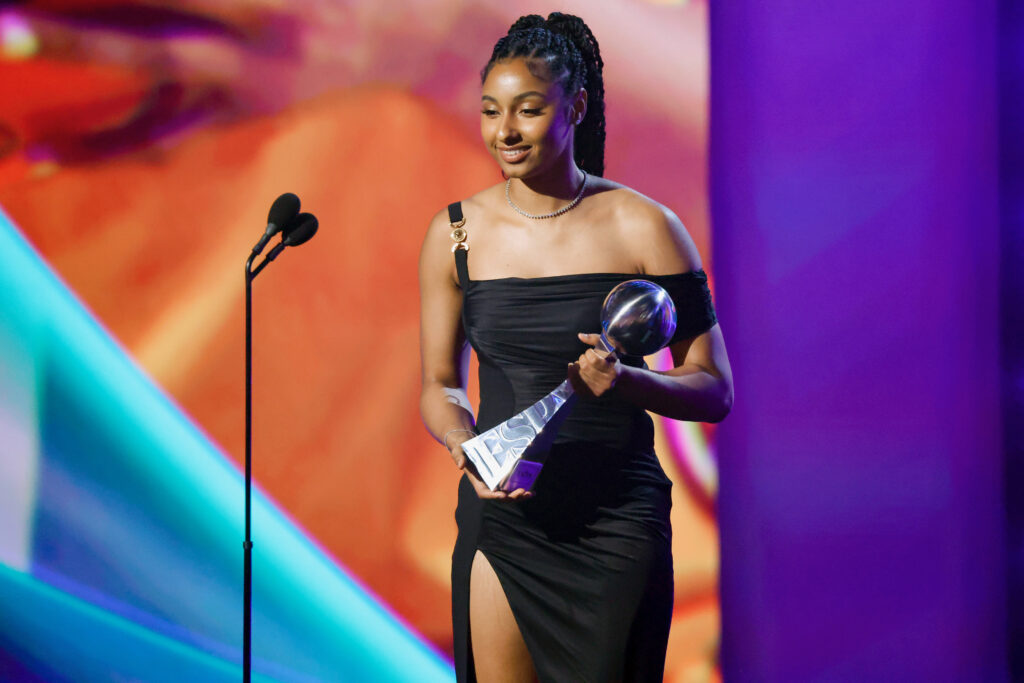
JUJU WATKINS, 20
USC BASKETBALL
Despite her team losing 76-69 to the Iowa Hawkeyes in February 2025, USC Trojans guard JuJu Watkins showed just how bright her star is with 27 points, five rebounds and three assists. In only her second year in the NCAA, the Los Angeles ace has already made her mark in the ever-growing women’s game.
While Watkins is not eligible for the WNBA Draft until 2027, the gap means more opportunities for her to grow her brand in college. Her impressive season caught the eyes of partners Nike, State Farm, Fanatics, Gatorade, Pottery Barn Teen, Mondelez, United Airlines and Spotify.
Watkins’ NIL valuation is currently at $739,000 but would likely grow as her career continues to blossom under the California sun.
CARSON BECK, 22
MIAMI FOOTBALL
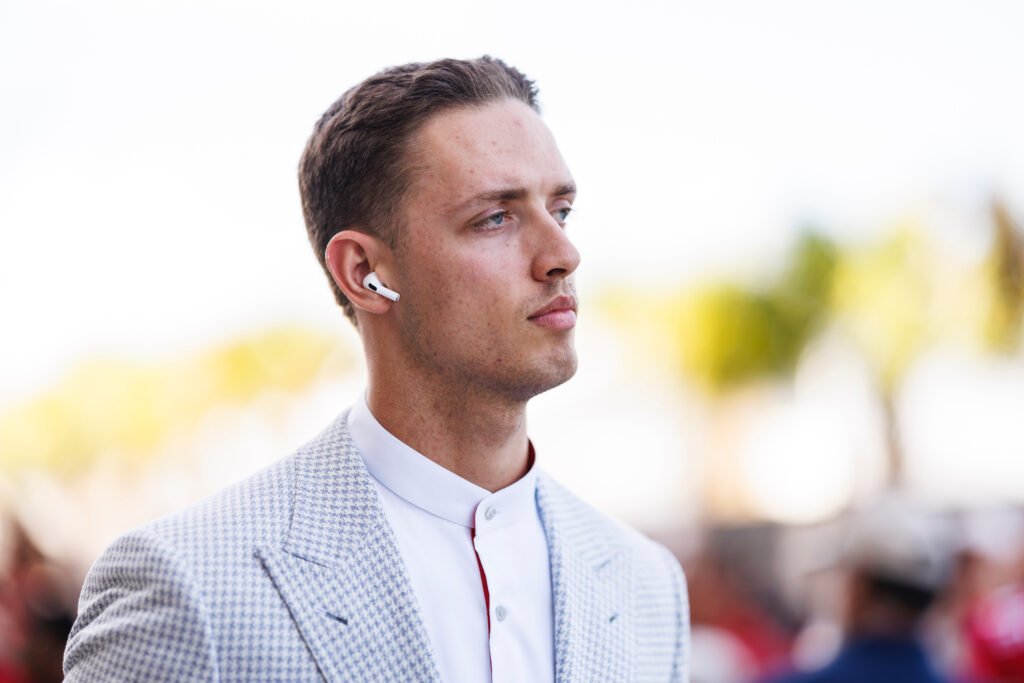
As he heads to the University of Miami after five seasons with the Georgia Bulldogs, Carson Beck is already one of the most-watched college athletes.
Beck’s marketability is a combination of quarterback ability and social media popularity parlayed into TikTok videos made with his influencer ex-girlfriend and former Hurricanes hooper Hanna Cavinder. On top of existing partnerships with The Dairy Alliance, Powerade and Beats by Dre, Beck signed a lucrative NIL deal to join the Hurricanes, worth between $3 million and $4 million.
Overall, Beck’s valuation is at $4.9 million, per On3.
JEREMIAH SMITH, 19
OHIO STATE FOOTBALL
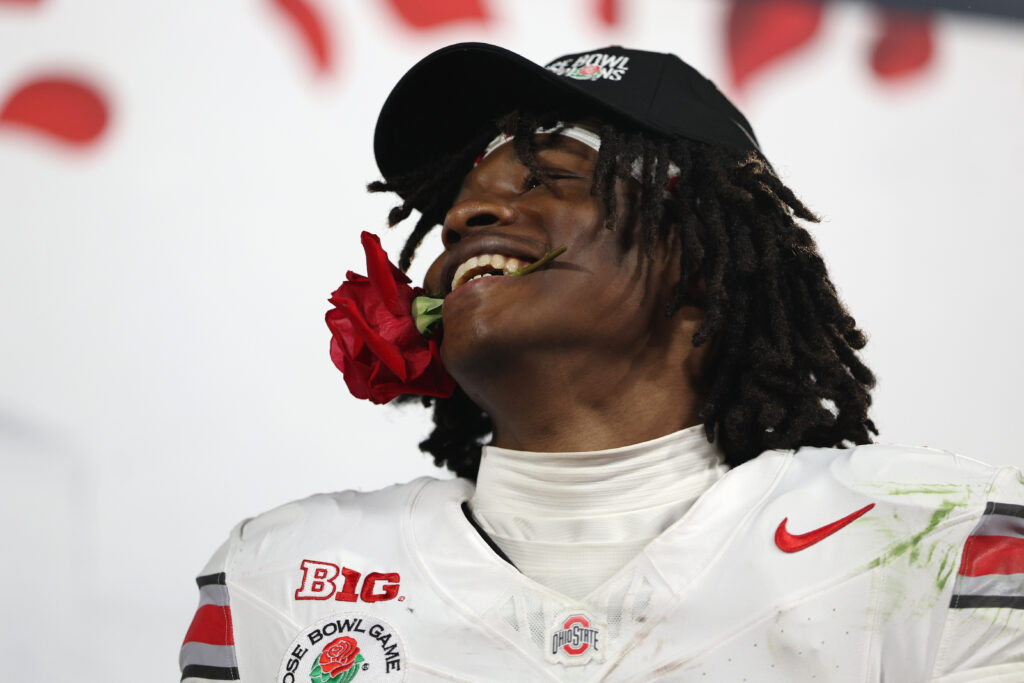
Buckeyes wide receiver Jeremiah Smith proved to be a pivotal part of Ohio State’s national title-winning team this past season. As a freshman, Smith made 76 receptions for 1,315 yards and 15 touchdowns, including one in their championship game against Notre Dame.
After kicking the doors open in his freshman season, Smith shows no sign of slowing down. Brands are capitalizing on his momentum by providing opportunities outside the stadium. The wideout’s notable partnerships include Adidas, Nintendo, Red Bull and Lululemon, with his valuation adding up to $4.2 million.
AJ DYBANTSA, 18
UTAH PREP BASKETBALL
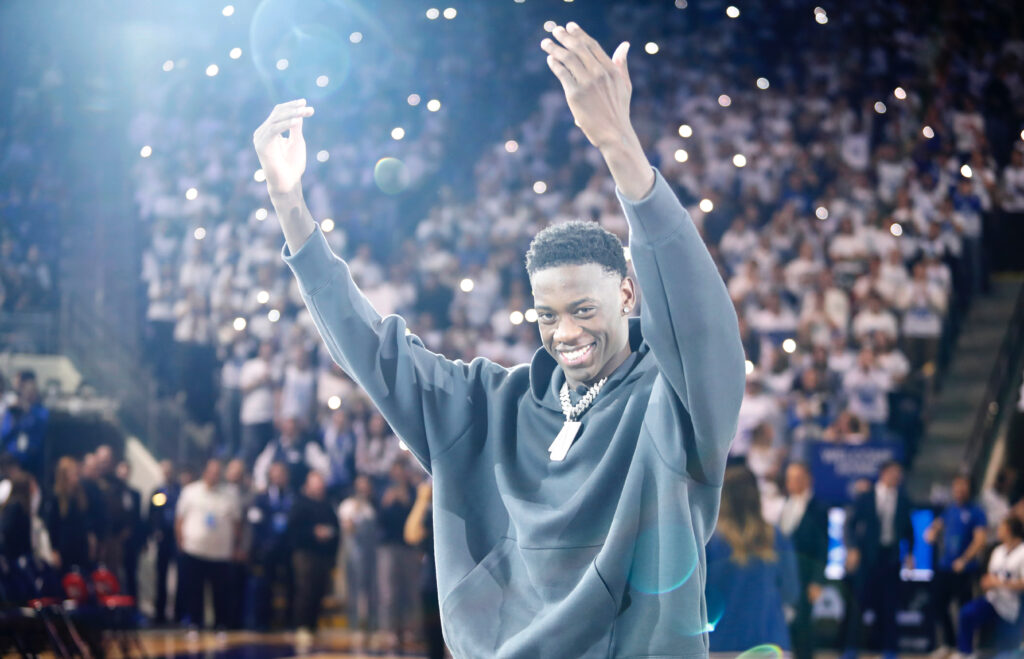
AJ Dybantsa is yet to step into the collegiate ranks, but
he’s already adding significant value to his NIL portfolio. The No. 1 recruit in high school basketball committed to BYU after a stellar high school career spread between St. Sebastian’s School in his native Massachusetts, Prolific Prep in California and Utah Prep.
The explosive forward and McDonald’s All-American secured a historic multi-year, reportedly eight-figure agreement with Fanatics Collectibles, focused on trading cards and memorabilia. Dybantsa also has partnerships with Red Bull and Nike, bumping his NIL valuation to $4.1 million.
GARRETT NUSSMEIER, 23
LSU FOOTBALL
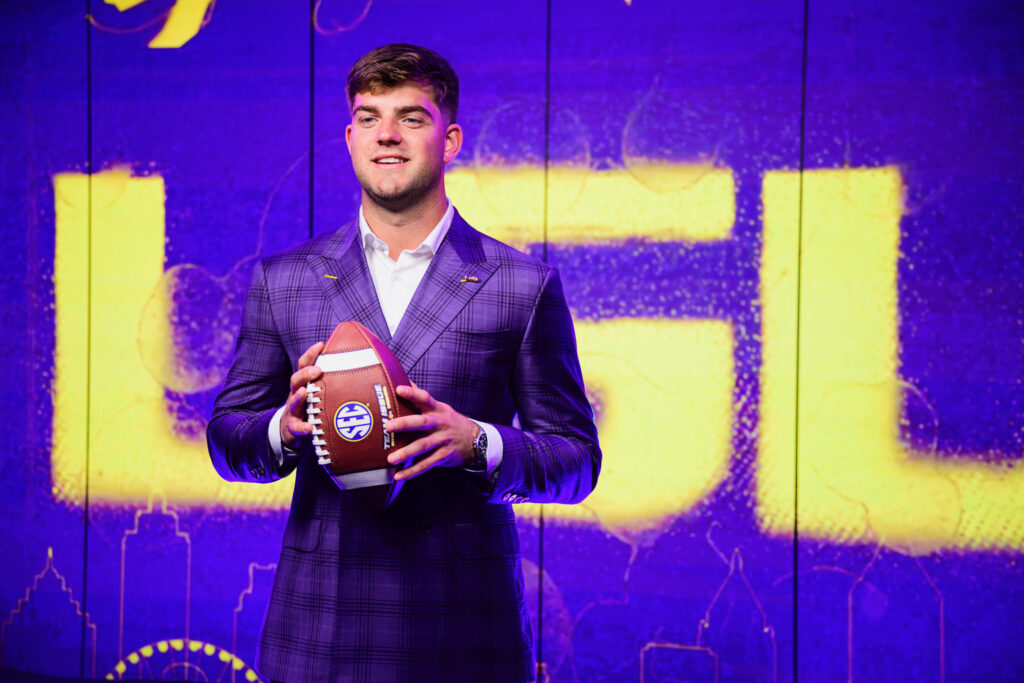
Fifth-year quarterback Garrett Nussmeier of LSU is returning after a masterful season in which he orchestrated 29 touchdowns for the Tigers.
After leading LSU to a 9-4 campaign, Nussmeier strengthened his $4 million valuation by signing with Nike in September, shortly before his final college season. The Nike deal added to his existing partnerships with Powerade, Raising Cane’s, EA Sports, Mercedes-Benz of Baton Rouge and T-Mobile.
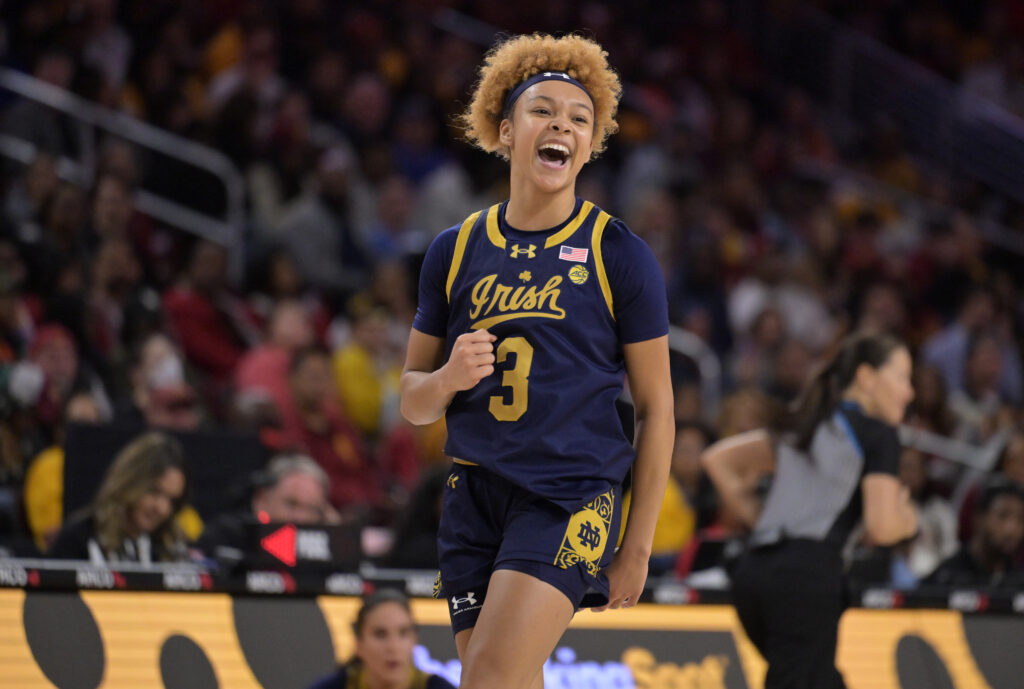
HANNAH HIDALGO, 20
NOTRE DAME BASKETBALL
With an estimated NIL valuation of $1 million, Notre Dame’s Hannah Hidalgo is one of the many rising stars in women’s hoops. Now entering her junior campaign for the Fighting Irish, Hidalgo partnered with Red Bull, New Era, Topps, the Aloft South Bend hotel chain and VKTRY.
She also expanded her horizons by signing an NIL deal with the Unrivaled 3-on-3 basketball league, spearheaded by some of the WNBA’s biggest stars.
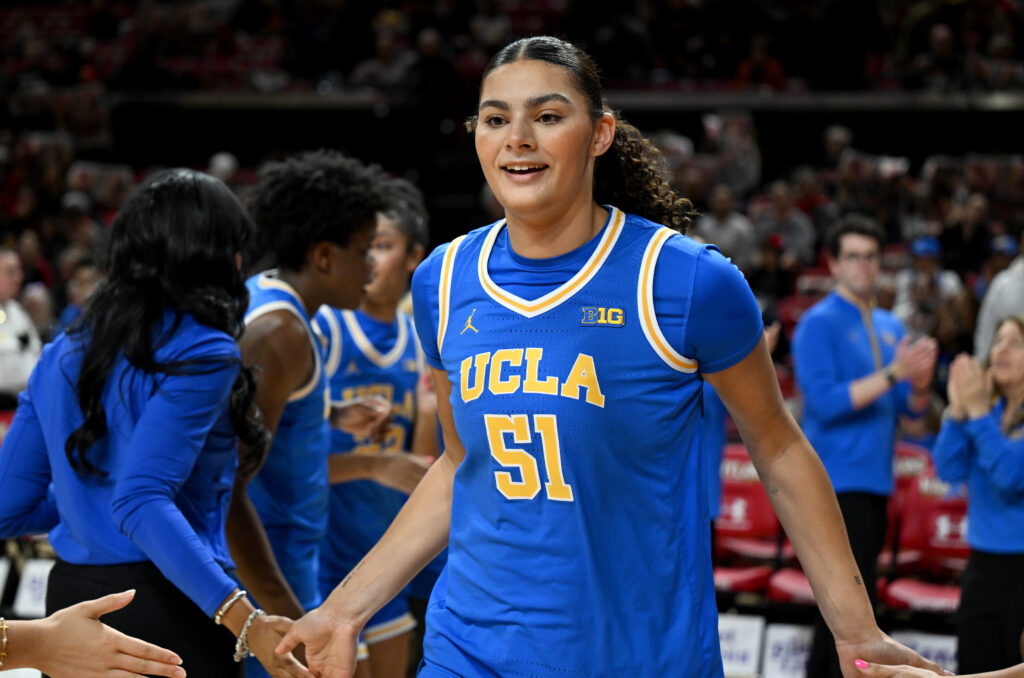
LAUREN BETTS, 21
UCLA BASKETBALL
A former Stanford standout, transferring to UCLA proved to be a good move for Lauren Betts, who has shone on and off the court since joining the Bruins. Apart from her impressive 20.2 points and 9.5 rebounds per game as a junior, Betts is closing in on seven figures, with her NIL valuation estimated to be around $679,000,
per On3.
Like Hidalgo, Betts joined her idols on Unrivaled to add to her impressive portfolio of NIL deals. Her partnerships include Under Armour, C4 Energy, Hollister, TurboTax and Stanley 1913.
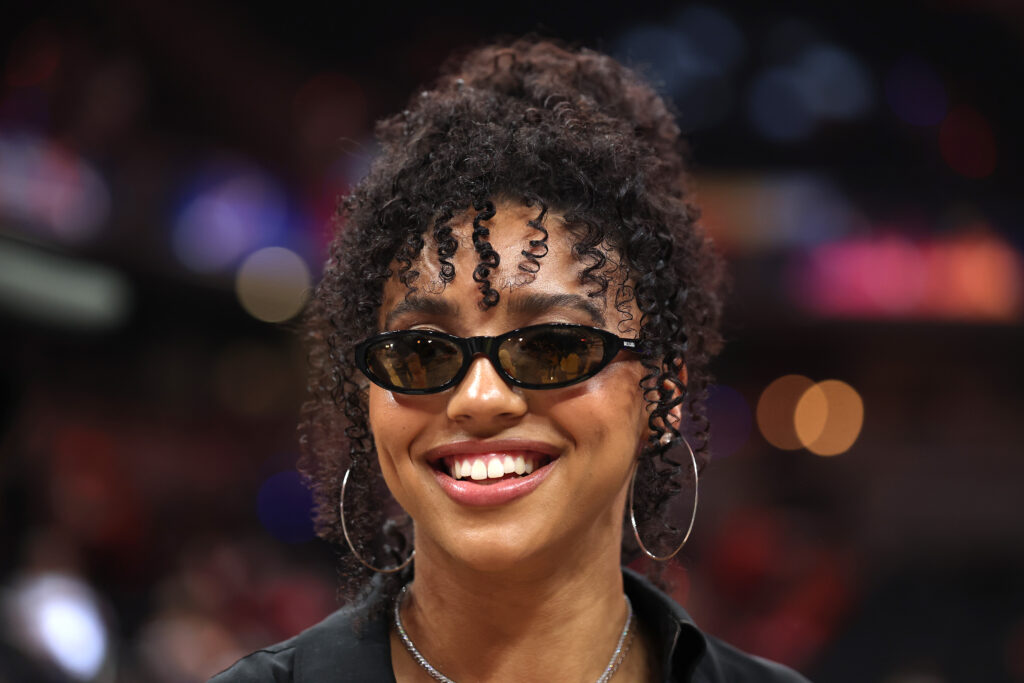
AZZI FUDD, 22
UCON BASKETBALL
UConn Huskies guard Azzi Fudd continues to find success with the program as she prepares to eventually join her girlfriend and former teammate, Paige Bueckers, in the WNBA.
Fudd was instrumental in the team’s national title win in April of this year, with 13.6 points per game. Her basketball prowess and off-court fashion sense grabbed the attention of consumer, apparel and beauty brands alike, inking deals with Chipotle, Under Armour, Bose, Buick and Paula’s Choice skincare.
Photo Credits
Harry Howe
Steph Chambers
G Fiume
Frazer Harrison
Jayne Kamin-Oncea
Tim Warner
Georgia Jones/LSU/University Images
James Gilbert
Alyssa Greenberg/WWD
Chris Gardner
Getty Images