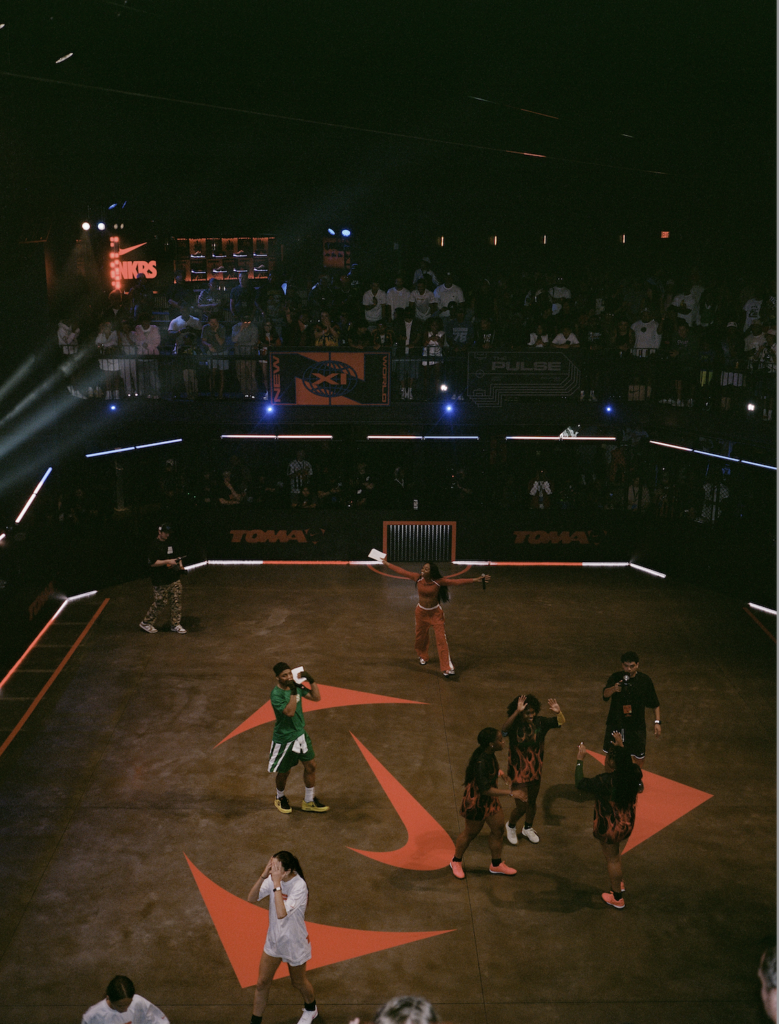

On an early April night in Atlanta, stylish twentysomethings — men in ankle-grazing leather shorts and long dreadlocks stood shoulder to shoulder with women in oversized blazers — crowded into The Eastern, a 2,200-capacity concert venue known for hosting acts like Big Boi and Thundercat.
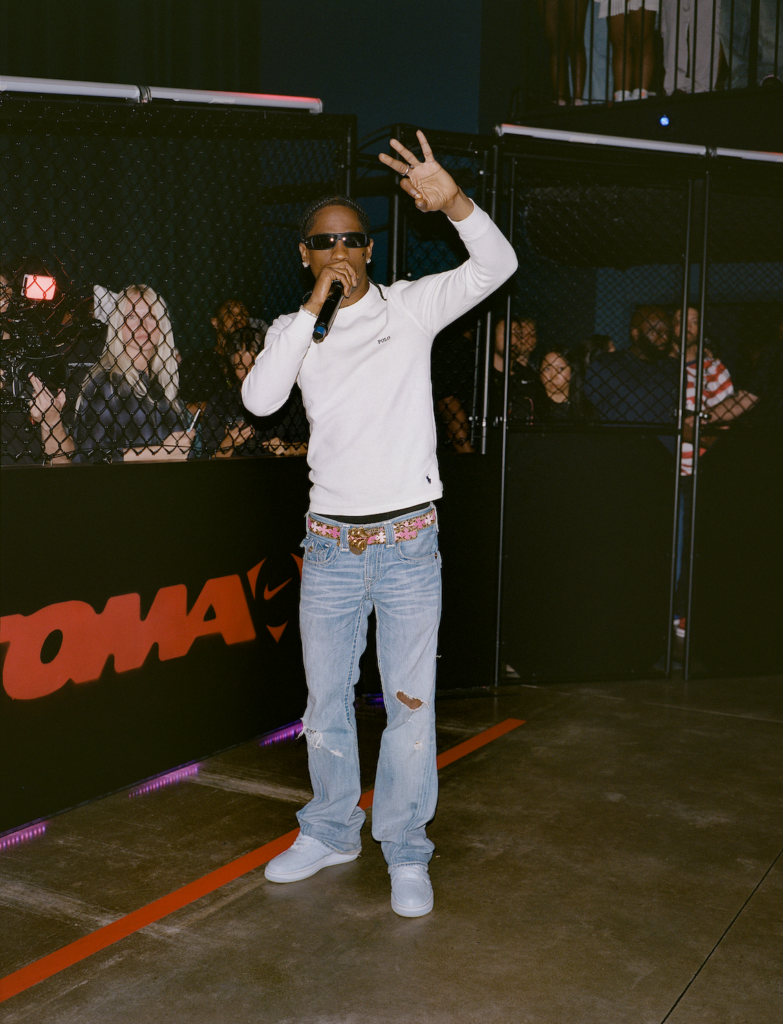
A DJ warmed up the room. Then, late in the night, Travis Scott made a surprise appearance. Wearing a white long-sleeve tee, wraparound sunglasses and low-slung denim fastened with a Chrome Hearts belt, he grabbed the mic and sent the crowd into a frenzy.
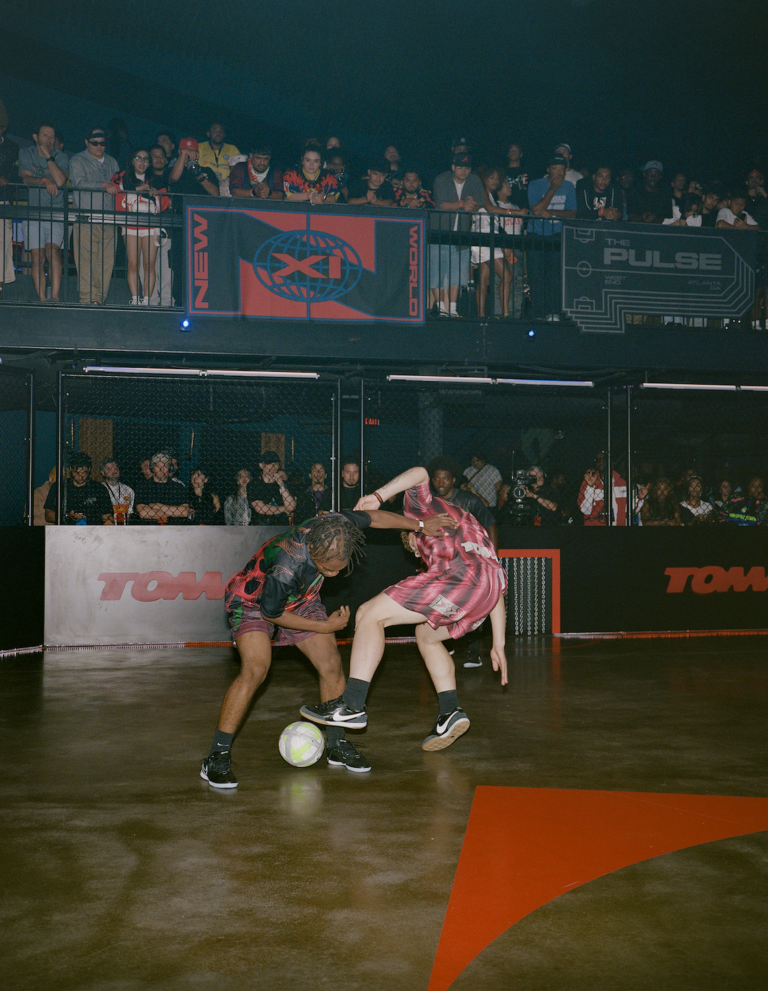
But this wasn’t a Travis Scott concert. He was there to emcee a youth street soccer tournament, prowling the caged pitch with the same chaotic energy he brings to his sold-out stadium shows.
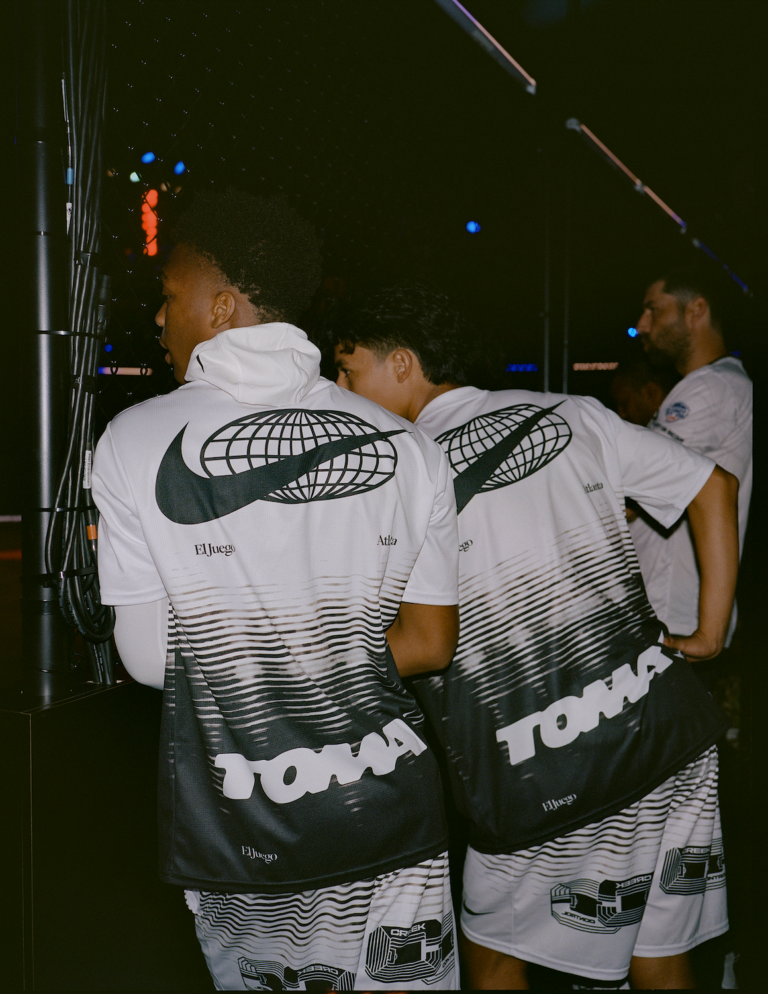
The event was part of Toma El Juego or “Take the Game” in Spanish, Nike’s fast-growing street soccer platform: small-sided competition that’s infused with music, fashion and local culture through celebrity appearances, rappers like Scott and Young Miko, and athletes like Ronaldinho and Vinicius Júnior, alongside sneaker previews such as Travis Scott x Nike Phantom Soccer Shoe and collaborations with labels including Kids of Immigrants, Paisa Boys and Badfriend. Plus night-market-style activations featuring local artists, barbers, designers and jersey-customization booths.
Toma Meets the Market
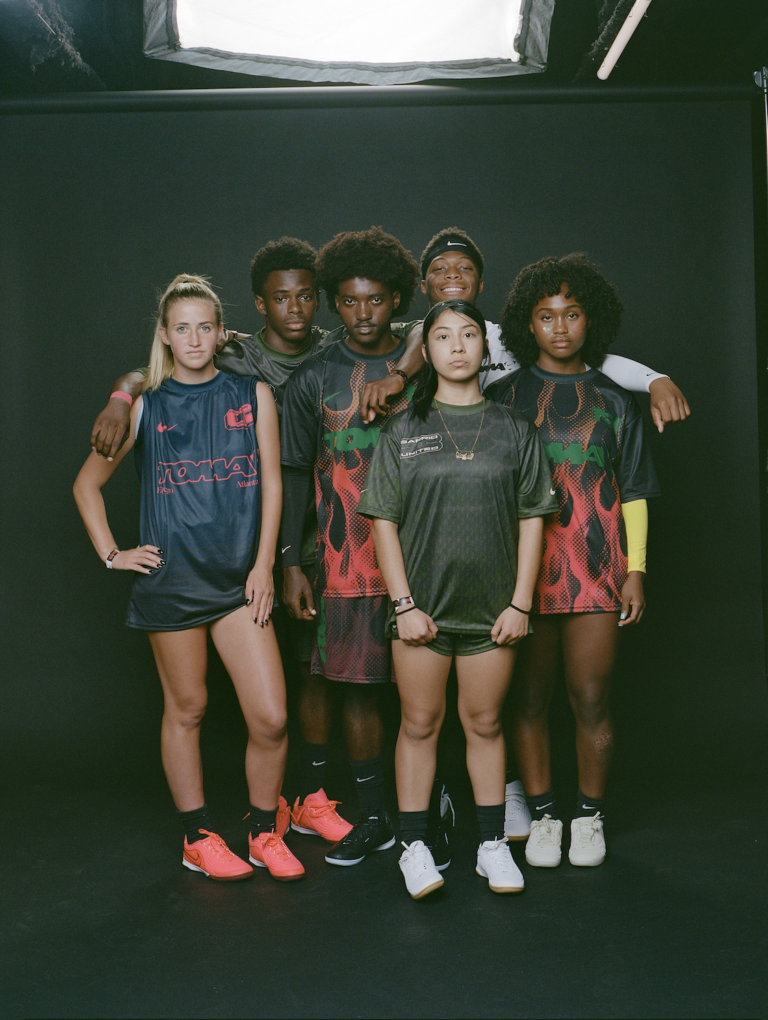
Launched in Los Angeles in 2025, the platform stages neighborhood qualifying tournaments across cities, including Atlanta, Seoul, Mexico City and Lima, culminating in stylized multi-format finals (3v3, 1v1) where teenage boys and girls represent their neighborhoods and diasporic communities. In Atlanta, local coaches recruited team members based on skill who played for areas including South Atlanta, Clarkston and Marietta, with custom Nike kits referencing everything from Latin Sunday league culture to the city’s Haitian and refugee communities.
To know why Toma exists is to understand both the changing economics of soccer in America and Nike’s belief that the sport’s future in the US extends well beyond the pitch. Soccer culture is music, fashion and lifestyle as much as it is the sport — a shift Nike rode once before, in basketball.
It was called City Attack. The strategy Nike used to reshape basketball culture in the 1990s when the company moved away from one-size-fits-all national advertising and embedded itself inside specific urban scenes — sponsoring New York streetball tournaments, building campaigns around cultural figures like New York legend Bobbito Garcia, and embracing the Air Force 1 after it had already become woven into the city’s hip-hop and fashion culture. It connected Nike to the streets, made it cool to the most influential people in culture and laid the groundwork for a basketball business — Nike Basketball and Jordan Brand combined — now worth billions annually.
“It’s taking a bit of a page from that playbook,” said Nuno Silva, VP/GM of Nike Soccer North America. But what’s true then is true now: To have authenticity, you can’t buy your way into a culture — you have to earn it. “You can’t just come in and want to own it. We cannot be there to extract value. We need to be there to provide value,” Silva added.
The timing couldn’t be more perfect: Soccer is booming in America. Ampere Analysis data, reported by The Economist in November 2025, shows the sport has surpassed baseball as Americans’ third-favorite sport for the first time. At the same time, the country’s soccer-loving Latino population, which now accounts for nearly one in five Americans, drove more than 70 percent of US population growth in 2023, according to Census Bureau estimates released in 2024 — reshaping both the audience and future talent pool of the game.
Growing Pains
But as rosy as soccer’s future in America may look commercially, the sport has long struggled to establish itself as a core part of the country’s cultural identity — a gap rooted in a deeper structural problem.
“The US is the greatest exporter of culture and entertainment. But you go into the US game and there’s not really an identity,” said Silva. “We know how kids in Brazil play: at the beach. We know how kids in Spain play: in parks. The game here [in the US] is very pristine. The game doesn’t exist on the streets. It’s very suburban.”
In April 2026, the Aspen Institute gave that problem a name: “soccer deserts.” A report examining the Bronx, Brooklyn, Queens and North Jersey found roughly 250,000 children already playing soccer across the region, with another 150,000 lacking meaningful access to places to play. Youth sports spending, meanwhile, has risen 46 percent since 2019, and nearly a third of young players surveyed said the worst part of soccer was the cost. The accessibility disparity is particularly stark around transportation: 86 percent of high-income children are driven to practices and games compared to just 21 percent of lower-income kids.
If pay-to-play is soccer’s access problem, dropout may be what thwarts retention. According to the American Academy of Pediatrics, as many as 70 percent of adolescent athletes quit organized sports by age 13, driven by burnout, overuse injuries, early specialization and increasingly professionalized youth systems.
“It feels very stifled, very scripted, very organized — robotized. The genius was lost,” Silva said. “How do you give them a space to just be better? To be free?”
Beautiful and Better
Toma is designed, at least in theory, as an antidote to many of those pressures. Participation is free. Players qualify through neighborhood tournaments rather than conventional club pipelines, with talent agents and development staff — including representatives from US Soccer and the National Women’s Soccer League — scouting players at events. The bet is that this can surface talented high-school-age players who might otherwise fall outside the traditional American development machine.
“I never thought I would get opportunities like this,” said Shafi Manzi, who hopes to play professionally. “I hope to get something out from soccer that could not only just help me, but help my family and community where I came from.”
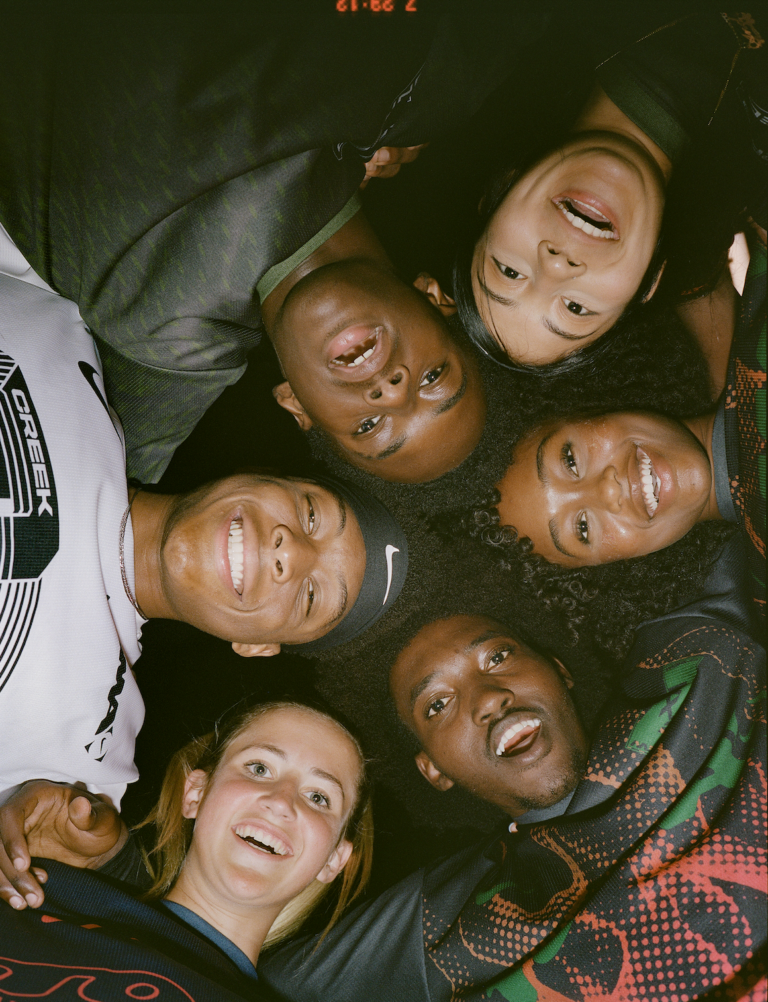
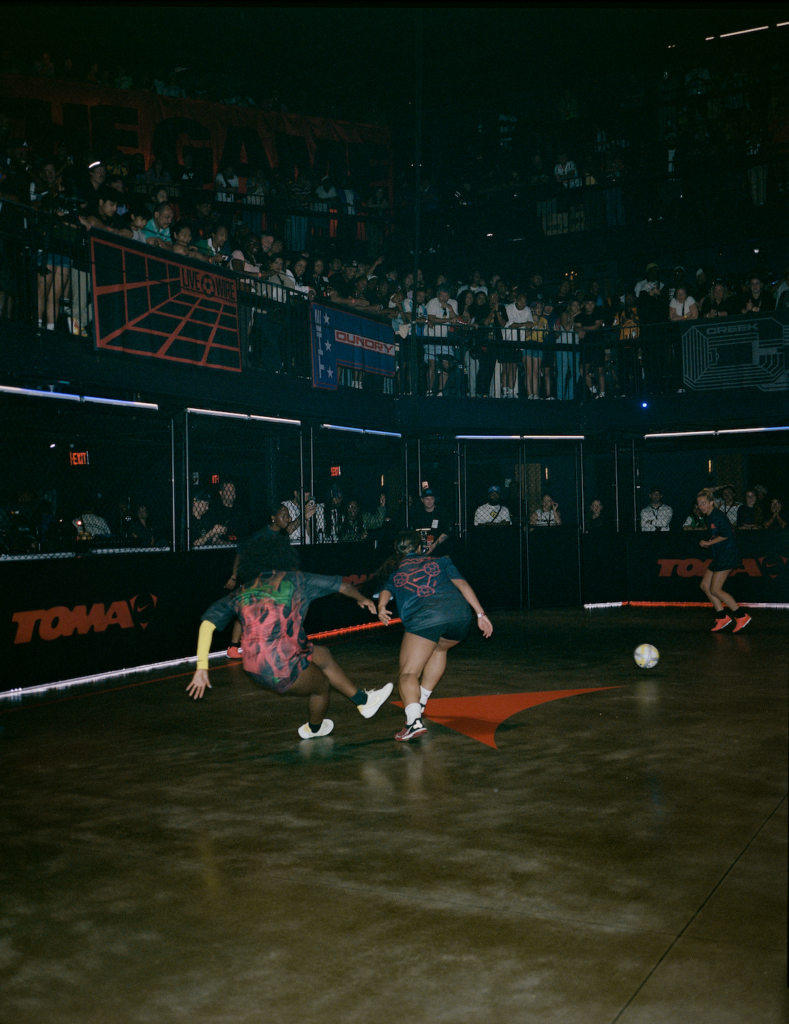
The games are fast-paced, emphasizing improvisation, creativity and street-style flair over rigid systems and sideline coaching. “I just like doing any style, any trick when it comes out — whenever my mind feels like it’s right,” said Andrea Rodriguez Santana who picked up soccer at a young age. “I like getting good assists, setting up my teammates for bangers. It makes the energy really high — especially when y’all run at each other and celebrate together,” added Emory Pitt.
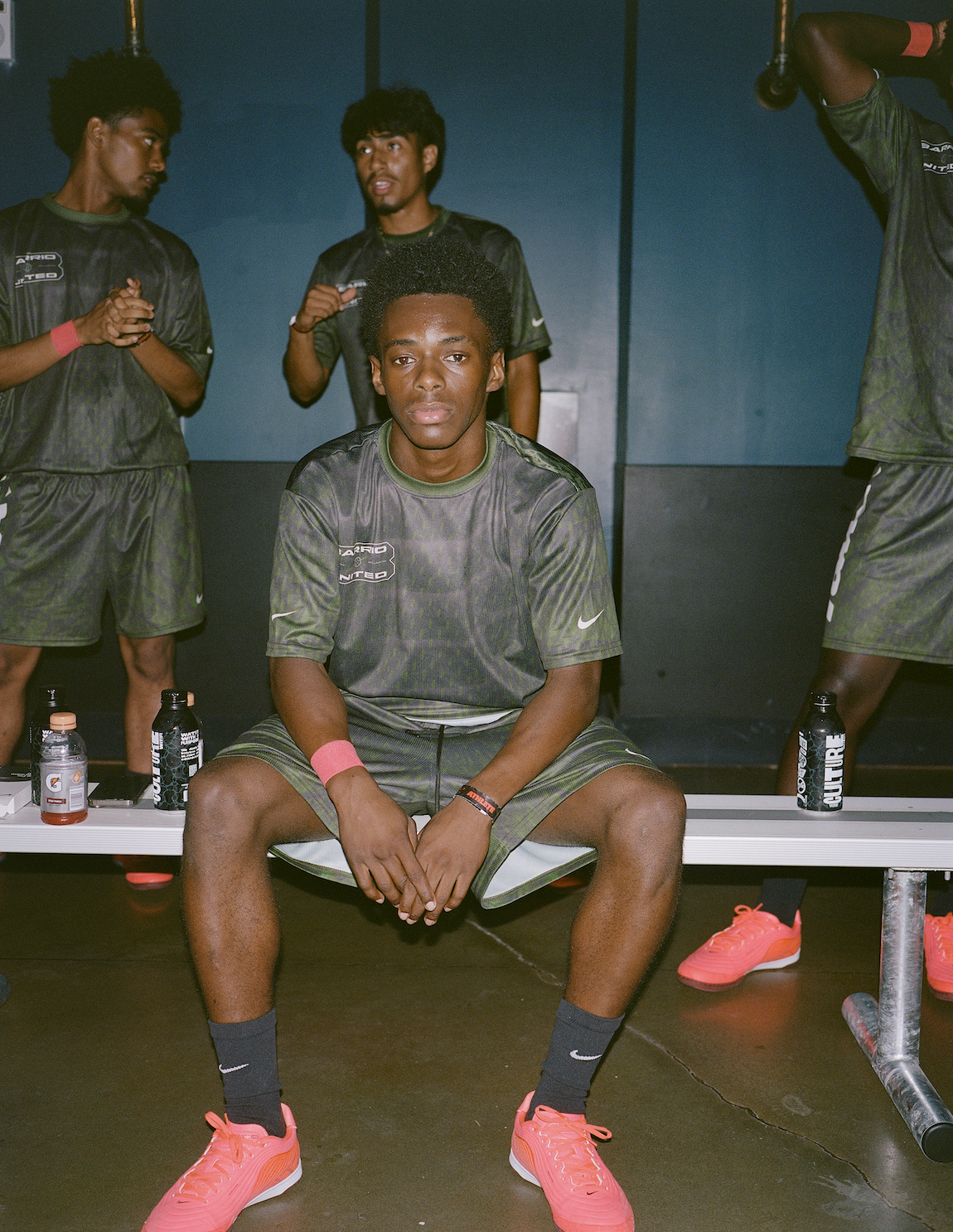
Toma’s pitch is simple: If the sport becomes more fun, expressive and socially magnetic, kids may stay in it longer. “I always enjoyed watching other people play, or other people watching you play. That community environment — everyone watching, people just waiting next,” said Bradlee Williams, who was recently pacing and listening to music as a pregame ritual. He was wearing the Nike Gato — a shoe players said they wear off the pitch too, the way previous generations grew up in Air Force 1s and SB Dunks long after leaving the basketball court and the skate park.
The Gato may follow in those footsteps. Nike — whose stock has fallen from roughly $165 a share in 2021 to around $45 today amid slowing growth and rising competition from newer performance brands — is executing its “Win Now” turnaround strategy, and searching for its next major growth engine.
“We’re living soccer’s golden decade in America,” said Silva. “The flow of what we have ahead of us in the next five years gives me chills — Men’s World Cup this year, the LA Olympics in 2028, Women’s World Cup returning to North America in 2031.”
If Nike is right, the next generation of American soccer culture won’t only come from manicured suburban complexes. It will come from wherever the kids decide to take the game.