
So much goes into creating a mascot. There’s a design, a backstory, a name and a personality, all of which come together in a performance. And each element is made up of countless details that can mean the difference between a beloved mascot or a reviled joke.
Certain mascots were no-doubt expertly planned, their concepts workshopped, their moves focus-grouped. Plenty, however, seem to have been developed on the fly. Clearly, there is no exact science here. Because regardless of the approach, there’s no telling how a mascot will be received until they’re in the wild, on the front lines, interacting with fans.
The job may be hard but the concept is simple: a mascot needs to rep the team, hype the crowd and not get too weird. Ultimately, if a mascot plays its role well, there are no lulls in the action and everyone leaves feeling good. Of course, there’s more to it than that. There are myriad elements just below the surface of its name, design and act that, in fact, make or break a mascot’s success; things like aligning with team values, helping fans feel connected to their city and adapting to whatever chaos ensues in the stands.
Some mascots check all the right boxes instantly. The prized few are immediately adored by hometown fans — some even make fans of their own. Take Ellie the Elephant, the New York Liberty’s mascot. Not only is the elephant a nod to New York’s circus history, when elephants came over the Brooklyn Bridge, but the name is a shout-out to Ellis Island. Throw in her signature twerking and a style that feels more in touch with a younger generation of fans — we see that Telfar bag and those custom kicks, Ellie — and it’s no wonder Brooklyn’s favorite elephant has the fans clamoring for more.
But there are others that, though they check the surface boxes, don’t check those elusive, intangible ones. These are the mascots that confuse fans more than excite them and exist in a strange limbo of neither being liked nor disliked. Others are downright loathed (sorry, King Cake Baby).
It’s a tough gig that’s too often thankless. Whether a mascot endears itself to the fans or becomes a lightning rod for negative feelings toward a team is well beyond anyone’s control. All of which means that when a mascot becomes part of the team lore, it’s something to behold.
Here we’ve compiled a short list of the most memorable mascots in (recent) sports history.
Squatch (Seattle SuperSonics)
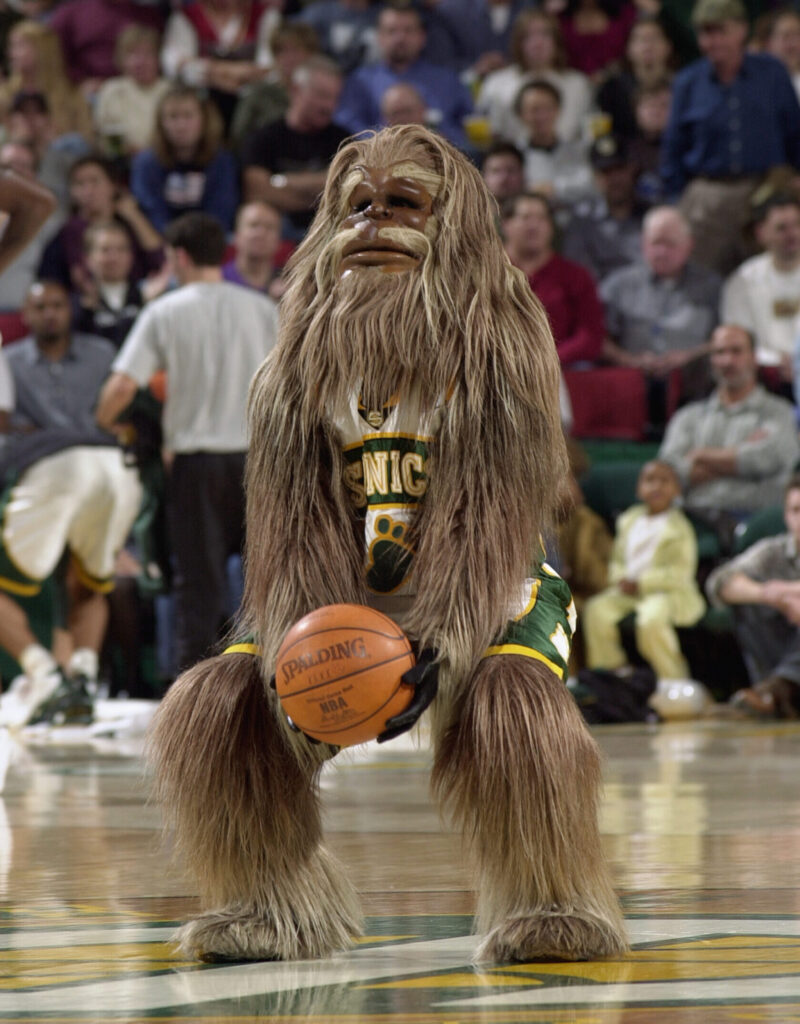
The Seattle SuperSonics was one of the most beloved teams in NBA history. It had Hall of Famers Lenny Wilkens and Jack Sikma, the tandem of Gary Payton and Shawn Kemp delivering next-level fast breaks and rim-rattling dunks, and even challenged the legendary Chicago Bulls for a title. It’s no wonder that anytime Adam Silver mentions expansion, NBA fans are clamoring to bring basketball back to Seattle.
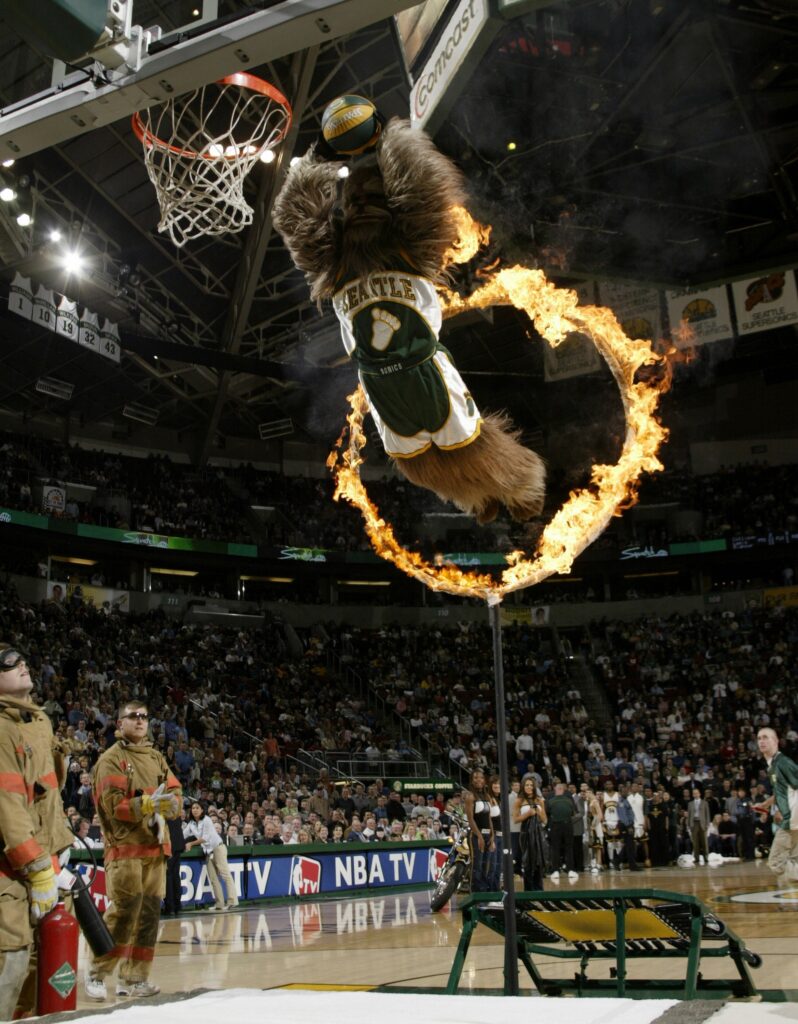
That local love in the Pacific Northwest wasn’t just a result of the players on the court. The Sonics really made an effort to put down roots, connect with the community and reflect the city back to its fans. Enter Squatch. Tapping into the rainy forests that populate Washington state and the lore of the famed and elusive mytho-monster Sasquatch, the Sonics came up with a mascot that instantly felt at home in the Emerald City. Once Squatch came out of hiding and hit the KeyArena, he leveled it up. He was a ferocious, risk-taking dunker who would fly off trampolines or jump off the top of 20-foot-tall ladders just to bring the crowd to its feet. Sadly, when the Sonics new owner moved the team to Oklahoma City, Squatch was retired, and his likeness remains the property of the city of Seattle. So if that expansion ever brings the Sonics back, keep your eyes peeled for Squatch making his way out of the forest.
Phillie Phanatic (Philadelphia Phillies)
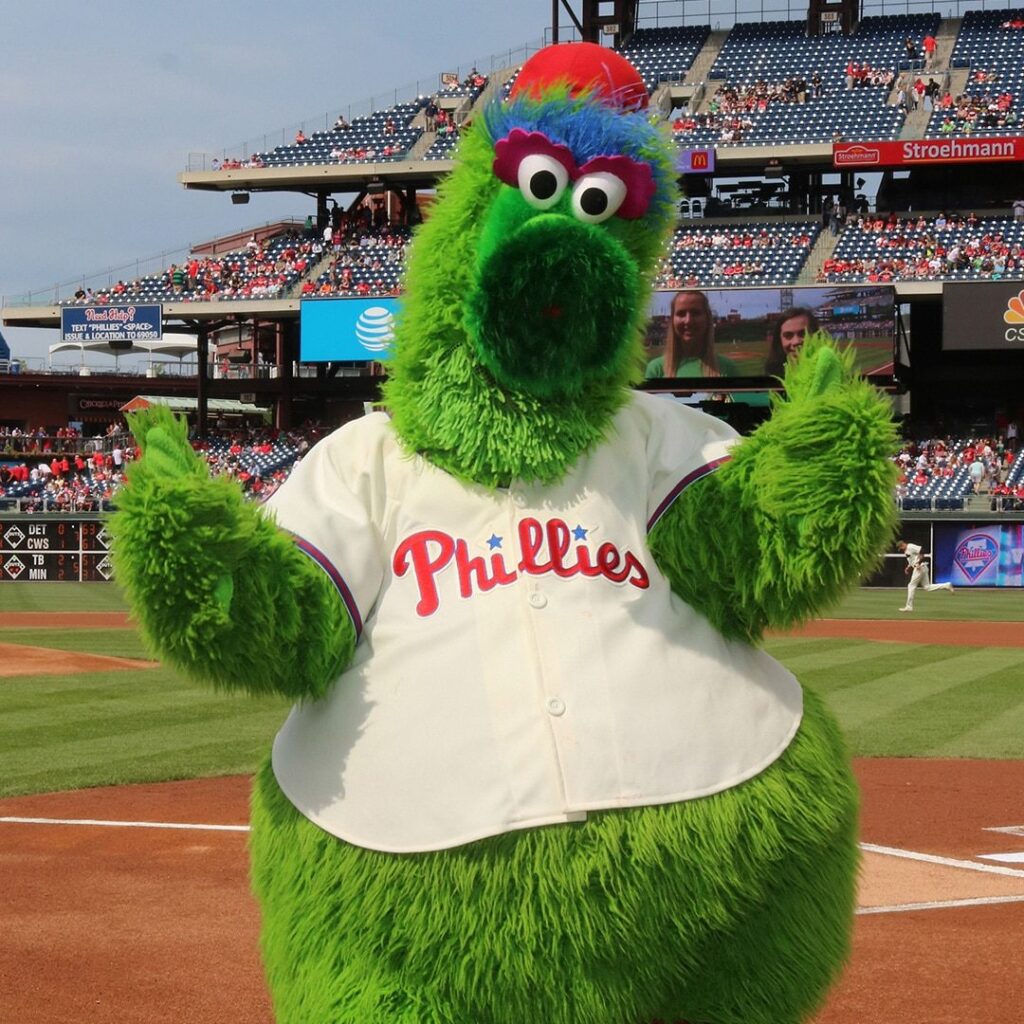
Philadelphia sports fans definitely have a reputation, and it’s not necessarily a good one. They’re known to be rough, critical, loud and willing to tell you exactly how they feel. Yet, no matter the mood, there’s one thing that always warms their hearts: a one-of-a-kind, green, furry creature
called the Phillie Phanatic. Absolutely beloved in the City of Brotherly Love, this mascot is all about the demeanor of the person inside the costume.
Rather than focus on Philadelphia’s classic iconography — the Liberty Bell and its rival cheesesteaks — the Phillies decided to cast all that aside and lean into whatever the Phanatic is, and, clearly, personality leads the charge. The family-friendly Phanatic spends the games speeding around the stadium on his ATV , dancing on top of the dugout and even engaging in some friendly taunting of opposing teams. It’s no wonder he’s often voted best mascot in Major League Baseball. And while fun (phun?) is certainly the Phanatic’s No. 1 priority, it’s worth noting that he was named second-sexiest mascot in baseball this year. While we’re not quite sure what the qualifications for a sexy mascot are, it’s a definite co-sign.
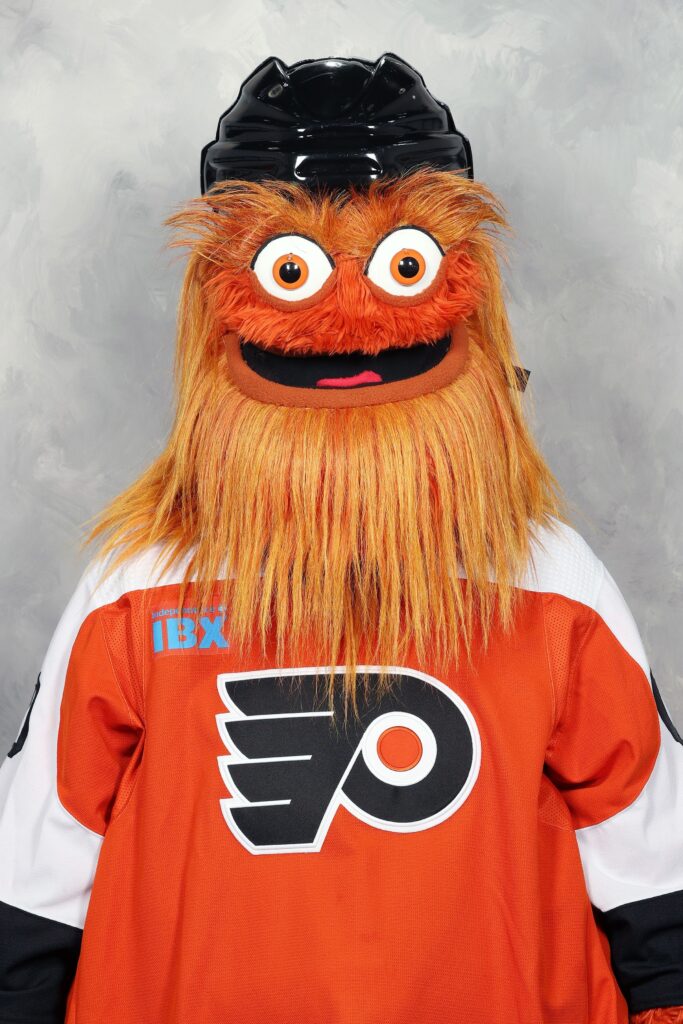
Gritty (Philadelphia Flyers)
Before the 2018 – ’19 NHL season, the Flyers was one of only two remaining teams in the entire NHL that didn’t have a mascot. When it finally got one, it didn’t go well. But this is a tale of two mascots: the “before Gritty” and the “after Gritty.” The orange, furry seven-footer is one of the rare mascots to transcend his initial reception and become an icon. Gritty’s introduction was a disaster. Fans called him “terrifying,” “hideous” and “horrifying.” The organization claimed that Gritty was the physical embodiment of the grit their city and its NHL team were known for. In person and on social media, the sporting world was wondering what the hell this thing was and who was responsible for it. (Remember, in 1968, Eagles fans at Franklin Field notoriously pelted Santa Claus with snowballs at halftime. Getting Gritty right wasn’t just a matter of branding, it was a matter of safety.)
It didn’t get better once Gritty hit the ice. In his first appearance, he wiped out while firing the T-shirt cannon into the stands. In his second appearance, he body-checked a fan during intermission and inadvertently shot a Flyers staffer in the chest with the same T-shirt cannon that had knocked him down in his first game. Things were not going well. That’s when Gritty dug in and showed the grit. Through a series of clever social media posts, a challenge to the rival Pittsburgh Penguins mascot and an appearance on The Tonight Show Starring Jimmy Fallon, somehow Gritty won over the fan base — and the city. Suddenly, Gritty was the most followed NHL mascot on Twitter and a local hero. Philadelphia embraced Gritty as one of its own. Despite all odds, he’s now one of the most beloved mascots in sports.
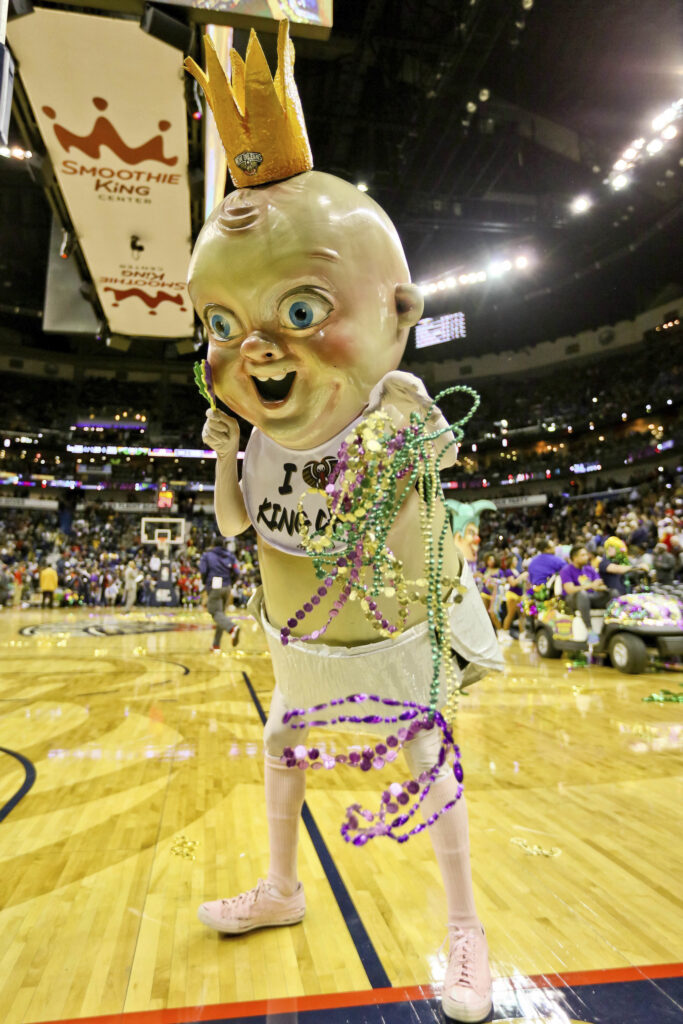
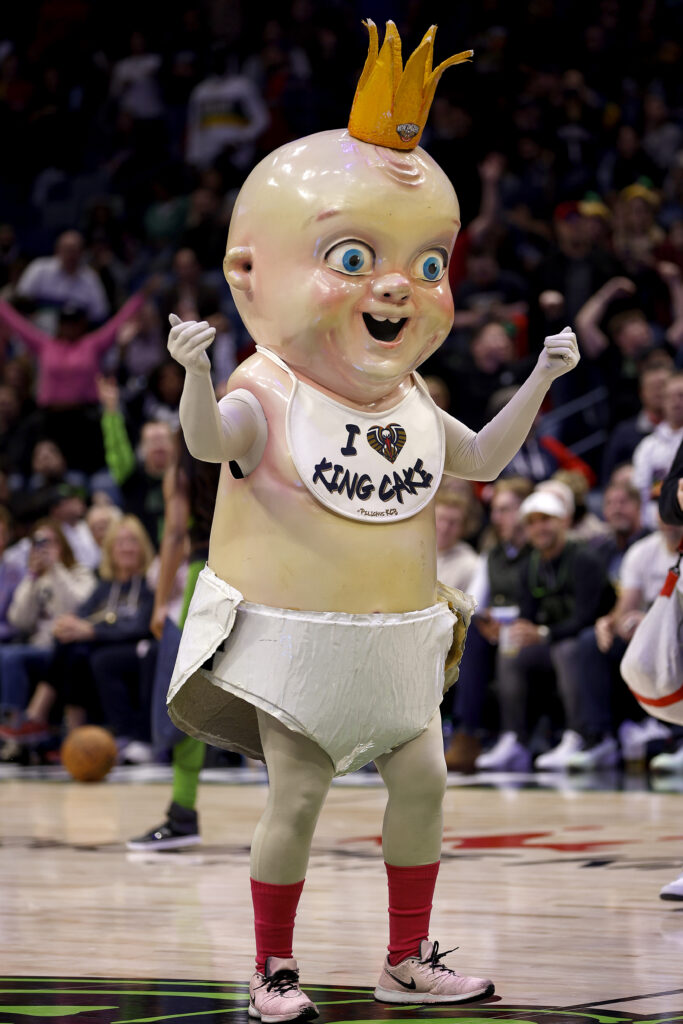
King Cake Baby (New Orleans Pelicans)
New Orleans is a city rich with history. Settled by the French, the city is imbued with a variety of cultures and traditions, none of which is bigger than Mardi Gras. A classic staple of Mardi Gras celebrations is the King Cake. There are various styles, but what makes a King Cake a King Cake is the small, plastic baby inside it that is said to bring good luck to whoever finds it.
So, naturally, the Pelicans made King Cake Baby its mascot. While tapping into local customs could, theoretically, be laudable, this mascot was a miss, and super-sizing the baby to monstrous and potentially terrifying proportions did not earn the good will of the community. Not only in size but in texture, Baby is off: Eschewing the soft, furry look of most mascots, Baby has a hard, shiny head and torso. Baby’s eyes are wide with terror. And let’s not forget he is wearing a diaper.
Sure, the Pelicans tapped into a beloved tradition, but the team ignored nearly every other rule of mascot-making. (If your baby mascot is making real babies cry, it might be the wrong choice.) King Cake Baby will definitely not be forgotten, especially for its cringe-inducing ability to send fans running.
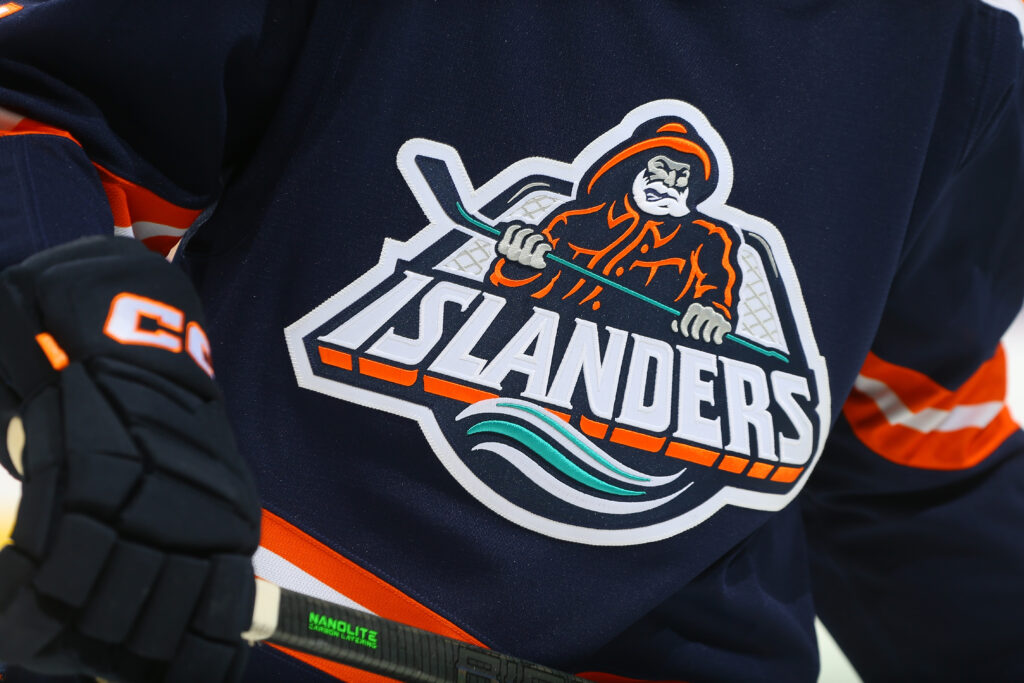
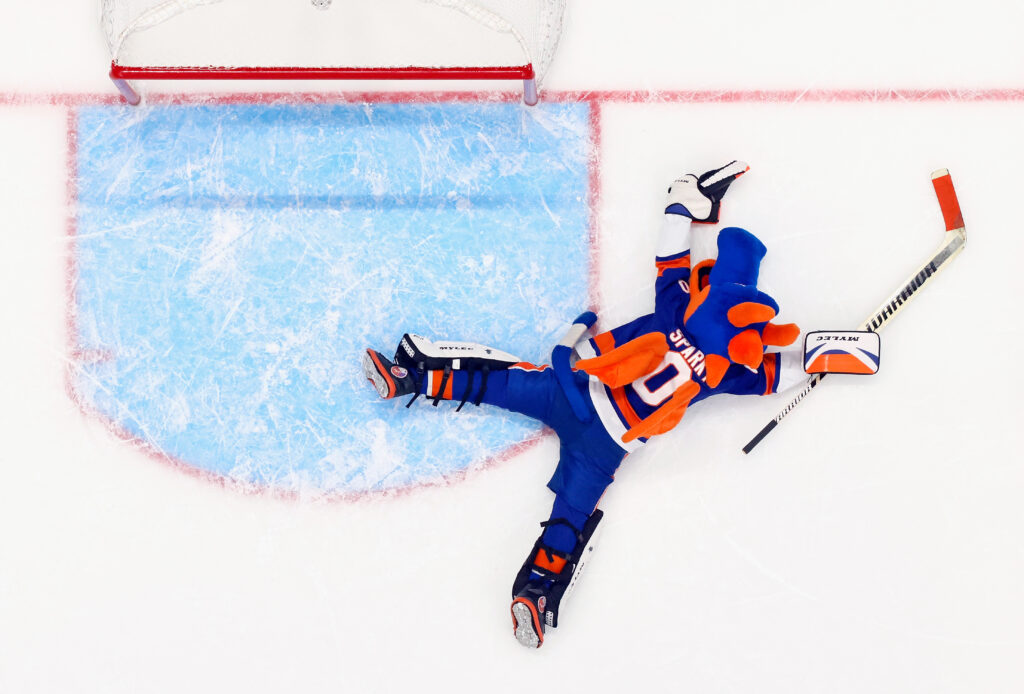
Nyisles (New York Islanders)
The Stanley Cup–winning glory years were well behind the 1995 Islanders. The Nassau Coliseum was rarely sold out. The team’s merch sales were abysmal. No one could argue that it was time for a major rebranding. So, the corporate team for the Isles locked themselves in a room and emerged some time later with what only an echo chamber could have produced: Nyisles, the rain-slicker-wearing fisherman. Today, it’s considered one of the biggest sports marketing disasters of all time.
Embracing Long Island’s sea-faring culture isn’t the worst idea, but an older gentleman in a fishing hat isn’t getting anyone fired up, at least not in a positive way.
Fans, already disgusted with the new logo, were absolutely vicious in the mascot’s debut. Comparisons were made to Gorton’s fisherman; fans and rivals alike chanted “we want fish sticks.” He was booed mercilessly. A 10-year-old was quoted by the New York Post as saying he would “like to assassinate him,” and another kid tried to kick him in the crotch. Poor Nyisles was caught in the squall.
Two seasons later, the logo and the original version of Nyisles were retired and buried at sea. But he’s far from forgotten. If you want to rock the boat with an Islanders fan, bring up the fisherman.
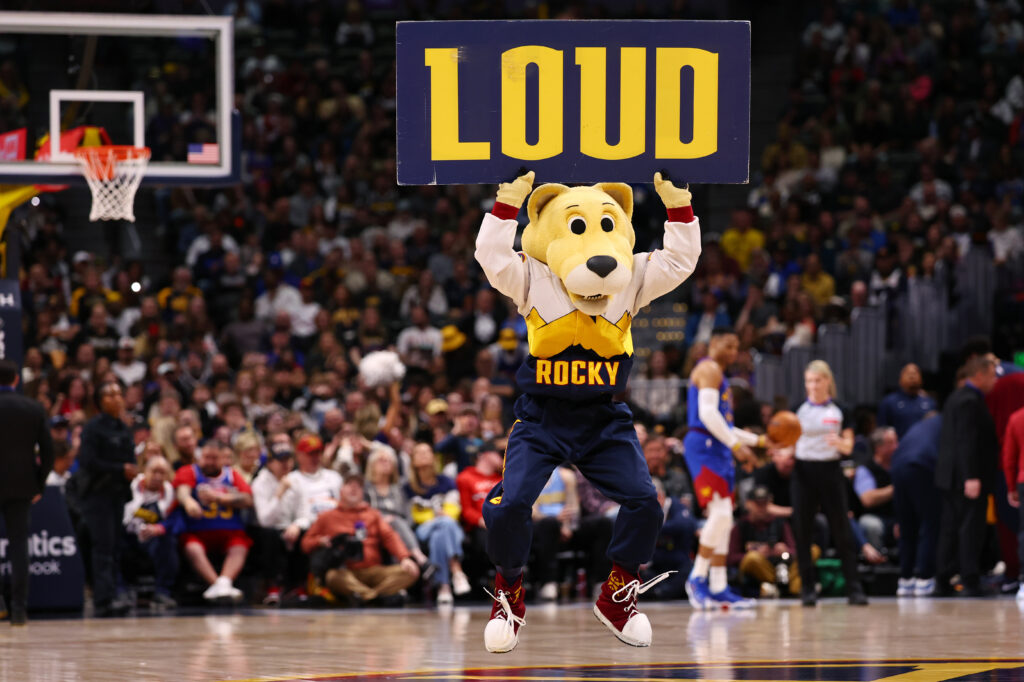
Rocky the Mountain Lion (Denver Nuggets)
Let’s get the easy part out of the way. Rocky is a perfect mascot. The bright yellow mountain lion is yoked in comparison to most mascots and his entertaining and athletic act has made him a staple of Nuggets home games and a beloved figure in the Mile High City. He’s even in the
Mascot Hall of Fame. Rocky’s in-game antics include walking on stilts, dunking and repelling from the rafters during the pre-game. Rocky is one of the most respected mascots in the game, and with that respect comes a whopping $625,000 salary (per reporting by Sports Business
Journal).
What Rocky is not is invincible. On one fateful day in 2013, as Rocky descended from the rafters, as usual, he appeared … lifeless. Fans watched in confusion as Rocky slowly made his way down, hands and feet dangling, limp at his sides, before he collapsed to his side. When he hit the court, the spotlight went off.
Later, it was announced that Rocky had had the wind knocked out of him and would be okay. Regardless, fans were no doubt traumatized after seeing what is undoubtedly one of the most unsettling mascot moments in sports history. And, unfortunately for him, the one he will likely most be remembered for.
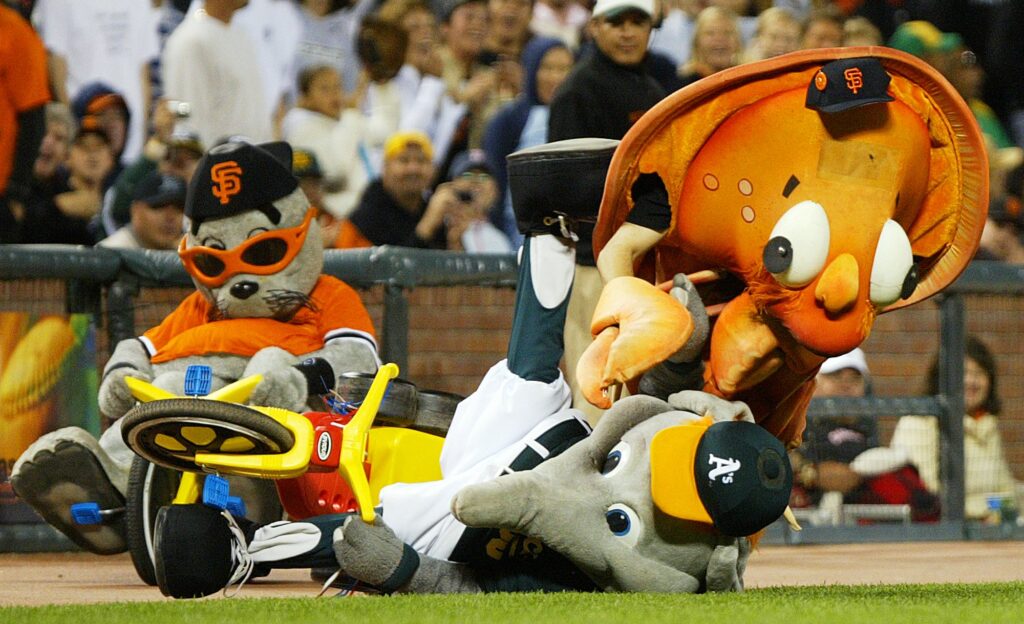
Crazy Crab (San Francisco Giants)
Crazy Crab was conceived to be an “anti-mascot,” meant to poke fun at the furry, family-friendly mascot craze of the ’80s. Besides being possibly the weirdest-looking mascot ever (move over, Gritty), his goal was to annoy fans, opposing players and anyone else in his path. And kudos to the San Francisco Giants for trying something new. The idea worked — it just may have worked too well. If most mascots engage in some lighthearted back and forth, Crazy Crab was downright confrontational, doing everything he could to get under people’s skin. Wayne Doba, the man inside Crazy Crab, did such a good job agitating anyone within the reach of his claws that fans started throwing beer and batteries at him. In fact, he was the subject of so many aerial assaults that his suit had to be fitted with a fiberglass shell to protect him. A bit too crazy, not to mention dangerous. After a single season, the Giants retired Crazy Crab. The team didn’t have another mascot for 12 years.
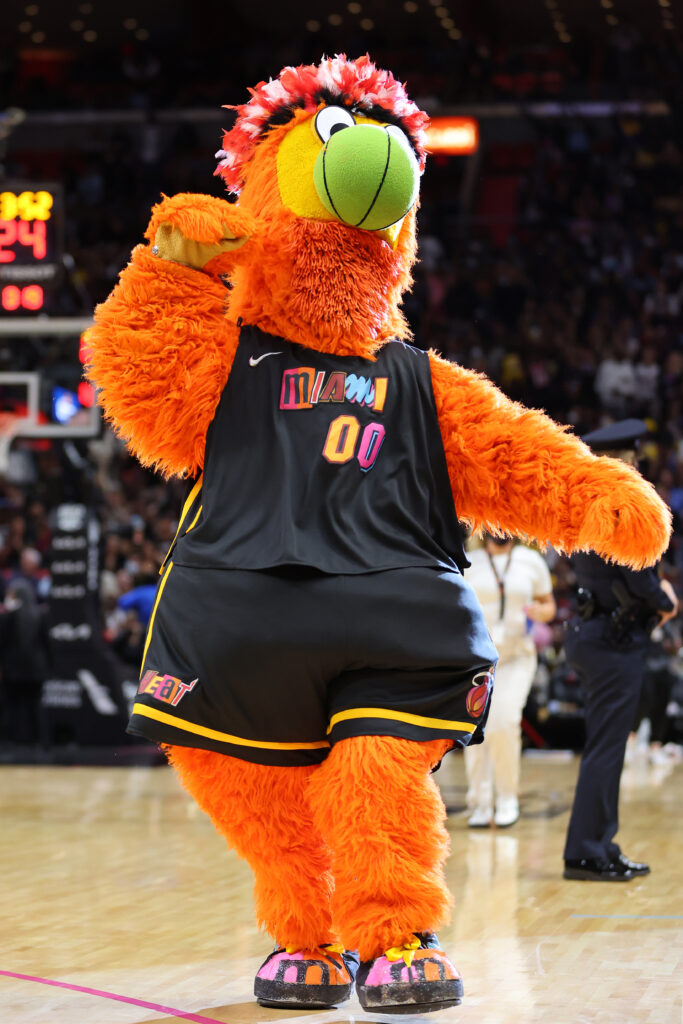
Burnie (Miami Heat)
The wholesome Burnie, an orange character and Floridian cousin to the Phillie Phanatic, has been with the Heat since the team’s inception. In the early years, Burnie got the crowd going, kept them hyped during the Shaq era and blew the roof off South Beach whenever the Heat was on the court. Designed by the team’s original owner, Ted Arison, Burnie has been a fan favorite since the very first game, known for being a fun time who gets a celeb-filled crowd to play along.