
“What happens after we die?” is a question that plagues humans from the time they’re old enough to know what death is to, well, the moment before they die. It has informed entire arms of philosophies, is the root concern of most religious practices, and is the sort of thing that jolts us awake in the middle of the night. With the 2026 Winter Olympics in the rearview, the World Cup in focus, and the 2028 Summer Olympics on the horizon, an adjacent existential question presents itself: What happens to stadiums — arenas and other facilities –– after the event they were built for is over? After stadiums die, where do they go?
For some, the answer is uplifting. Like Estadio Centenario in Montevideo, built for the debut World Cup in 1930 by host nation Uruguay. Located in the country’s capital city, the stadium is, somehow, still in use, serving as the official venue of the nation and the main home of the Uruguayan soccer team. For many other stadiums, however, the afterlife has been less practical. From stadiums repurposed for community good to high-tech, glorified data centers paving a path to a dystopian future, what follows is a roundup of some of the worst, best and weirdest lives and afterlives of stadiums, worldwide.
Stadiums Left to Rot in the Jungle
When Brazil hosted the World Cup in 2014, the country poured nearly $500 million into its outdated Maracanã Stadium, hoping to refresh the facilities for an influx of patrons. After the games ended, it was widely assumed that local teams would make the stadium their home, but high maintenance costs made that idea an impossibility. Just two years later, the country’s government began bickering with Olympic organizers as to who was responsible for leaving the stadium in lackluster condition following the 2016 games in Rio. Soon, the ground was unusable for soccer matches. According to an NPR report from 2017, “Neither Maracanã SA, the firm currently under contract for the stadium’s upkeep, nor the Rio state government accept responsibility for the post-Olympic cleanup and administration of Maracanã, according to O Globo. Both groups are said to blame the Rio 2016 Organizing Committee for having left the stadium in disrepair after the Summer Games.” As such, it languished.
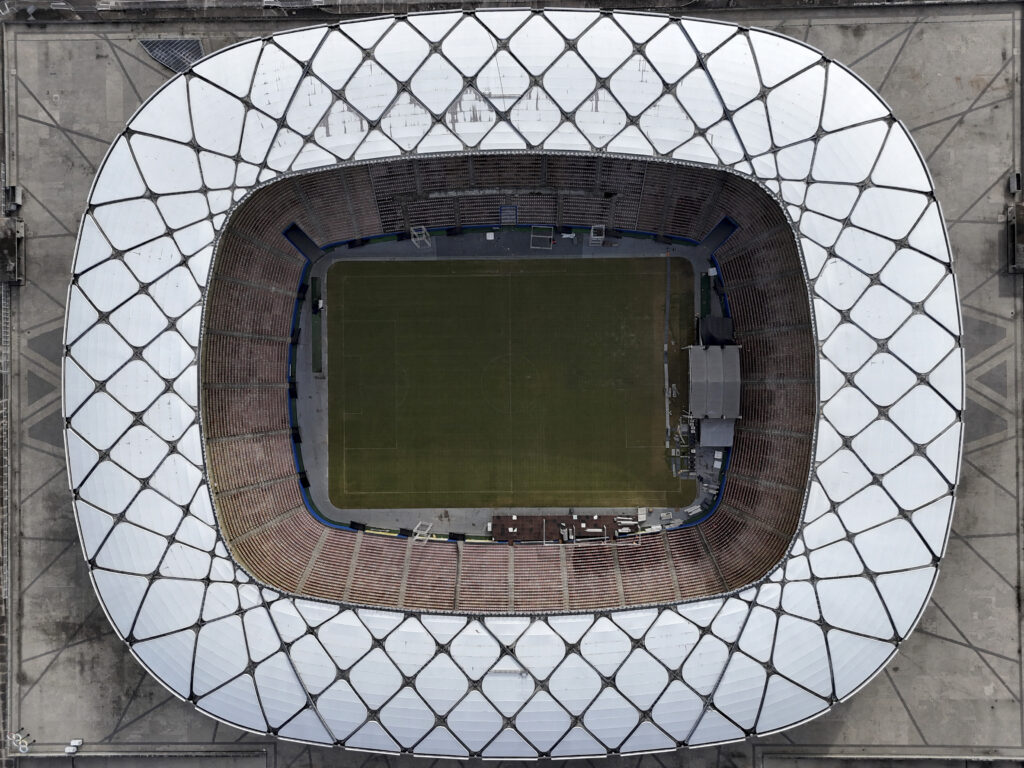
Another facility built for the World Cup, the Arena da Amazônia in Manaus, found an even worse fate. Made to look like a white woven basket that seated 44,351, the arena cost $220 million to construct. After the World Cup, empty and functionally impossible to get to, it was essentially abandoned: “Manaus is surrounded by a rain forest the size of France, Spain, Sweden, Greece and Italy combined,” wrote The New York Times, “and it is reachable only by airplane or boat.”
Stadiums as Data Centers and Dystopic Potential
While stadiums left to decay after reaching their expiration dates are sad, they represent one of the more predictable outcomes. There are, in fact, stranger fates.
The Intuit Dome in Inglewood, California, was built by Los Angeles Clippers owner Steve Ballmer, officially opening its doors in 2024. The Microsoft billionaire privately financed the arena, tossing $2 billion at the venture, or about 1.6% of his net worth. It seemed like a positive counterpoint to the pathetic billionaires asking taxpayers to foot the bill for new stadiums, all the while holding the threat of relocation over diehard fans’ heads. Ballmer’s sole responsibility for the venue comes with some interesting caveats, though.
The stadium is only accessible to people who download the LA Clippers + Intuit Dome app, which “links a digital ticket to a user’s name, phone number, email address, and zip code,” according to a KCRW report. Users are also encouraged to add a credit card and opt into the stadium’s facial recognition cameras by uploading a photo of themselves. The “selfie” then links to a patron’s ticket and credit card through a feature called “Game Face ID.”
Facial recognition cameras not only allow fans to enter the Inuit Dome without a physical ticket but to move through concession stands without interacting with cashiers. It’s a novelty that quickly wears off when its dystopian nature registers. What, exactly, could a former Microsoft CEO want with facial recognition data of everyone who enters his stadium? As Larry Vincent, a marketing professor at USC Marshall School of Business, told KCRW: “We’re just scratching the surface on how this can be used, and it can quickly go to a sci-fi place that is creepy. Marketers have to really think about, ‘Okay, I can do this. Should I do this?’”
It’s easy to see where facial recognition technology can lead, because it’s already led us there. In November 2022, a woman named Kelly Conlon took her daughter’s Girl Scout crew to see the world-famous Rockettes at Radio City Music Hall. As she entered the facility operated by New York Knicks owner James Dolan, she was pulled aside by security and asked to confirm her identity. She did, and was denied entry. Her crime? Working for a law firm that had a lawsuit against Dolan’s company, MSG Entertainment.
According to The New York Times, MSG “instituted the ban…not only on lawyers representing people suing it, but on all attorneys at their firms.” The reason? “The company says ‘litigation creates an inherently adversarial environment’ and so it is enforcing the list with the help of computer software that can identify hundreds of lawyers via profile photos on their firms’ own websites, using an algorithm to instantaneously pore over images and suggest matches.”
It was a sensational story at the time and equally baffling now. It’s certainly led me to bite my tongue when expressing frustration at Knicks games. You never know who’s listening.
Stadiums Built for Costume Changes
Owners of NFL stadiums gearing up to host 2026 World Cup games face their own set of challenges, though these host venues are uniquely suited to continue their lives after the games end. After all, the World Cup concludes on July 19 and the first NFL game of the 2026 regular season is set for early September. The revenue train will be pulling into the station as it does each fall. According to a report from The Athletic, these stadiums “were built for a sport commonly played on artificial turf; and for NFL fields that are 53.3 yards (48.7 meters) wide, almost 20 meters narrower than a World Cup soccer pitch.”
To accommodate the wider fields, each stadium must undergo turf replacement. The Athletic report adds: “All 11 stadiums — even the four that play NFL football on natural grass — will bring in special sod carefully crafted by agronomists and approved by FIFA.” Additionally, each stadium will need to go through a strict “debranding” process, a demand from FIFA to remove any sponsors or advertisements from stadiums.
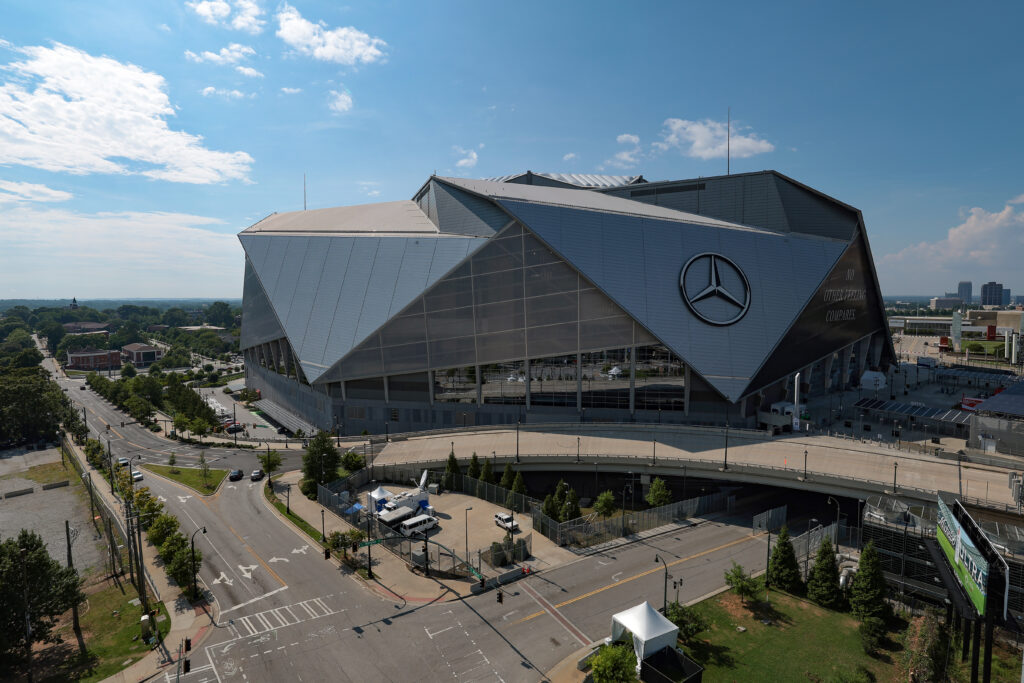
Mercedes-Benz Stadium in Atlanta, for example, will become “Atlanta Stadium” and the massive MB logo on top of the structure will be covered up. FIFA promises exclusivity for its sponsors at each stadium. As such, according to Adam Fullerton, the VP of operations at Mercedes-Benz Stadium, “somewhere over 2,000 cover-ups” will occur “across the stadium, both inside and outside.” For a month, we’ll all pretend not to know that Atlanta Stadium generally operates under a different name.