FAST AND STEADY WINS THE RACE

ELENA RYBAKINA WASN’T A TOP JUNIOR, BARELY HAD A SPONSOR AND PLAYS WITH A COOL SO UNREADABLE IT BORDERS ON INVISIBLE — UNTIL SHE SERVES 127 MPH. HER QUIET RISE LED HER TO A WIMBLEDON TITLE, AN AUSTRALIAN OPEN AND HER EYES ON NO. 1.

BY Robert Cordero and Genevieve Walker

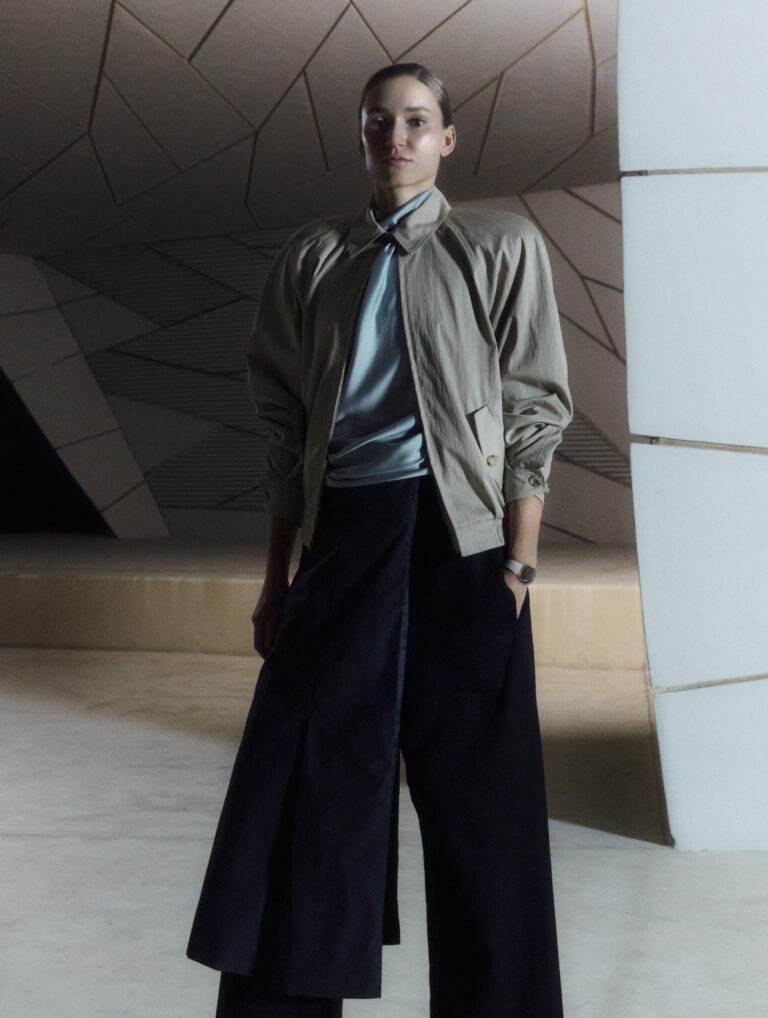
We could be talking about the weather for how calm and fresh Elena Rybakina appears over Zoom. Anyone else would, reasonably, look exhausted. Rybakina, ranked No. 3 in the world for women’s tennis and just off her 2026 Australian Open title, spent the day in front of cameras for her PLAYERS cover shoot. When asked how her day was, she responded breezily. “It was an easy day. I’m going to do some treatment and physio, and tomorrow is a match.” 
 
By “a match” she means the Qatar Open, where the world’s top players have converged to face off. But this is Rybakina: calm, collected, focused. (The following day, she will win against Xiyu Wang.) 


Rybakina, 26 years old, has a Wimbledon title, an Australian Open title and one of the most lethal serves and groundstrokes on tour — yet somehow she’s still flying under the radar. Compared to her peers, such as Aryna Sabalenka, Iga Swiatek, and Coco Gauff, she’s yet to become a sports-watching household name. And the reason, it turns out, is inseparable from why she wins: an innate tranquility that simply doesn’t demand attention. 


Rybakina decided to take a risk and go pro. She believed in her game. Then came the 2018 wild card in St. Petersburg during which she beat Caroline Garcia (ranked in the top 8), and then the Kazakhstan Tennis Federation came calling, with full financial support. In a decisive move, Rybakina switched her nationality that year. It was yet another gamble that worked in her favor. She started training under coach Stefano Vukov, and within a year, she jumped from around 200 in the world to finishing the season at 37. “And since then, my tennis just went up,” she said.
 
Now a seasoned pro, her inborn talents have been refined and harnessed: Her laser focus and cool head are two of her defining characteristics. Rybakina is an aggressive and controlled force. 


On indoor courts, especially, she dominates. There’s no wind, no sun in her eyes on the toss. Just the ball and the target. On court, when things get tight, she breathes, talks to her box and refocuses. She plays, and plays hard. 
 
But she understands the role of mental health in the game. She’s watched her contemporaries (Aryna Sabalenka, to name one) speak out about the enormous pressure put on athletes. Sports psychologists are now more common — there’s no shame there. Rybakina is aware of her limits. 
 
Maybe because she was the kid showing up to practice part-time, or because her parents weren’t forcing her to play, Rybakina has a clear-eyed understanding of the right and wrong reasons to play tennis as a junior. When it’s for the wrong reasons, the requirements of travel, training and solitude can be crushing. The first time she traveled to Australia for the Open, she was 16 and unaccompanied. “I went without [a] coach or parents, which is very rare. My parents, they both were working at that time. They couldn’t really skip and of course, financially, I couldn’t bring a coach.” 
 
The experience was impactful. “It was one of my first Grand Slams,” she said of playing as a junior, but it was also far away and she was on her own. “It was a difficult trip at some point, but at the same time, I made good friends. I love Melbourne.” Though she lost, she made lasting connections and gained a sense of autonomy and selfhood. One piece of advice she’d give young players: make sure you’re having fun. 
 
Fast-forward to 2026: Back in Australia, Rybakina against Sabalenka, same as last time, but this time, Rybakina wins. “It was incredible. Again, I played against [Sabalenka], the same player, just three years later, and I managed to win. It was really nice, and I was super happy.” 
 
Now, Rybakina is based in Dubai, where she’s able to train in cutting-edge facilities. She’s also centrally located for tournaments across the globe. She feels at home in the Middle East: great courts, matches that don’t start too early, and good food. (It’s the rice with chicken she goes for, and the desserts, though not so much in training season.) The region suits her game and her rhythm. The results are clear: With access to the world’s best courts, no lengthy travel and no diversions, her game is locked. 
 
What’s next? Well, No. 3 is great, but No. 1 would be even better. Rybakina thinks this year it’s possible — and says so without drama or a fist pump. Sabalenka, Swiatek and Gauff have all worn their fame loudly — brands, covers, moments. Rybakina’s ambition is just as massive, but she delivers it with a shrug: “I have all the game and all the possibilities.” 

Words by: @rob.cord and @genevieve.g.walker 

Talent @lenarybakina 
Photography @antoineharinthe 
Fashion @sofia.mottaa
Creative Direction @ricardogomesinst 
EIC @vladimirrestoinroitfeld
Editorial Director @rob_cord_
Digital Director @scovvv 
Senior Editor @genevieve_g_walker
Editorial Operations @kat.harron
Grooming @tsuyoshi.tamai 
Graphic Designer @guillaumesbalchiero 
Players Executive Producer @adrienwilliamromeo
Production @kristieslab 
Fashion Team @julietocariuc 
Retoucher @officinaotto 
Production Team Glenn Roitfeld