

Soccer’s history stretches back far into the past. Hundreds of years before the game as we know it took shape, entire English towns got together to play some of the first ever “mob-football” matches. This early, violent precursor to soccer was played with the objective of driving a filled animal’s bladder into the other team’s goal, and it was governed by only one rule: “no murdering.”
The use of soccer boots goes back nearly as far into the past as the sport itself. And as the violent-to-just-shy-of-killing style of gameplay would have it, the boots’ origins are only slightly less dark. The first pair was reportedly made for King Henry VIII, whose preferred pastime, besides finding ways to behead, divorce and remarry his wives, was soccer. Essentially work boots reinforced with steel for the king’s protection, his “soccer boots” were nothing particularly elaborate, but they marked the first step toward what would grow to become a global industry.
Now, with hundreds of models available from dozens of producers (although the Big Three, Nike, Adidas and Puma, command the vast majority of the market with a respective 49%, 38% and 10% share), soccer cleats have transcended their original purpose. No longer designed to be heavy and protective, modern soccer cleats are engineered to sustain performance at the highest levels while also carrying cultural significance as symbols of style and identity far beyond the pitch itself. Here, PLAYERS takes a look at the defining models and innovations in the evolution of soccer cleats.
ANCIENT SOLES
King Henry’s Soccer Boot
The first recorded soccer boot was commissioned in 1526 for King Henry VIII. Listed among the 17,000 personal items in King Henry VIII’s inventory, as documented by Dr. Maria Hayward, an English historian of early modern British history and textile conservation, these soccer boots were a rudimentary precursor to later models. Shoemaker Cornelius Johnson was paid four shillings, around $125 today, to create an ankle-high pair of heavy, thick leather boots that were both cumbersome and lacking in traction, making them soggy and slippery in rainy weather. Between the 1600s and the early 1800s, when the first specialized soccer boots were designed, players of less-than-kingly status (who thus could not afford soccer-specific boots) tended to wear their own work boots. Made of similarly heavy leather, these boots offered some protection on the field, a choice that reflected the rough nature of early soccer games rather than the technical requirements.
Converted Work Boots
By the 1800s, local shoemakers and factory workers began to convert leather work boots into dedicated soccer boots that came up to the wearer’s ankle and featured metal-tipped toes and steel-reinforced soles. Sometimes nails were hammered into the bottom to increase traction, but this created other problems. Not only did the boots weigh up to 500 grams each, and double that when wet, the projecting nails tended to cause injuries that made gameplay a little less fun. Accordingly, the Football Association — which was founded in London in 1863 to standardize a set of rules, marking a split from the early “mob”-style games — banned dangerous projections like nails that same year.
STUDDED ORIGINS (1891 – 1949)
First Soccer Cleats
By now, soccer looked something like the game still played today. Following a revision to the spike ban in 1891, which allowed small studs or bars on the bottom of the soccer boots, the production of specialized soccer shoes began. The designs of the late 1800s evoked elements of a popular style of Victorian work boot-cleats, like an ankle-high exterior, but were more flexible and often came with the now-permitted studs embedded permanently into the sole.
Introduction of Removal Studs
In 1925, Adolf (“Adi”) and Rudolf Dassler made their first impact on the soccer world by introducing some of the earliest, if not the first-ever, soccer cleats with replaceable studs. This revolutionary technology allowed players to adjust their shoe’s studs according to abruptly changing weather conditions, offering superior traction and ushering in a new standard of play. Later, the two brothers would split up and go on to start Adidas and Puma, respectively.
THE ADIDAS ERA (1950 – 1970)
Adidas Samba (1950)
Launched ahead of the 1950 FIFA World Cup in Brazil, the original Adidas Samba was Adi Dassler’s first solo endeavor into the world of soccer –– a kingdom in which he would soon reign supreme. Featuring a revolutionary signature gum rubber sole with suction cups, the original Samba was designed to succeed while playing on cold or icy ground. Initially a high-top design, the Samba was re-launched in 1972 with a low top and a three-zone profile allowing for better ball-handling and multi-directional traction, cementing the Samba as the go-to choice for indoor soccer matches.
Adidas Argentina (1954)
Adidas’ Argentina was the first screw-in stud soccer cleat, marking a shift away from the traditional boot designs of the past. Its popularity surged after the 1954 FIFA World Cup final — widely known as the “Miracle of the Bern” — when West Germany’s national soccer team defeated Hungary 3 – 2, ending Hungary’s undefeated streak that lasted for 30-plus matches. In rain-soaked conditions, the Adidas Argentina allowed West Germany to adapt to the deteriorating pitch by changing their shoe’s level of traction, an advantage Hungary lacked, and one that clearly proved necessary.
GAINING TRACTION (1970 – 1998)
The Nike (1971)
Nike’s first venture into the soccer cleat world was an ill-fated one. Initially planning to capitalize on the hype leading up to the 1970 World Cup, Nike missed the window after a delay in production. Its first soccer cleat was thus not released until 1971. “The Nike” was notable for being Nike’s first shoe to use the Swoosh and for some decidedly poor design choices, like leather that was specifically suited for warm climates and was known for cracking and falling apart in the cold. Regardless, it was produced for a decade, only to fail to gain mainstream buy-in by the soccer community. Nike eventually abandoned the model, but in 2021, it reissued the design –– this time with leather that resisted cracking –– to celebrate the original boot’s 50th anniversary.
Adidas Copa Mundial (1979)
In 1979, Adidas introduced another iconic model: the Copa Mundial. It featured foldable tongues, increased heel protection and molded rubber studs designed to improve the game on the new artificial turf pitches. The Copa Mundial revolutionized soccer with its 12-stud design, making for better traction across the sole, which quickly became standard on the pitch. According to soccer.com, it has since become one of the best-selling soccer cleats of all time.
Adidas Predator (1994)
Adidas launched the game-changing “power and swerve” zone engineering with the Adidas Predator: more grip meant more power — and more flexibility. The novel technology was implemented through specialized rubber elements on the upper, which increased friction and surface area for better ball spin and harder striking power.
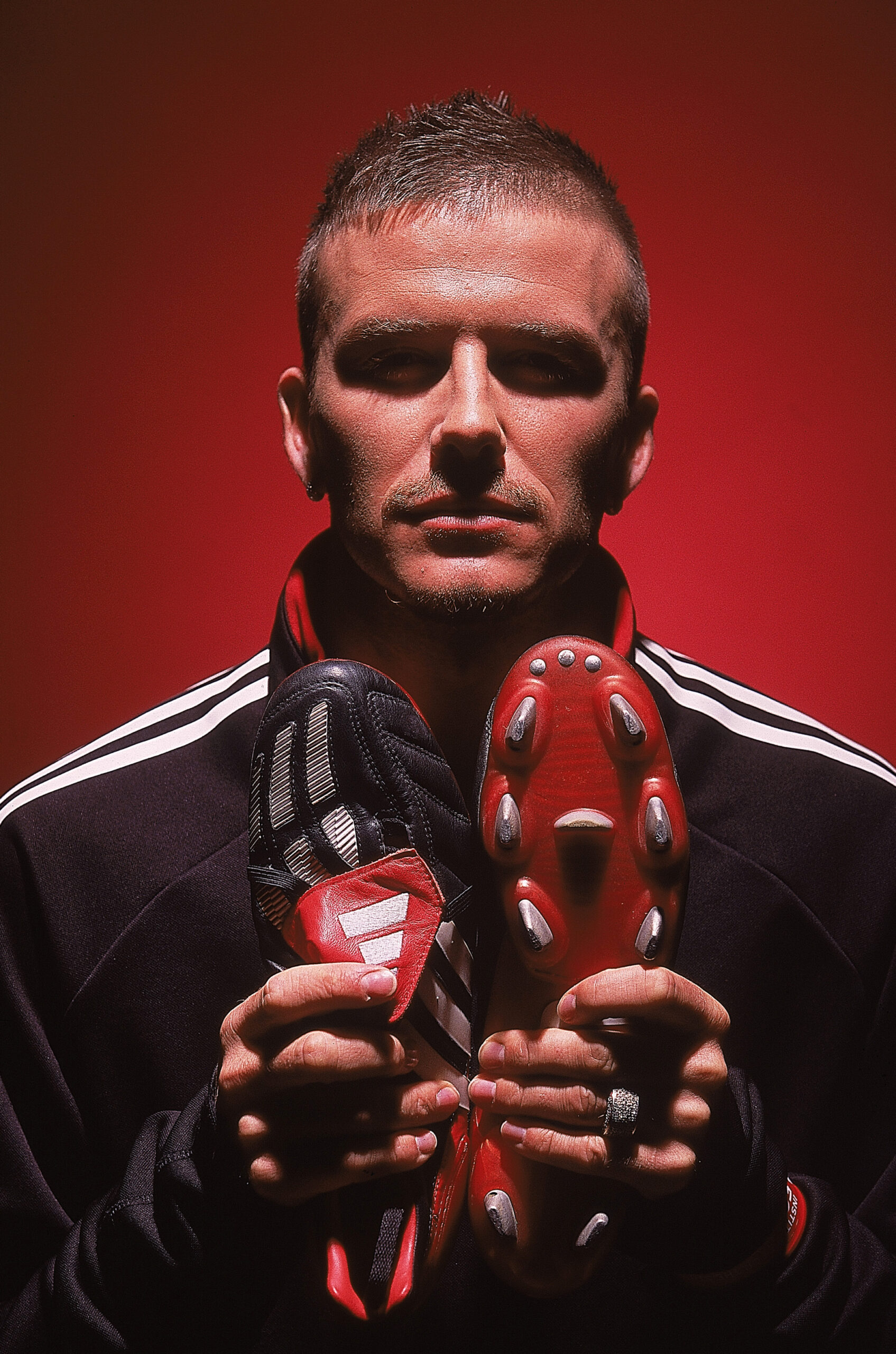
adidas Predator Mania (Gary M. Prior/Getty Images)
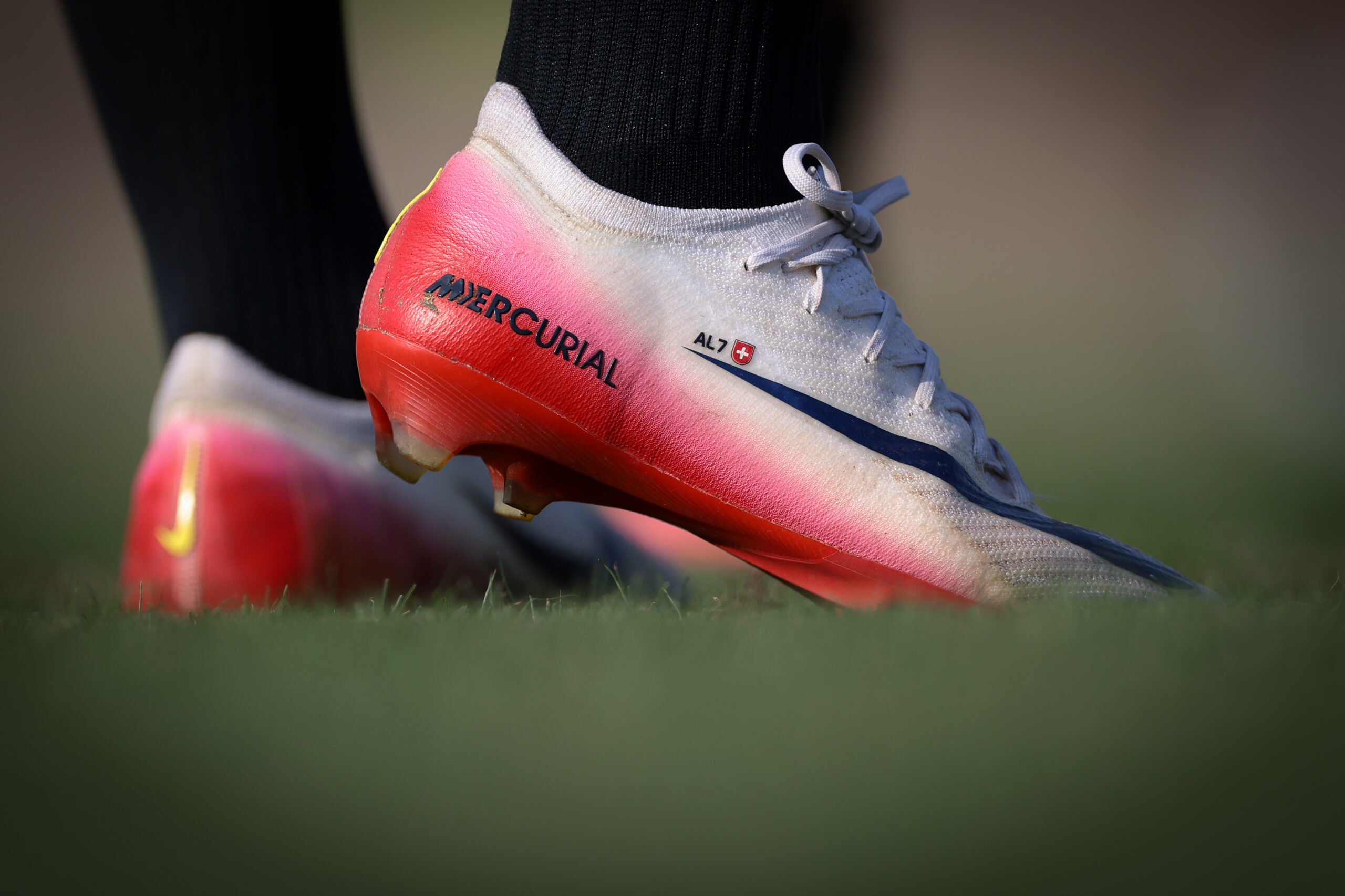
Nike Mercurial (Jonathan Moscrop/Getty Images)
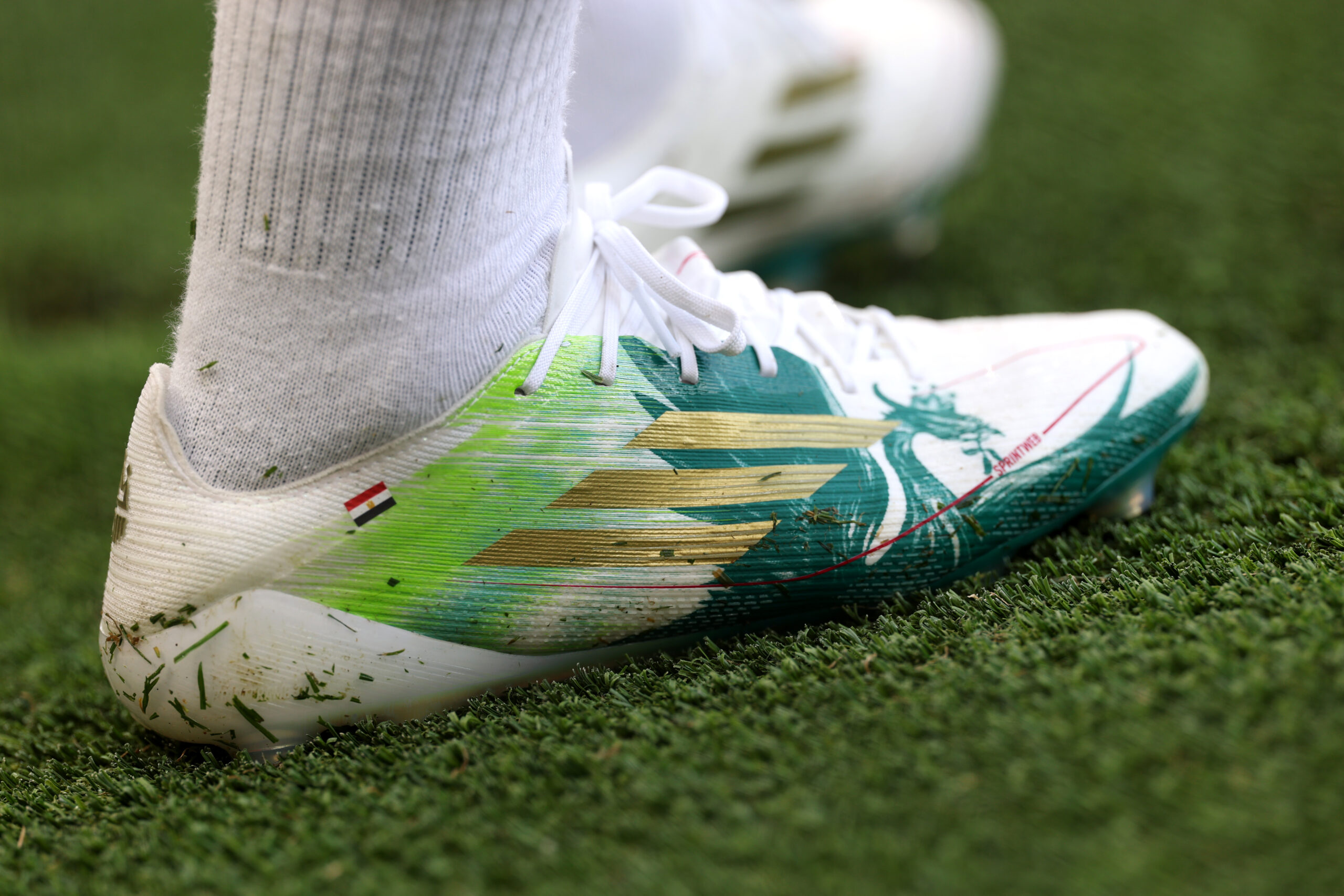
adidas F50 (Carl Recine/Getty Images)
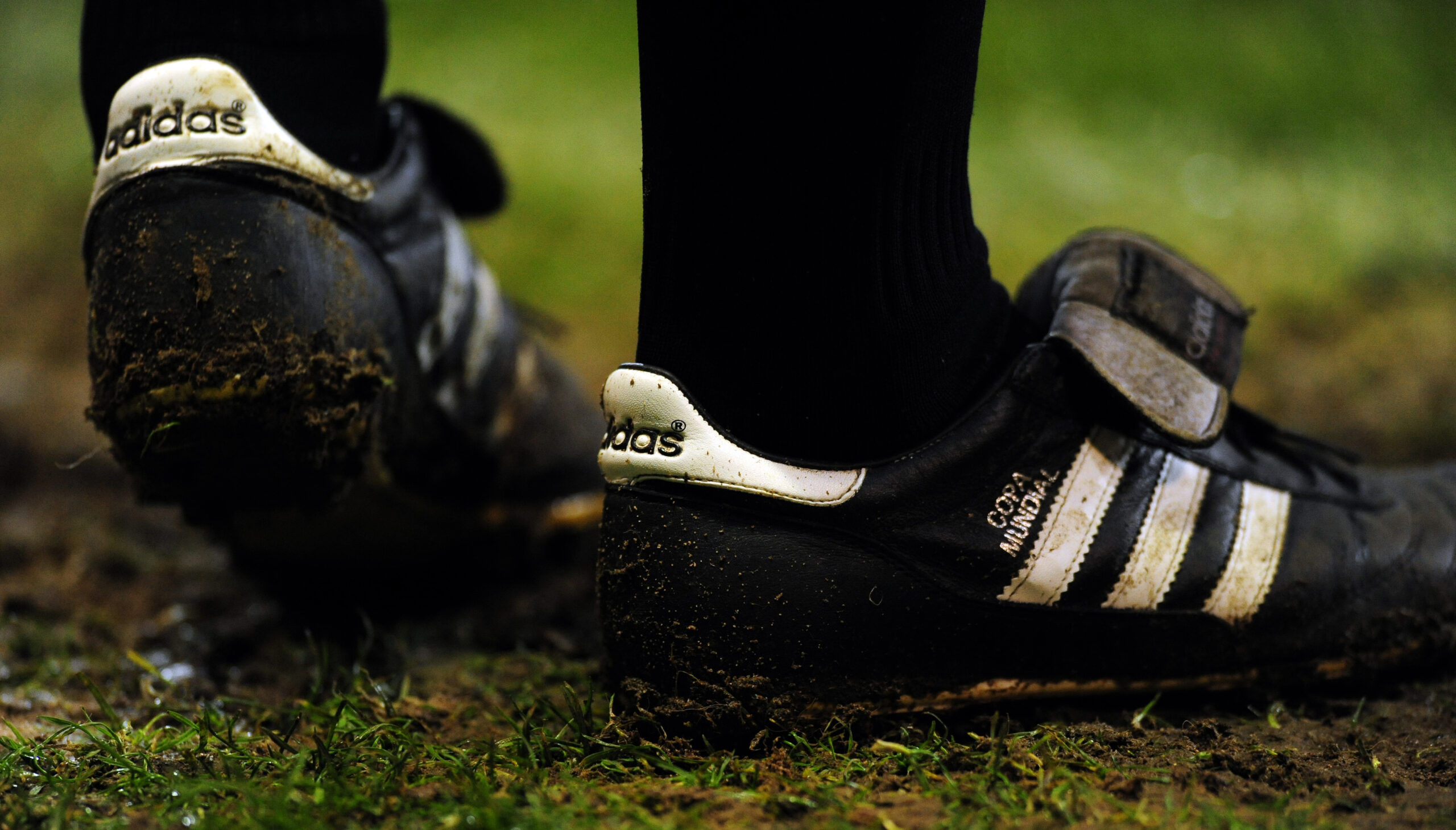
adidas Copa Mundial (Andrew Matthews/PA Images via Getty Images)
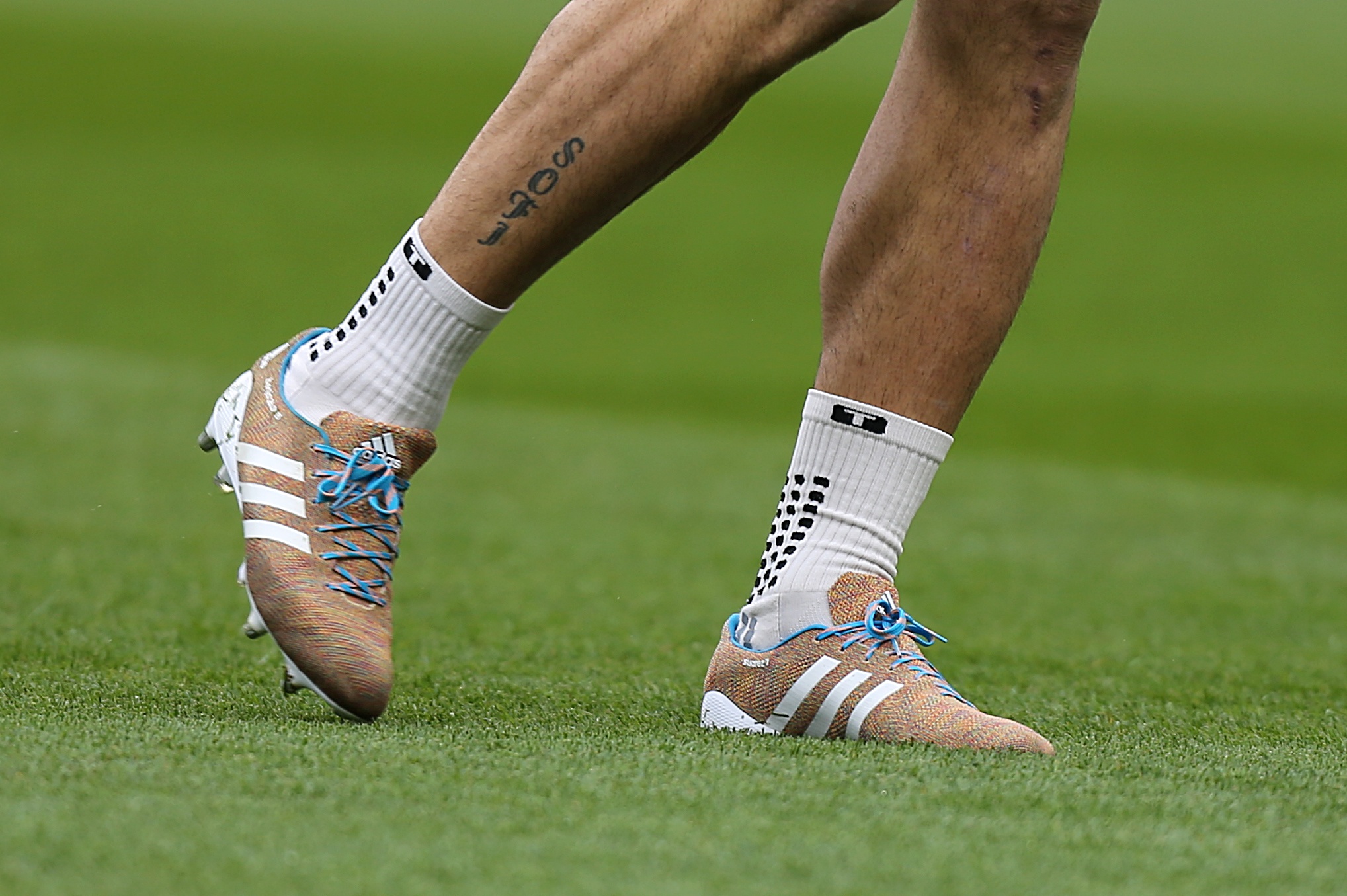
adidas Sambas (Peter Byrne/PA Images via Getty Images)
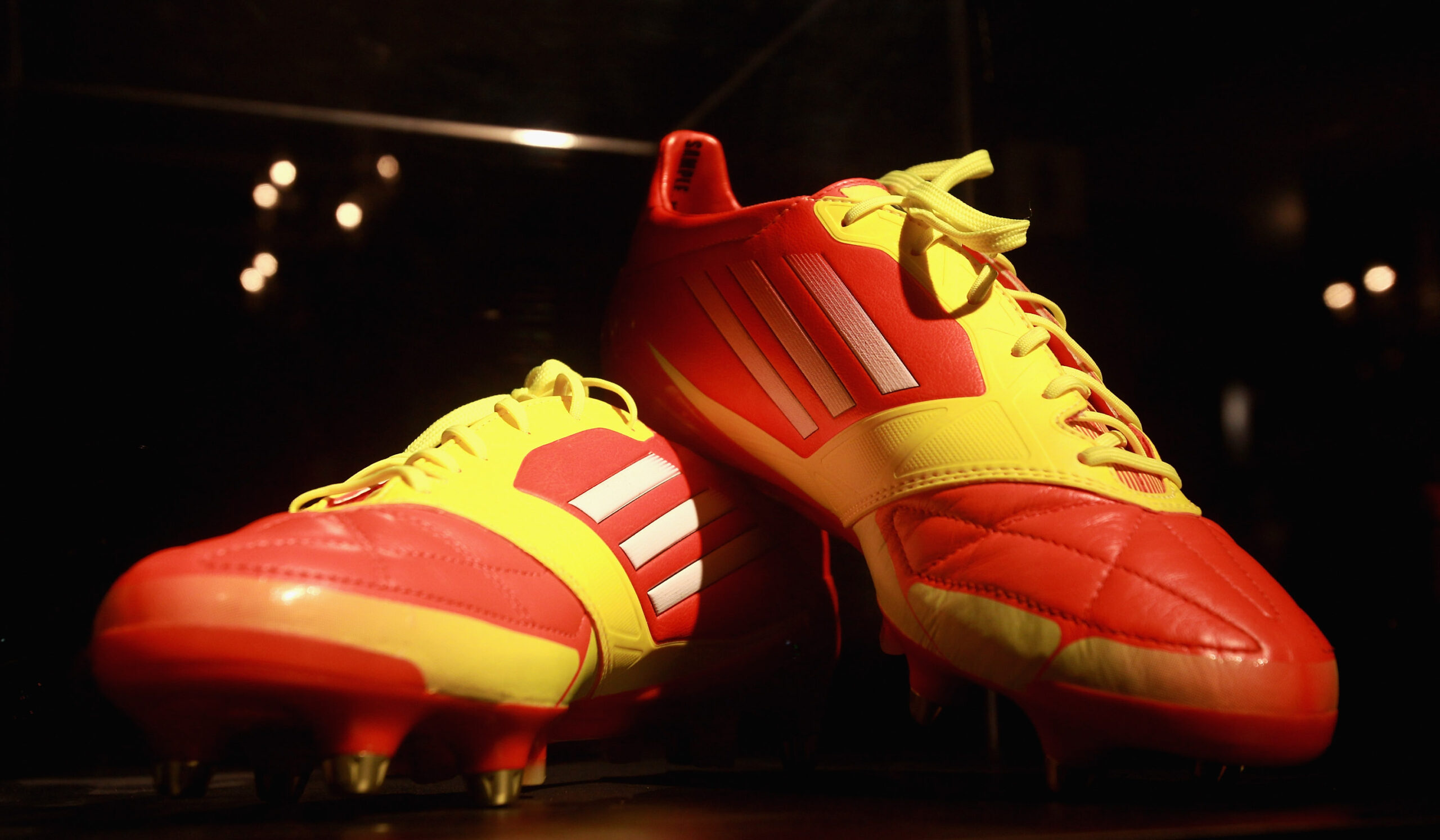
adidas F50 adiZero (Alexander Hassenstein/Getty Images for adidas)
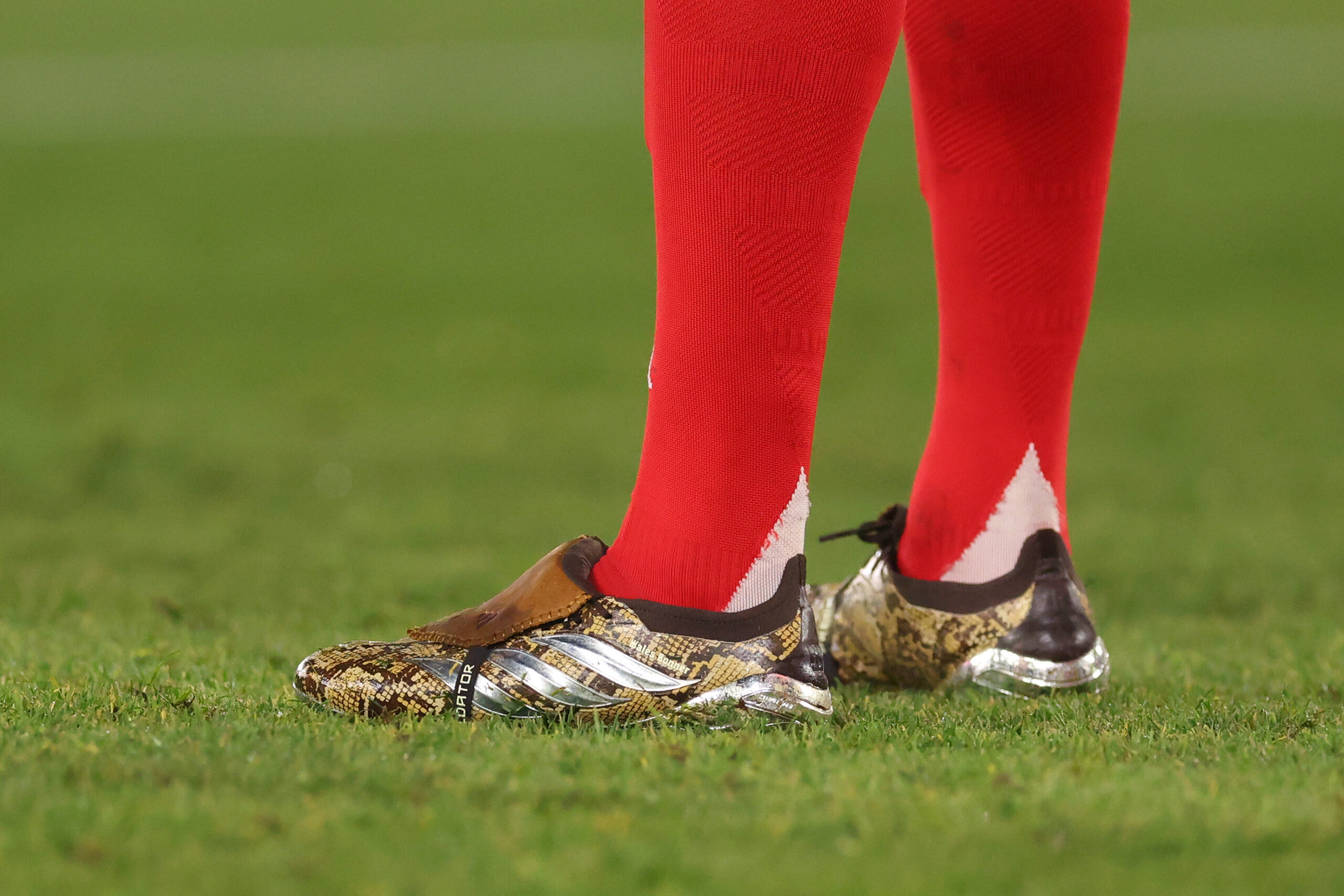
adidas Predator (Catherine Ivill - AMA/Getty Images)
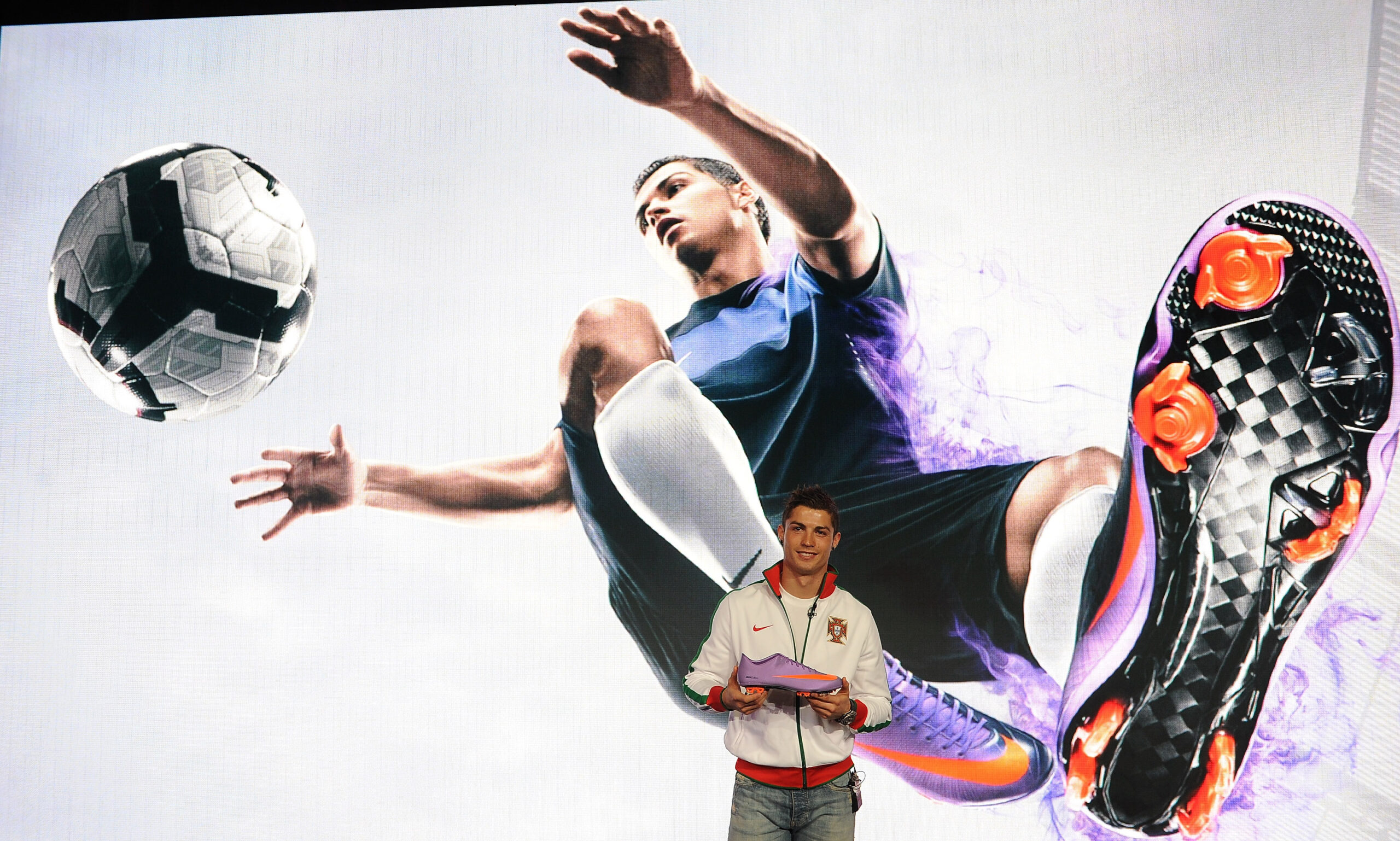
Nike Mercurial Vapor Superfly II (Christopher Lee/Getty Images for Nike)
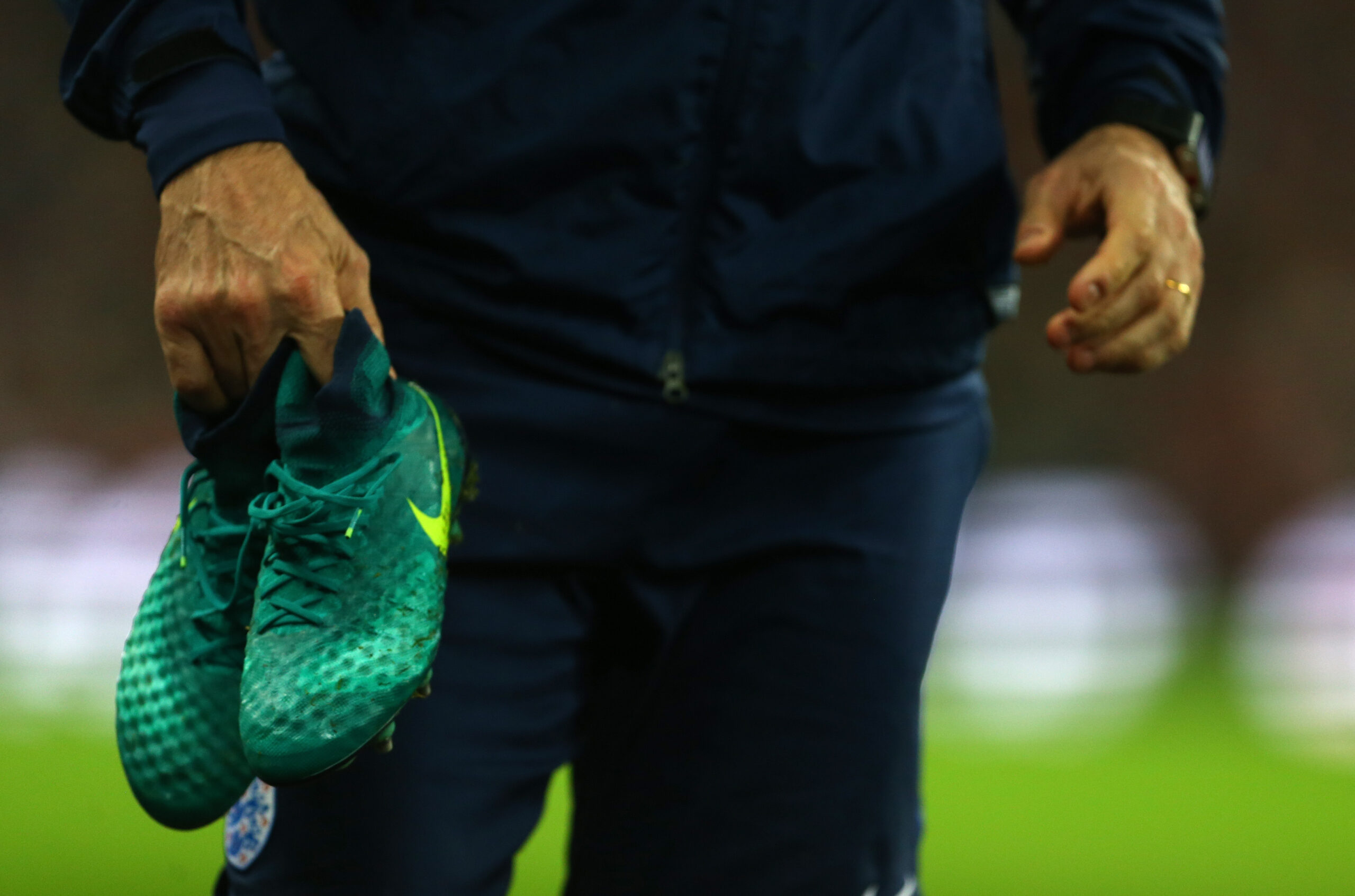
Nike Magista Obra (Catherine Ivill - AMA/Getty Images)
FEATHER LIGHT (1998 – 2010)
Nike Mercurial Vapor R9 (1998)
Nike debuted the Mercurial Vapor R9 in 1998, introducing it with “Tempo Ultralight” construction — just 250 gram boots, a rare KNG-100 synthetic to minimize water absorption and a newly engineered stiff, thin soleplate with bladed studs traction. A 21-year-old Ronaldo Nazário, Brazil’s breakout superstar, was photographed at the 1998 World Cup with the boots draped casually around his neck. Dressed in electric blue, yellow and metallic silver, the cleats arrived on soccer’s biggest stage with unmistakable presence. Brazil ultimately finished as runners-up, falling to France in the final, but the boots themselves became inseparable from the tournament’s global visual legacy.
Nike Total 90 (2000)
In 2000, Nike launched the original Total 90 as part of its push to become a soccer-apparel giant alongside Adidas and Puma. Built on the promise to support a player’s comfort and endurance for the entire 90 minutes of a game, the shoes featured a synthetic leather upper with off-center laces to maximize striking surface. They were revolutionary, with a cultural impact to match. The boots were so beloved by everyone from children to bona-fide legends like Ronaldinho and Tierry Henry that Nike issued three unique models in the “Total 90” line between 2000 and 2008, and re-issued the Total 90 III in 2025, to much fan excitement.
Adidas Predator Mania (2002)
The Adidas Predator Mania is now widely regarded as the greatest Predator ever made. Seen on the feet of legends including Zinedine Zidane and David Beckham, the Gunmetal colorway was ahead of its time, blending metallic black and deep red tones in an era when most boots leaned toward loud neons and flash. Its appeal was more restrained, cool, controlled and quietly dominant, matching the style of the players who wore it.
At a moment when soccer’s global spotlight was intensifying, the Predator Mania had a front-row seat. It combined a soft leather upper with enhanced strike zones and a secure, locked-in fit, achieving a balance that most boots of the era failed to deliver in a single design. Built for creators and midfield maestros, it became a defining tool for players who controlled tempo and dictated the rhythm of matches.
Released in limited quantities and initially met with modest attention, the boot has since taken on a cult status.
Nike Mercurial Vapor I (2002)
The Nike Mercurial Vapor I marked a turning point in soccer boot design, introducing a speed-first, stripped-back aesthetic that redefined what performance footwear could be. Using synthetic fabric and track-inspired spikes, it helped usher in the era of ultra-light cleats built for explosive acceleration, close control and sharp technical execution. Endorsed by icons like Ronaldo Nazário, who became the face of the boot, alongside Thierry Henry and other elite forwards, the Vapor I set the standard for the modern attacking player.
GOLDEN AGE (2004 – 2014)
Adidas F50 (2004)
Known as one of Adidas’ first true modern speed cleats, the F50 paired lightweight performance with quickness and agility on the pitch. It helped steer soccer away from traditional all-black silhouettes and ushered in a bold, new era of color, with bright reds, crisp whites and metallic finishes taking center stage. Its sleek, low-profile design using synthetic materials created a more aerodynamic body, allowing players to move lighter and faster. The cleat embodied the brand’s vision of the kind of player Arjen Robben represented on the pitch, with explosive acceleration and sharp agility. Transformative in both style and technology, though they were only made for 11 years, the F50 remains a nostalgic favorite among collectors today.
Adidas F50 adiZero (2010)
Lionel Messi consistently wore the Adidas F50 adiZero during his time at Barcelona and Argentina, even at the 2010 World Cup. The shoe’s ultra-thin synthetic upper gave him a closer, more responsive touch on the ball, he has said, perfectly suiting his tight control and quick dribbling style. At just around 165 grams, it was one of the lightest boots on the market at the time — often described as having a “barely there” feel. No doubt these shoes helped him evolve from an elite dribbler into an even more explosive, dynamic attacker.
Nike Mercurial Vapor Superfly II (2010)
On the opposite side, Cristiano Ronaldo was the face of the Nike Mercurial Vapor Superfly II, with the boot being marketed around the same idea of maximum speed with minimal weight. Neymar also wore it during his early breakout years, where it helped him stay light on his feet for quick direction changes, stepovers and sharp movements in and around the box as he built up to goal-scoring moments.
Nike Magista Obra (2014)
The Nike Magista Obra and Mercurial Superfly IV marked one of the biggest turning points in soccer boot history with the introduction of Flyknit material and the Dynamic Fit Collar. The sock-like design wrapped the foot and extended to the ankle for added support, creating a completely new look and feel on the pitch. Following this innovation, other brands began moving away from traditional synthetic and leather constructions to create their own knit concepts. These boots delivered a barely-there sensation while still offering the lockdown and stability players needed. Worn by stars like Cristiano Ronaldo and Andrés Iniesta, they combined futuristic design with elite performance, forever changing the way players thought about the game.
ELITE TECHNOLOGY (2020 – Present)
Nike Mercurial and Adidas Predator X (2020s)
In recent years, soccer cleats have moved away from the idea that one boot fits all, with brands creating models tailored to different playing styles. Cleats are now divided into categories like speed, control and comfort. Boots like the Nike Mercurial are built for pace and quick acceleration, while the Adidas Predator remains known for touch and striking precision.
Brands have also prioritized sustainability, introducing cleats made with recycled materials instead of traditional synthetics. They’ve also got a simple laceless look that players like Lamine Yamal have publicly endorsed for their smooth and futuristic aesthetic. Modern cleats are now made for both how and where players perform.
Adidas Project R.A.P. (Radical Athlete Perception) (2026)
Innovation shows no signs of slowing down. Adidas has introduced Project R.A.P. (Radical Athlete Perception), a concept centered around bespoke cleats created through athlete data and 3D printing for a personalized fit. Soccer stars Khvicha Kvaratskhelia and Ademola Lookman were among the first players selected to test the new technology. The project signals a new era of footwear focused on custom support and performance, introducing a new era of technology tailored especially for you.
Words by: Katherine Harron and Mecca Pryor