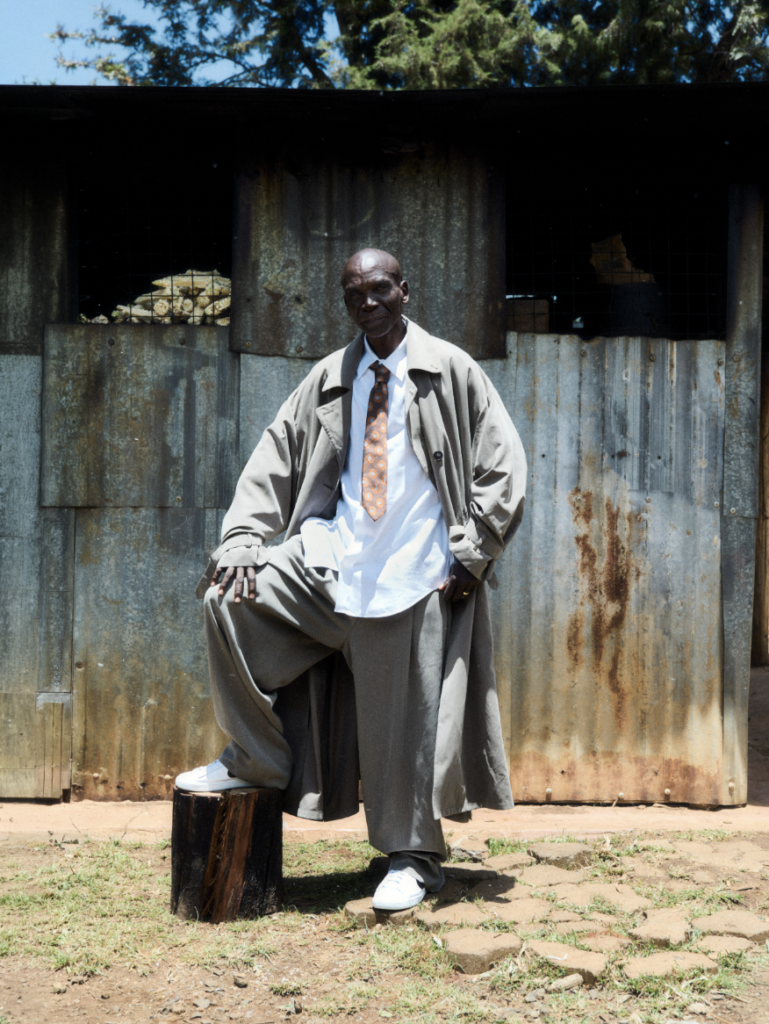

Some athletes are lucky enough to make history just once in their careers. For a smaller circle of sporting greats, achieving historic feats simply becomes a habit.
On October 11, just days before he sat down with PLAYERS, Eliud Kipchoge won the 2026 Melbourne Marathon, setting a new course record of 2:09:10. At 41, the man widely considered the greatest marathon runner in history proved he still has more in the tank.
By this point, Kipchoge has won it all, and then some: 11 World Marathon Majors, 17 career marathon victories and two Olympic gold medals in the marathon. He has won the Berlin and London marathons five and four times each, respectively. In 2019, he even became the first person to ever run the marathon distance in under two hours at the Ineos 1:59 Challenge. (Because it was conducted under special conditions, it wasn’t recognized as an official world record by World Athletics; the two-hour mark has since been broken in competition by Sebastian Sawe at the 2026 London Marathon.)
Kipchoge’s longevity is as awe-inspiring as his long list of titles. He won his first Olympic medal in Athens back in 2004, meaning that he has now been winning at the elite level for more than two decades. Few athletes are able to sustain the sharpness of mind and body and remain determined enough to dominate at the highest level into their late thirties and forties. Kipchoge sits in a very select club that includes legends like Lionel Messi, Cristiano Ronaldo and LeBron James.
So how has Kipchoge retained the desire, determination and skill to continue running marathons at an average pace of under five minutes per mile well into his forties?
What’s most striking about his system is how simple it is: Kipchoge makes a plan and sticks to it, trusting that his preparation will carry him through.
This diligence speaks to the fact that none of this was handed to Kipchoge on a silver platter. He had to work for it from the very start. Growing up in a single-parent home in Kapsisiywa, a small village in Kenya’s Rift Valley, Kipchoge ran two miles to school every day, but it wasn’t until a bold encounter at 16 with his future coach, Patrick Sang, that he considered a life dedicated to running. Once given the chance, he never looked back, and now the record books are filled with his name.
Kipchoge sat down with PLAYERS contributing editor Daniel-Yaw Miller to discuss the secret to his champion mindset, channeling positivity to push through the pain barrier and taking inspiration from his sporting idols.
What is your earliest memory of performing or watching sports?
I always loved watching soccer and especially the Premier League as a young boy. If we were lucky, we could find a television to see some of the games. In the last years, I have been fortunate to build great relationships with coaches such as Mauricio Pochettino and [Luiz] Felipe Scolari, whereby they have invited me to Tottenham Hotspur in the past and to the Grêmio football club, in Brazil, this summer. During the Berlin Marathon in 2019, I was also privileged to start building a great friendship with the legendary footballer Kaká, who started his own marathon journey. These are wonderful moments for me when I look back to when I was a young boy in Kenya.
Who was your first idol in sports and what inspired you about them?
This is actually a great story as this person became my lifelong coach, Patrick Sang. Patrick was an incredible steeplechase athlete who had great success in his career. It was in 2001 when I actually met Patrick Sang in person. I was a 16-year-old boy who loved running but needed help to improve and to obtain more knowledge. So I asked him for advice, and out of a good heart he gave me my first training program. I left that day with the program on a paper and started to follow the lessons rigorously. When I finished the program and asked for new material, he started to understand I was serious.
Given your recent win in Melbourne, where you set a course record at 41 years of age, how were you able to prepare your body and mind to achieve such a grueling pace?
I have prepared for Melbourne in a good way, whereby I was able to complete all of my training sessions. My approach to preparing for a good result at this age is the same way I did 10 years ago, but of course, the body needs to recover a bit more each time. I believe that when I apply all of my mind to the goal ahead, and I can trust in my legs and the preparation, then success becomes a matter of perseverance.
How have grit and determination helped you in your career and seen you through moments when others may have faltered? Are there any examples that stand out?
To me, grit and determination are what you need to show every day in training when nobody is watching. I believe that consistency is the key to success and is what has made my career successful. Of course, the fans can see moments of grit and determination in a race when you struggle a bit and push on, but only by being disciplined 365 days per year [do] grit and determination become a life-changing factor. This is what I mean when I say, “Only the disciplined in life are free.”
Could you try to put into words what both your body and mind go through when running a marathon at the pace you do?
Like everybody before a marathon, I feel nervous. Because no matter how well you have prepared, you never know how your body will react to the effort on that day. But once the gun goes off and the legs take over, the calm returns to my mind. I know I can trust in my preparation to carry me through the distance, so when I settle into my pace I focus on my breathing, on my tempo, on the course, and I forget about what the body is feeling. But we must always respect the distance because there will always come a time in the race where you start to feel your muscles.
The pain will come, that is a given. But it’s how we deal with this fact that keeps the mind healthy. I try to think positive thoughts, think about the beautiful things in life. I smile because it releases positivity and takes away the pain, and I push on. Only this way can we continue strong.
Are there any athletes from other sports whose stories or journeys inspire you?
I very much admire Lewis Hamilton. I was honored to meet with Lewis, whereby we got to learn from each other and have a relationship where we support and wish each other well. He is an incredible athlete who had such a beautiful career for such a long period, which can only be achieved by working hard and being disciplined and keeping the right focus on what is important.
To see these strong minds in different sports being successful for so long inspires me to achieve the same.