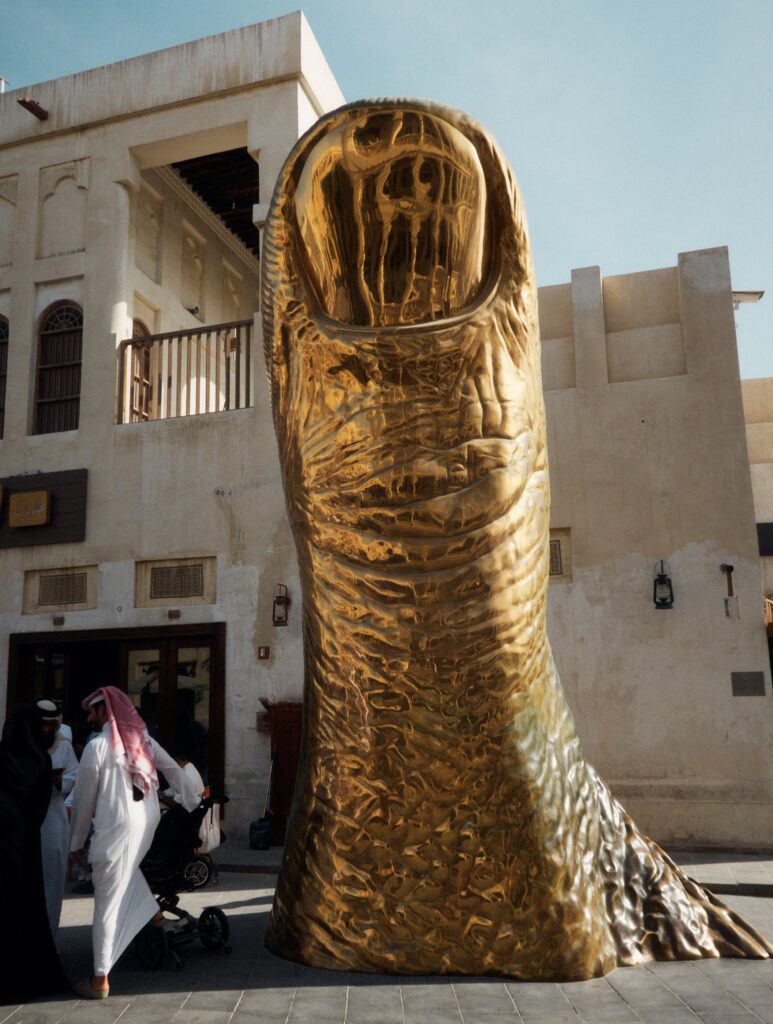

Visitors to Qatar may well think they’ve traveled into the future. The skyline of Doha, the nation’s seaside capital, can appear transcendent and otherworldly, with logic-defying, playfully geometric skyscrapers reflected in the calm, warm waters of the Persian Gulf. This combination of the traditional and the cutting-edge has come to define Qatar in recent years. The Middle Eastern nation’s investment in innovation has yielded new technologies, artworks and architectural feats, from the solar-powered tech keeping crowds cool at the Zaha Hadid–designed Al Janoub Stadium to the sinuously curving walls of Jean Nouvel’s National Museum of Qatar.
In fact, a tour of Qatar’s most significant new cultural institutions should begin with the National Museum, a remarkable form arising along the Corniche, Doha’s waterfront promenade. The museum houses 11 galleries and covers eons of local history, beginning with the formation of the Qatar peninsula 700 million years ago. Projected films and standing displays tell the stories of the people who have called the region home, including nomadic Bedouins, pearl divers and fishermen. The discovery of rich deposits of natural gas and oil in the 20th century dramatically transformed the lifestyles of Qataris, but an effort to document the nation’s history has ensured that traditional crafts and occupations are preserved and passed on. Not far from the museum, for instance, old-style wooden boats called dhows still sail in the nearby harbor.
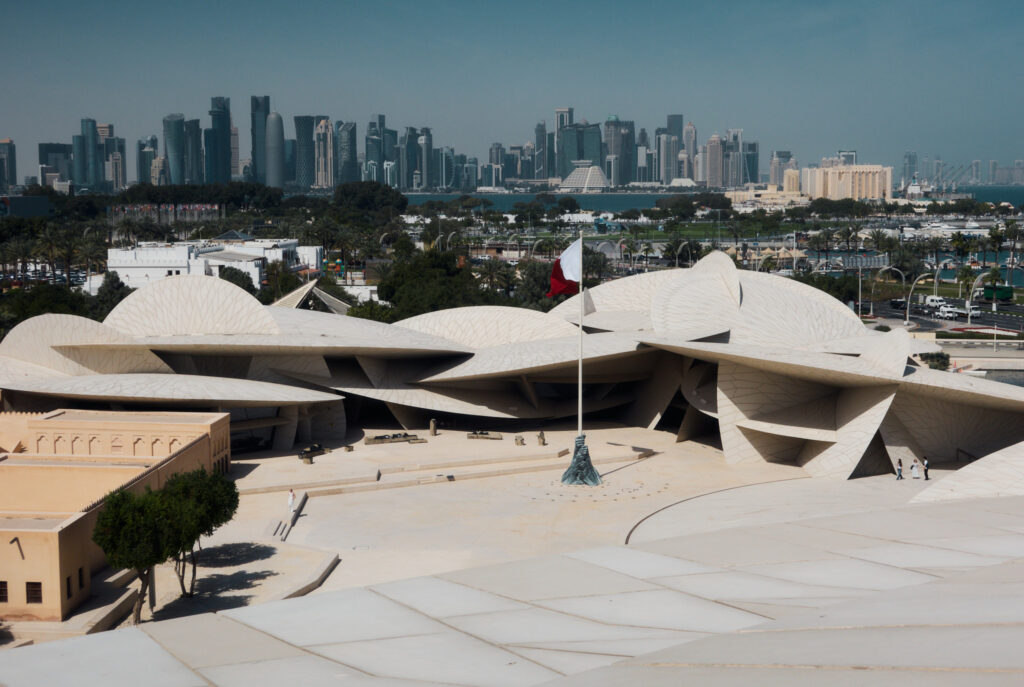
The building of the National Museum itself is inspired by the desert that covers much of the country. Designed by the Pritzker Prize–winning Nouvel, it resembles a desert rose: a unique crystal formation that appears when water evaporates from saline soil and minerals coalesce into disks around central grains of sand. Planned with software specially developed for the project, the museum consists of 539 interlocking disks, an unprecedented feat of construction and engineering. And at the heart of the building, which opened to the public in 2019, stands a more than 100-year-old royal palace, the residence of Sheikh Abdullah bin Jassim Al Thani, the founder of modern Qatar. The museum literally enfolds and preserves Qatar’s national heritage. Coming upon the classic arches of the two-story palace after walking the museum’s futuristic galleries feels like another leap through time.
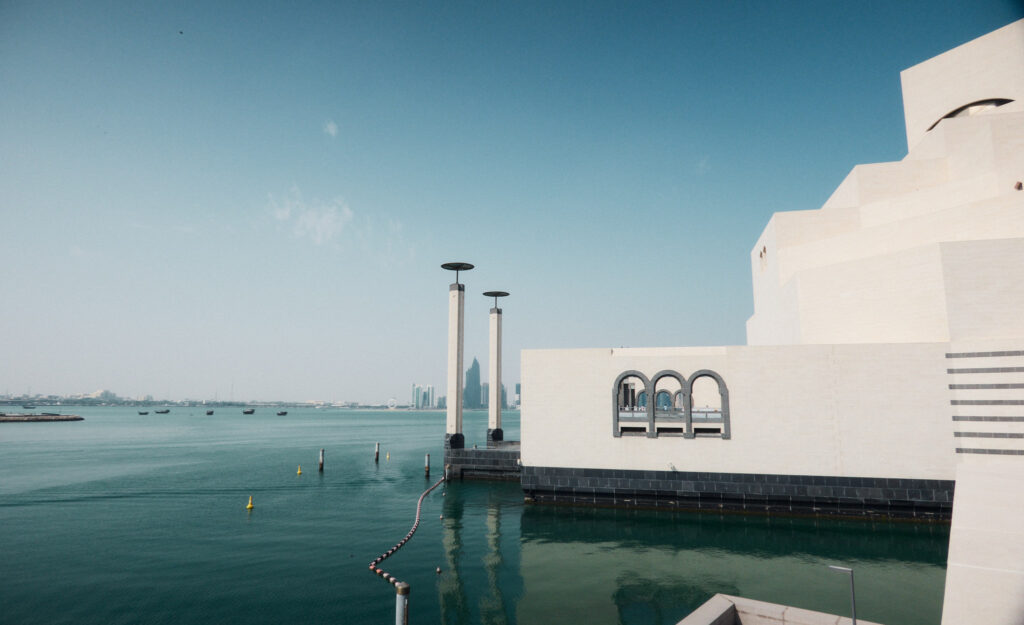
Continuing to stroll along the Corniche, visitors will arrive at the Museum of Islamic Art, designed by the architect I.M. Pei. If the National Museum celebrates the long history of the region, the Museum of Islamic Art tells a story that covers nearly the entire globe. The extensive collection represents schools of art and craftsmanship developed across the Middle East, Europe and Asia. The oldest artworks date back 14 centuries, and it’s a thrill to see the hand-worked details that have survived, unchanged, for generations.
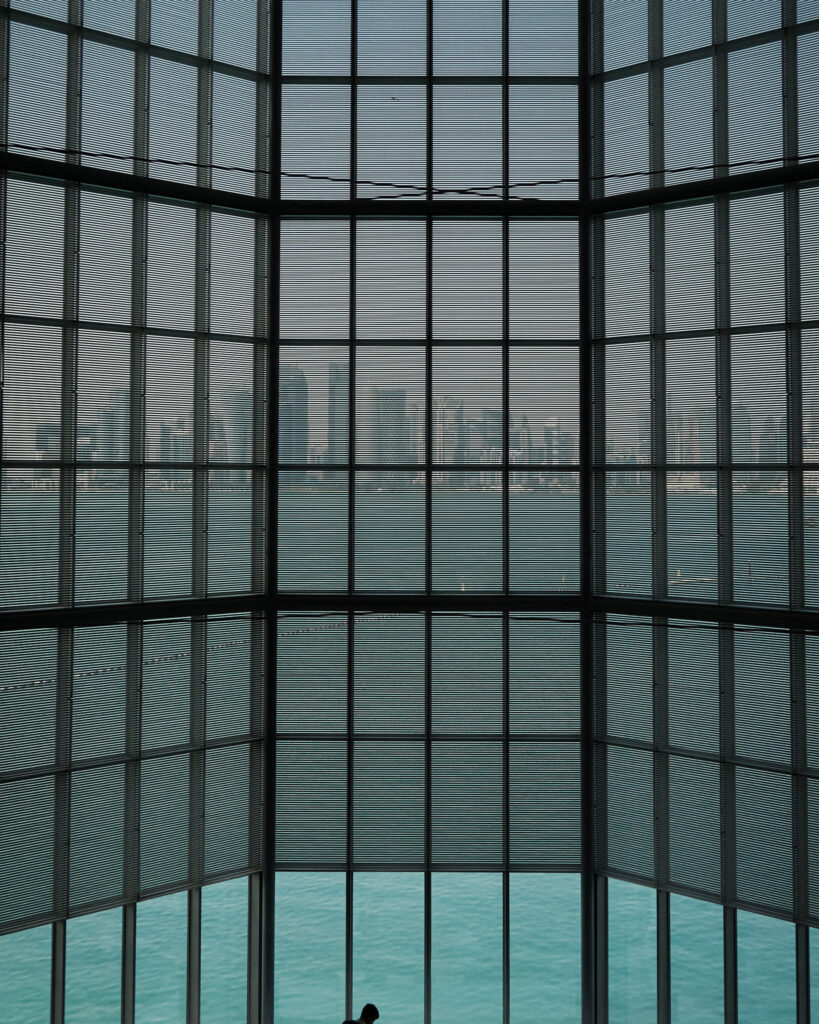
Pei’s building was the first of Qatar’s recent crop of cultural institutions to open, in 2008, and it set the standard for drawing on classical Islamic architecture to dream up new forms. The architect’s design was informed by his careful study of the oldest mosque in Egypt, Cairo’s sprawling Ibn Tulun Mosque. The sharply geometric, neo-vernacular limestone-block building he designed for the museum sits on its own small island off the coast. Inside the shady, meticulously curated galleries, visitors peruse treasures including silk tapestries, intricately painted ceramics, gems, armor, weapons and rare manuscripts — like a page from the 1,200-year-old Blue Quran. The breadth of the collection attests to the global spread of Islamic influence over the centuries; highlights include a 10th-century astronomical instrument from Iran, a 12th-century ivory casket made in Sicily, 19th-century Indonesian embroidery and a bejeweled golden falcon from 20th-century Jaipur.
Contemporary art also has a strong presence in the country. Qatar has hosted international fairs including the newest iteration of Art Basel, with the inaugural show held this February at Doha’s M7 creative hub and in the city’s Design District. Mathaf: Arab Museum of Modern Art picks up where the Museum of Islamic Art leaves off, focusing on modern and contemporary Arab art, drawing on the personal collection of Sheikh Hassan bin Mohammed bin Ali Al Thani and providing a platform for artists whose work explores the richness and diversity of the Arab world.
Located in Doha’s Education City, the museum is nestled in among other institutions devoted to learning and creativity; its neighbors are Qatar’s national research institutes and branches of American and European universities, including Weill Cornell, Georgetown, Northwestern and HEC Paris. Indeed, art and inquiry exist side-by-side at the museum. Mathaf has brought together scholars, artists and researchers to contribute to a growing encyclopedia of Arab art. One recent show traced the tradition of abstraction in Arab modernism, while another showcased the “Gulf Futurism” of Qatari artist Sophia Al-Maria, whose immersive installations and haunting soundscapes explore patterns of work and dreaming among the people of the Gulf.
As the museums rose by the water, another set of venues took shape throughout Doha: the city’s sports stadiums, built to host record-breaking crowds and star athletes playing in some of the world’s most high-pressure competitions. A soccer-loving country — practically everyone has a favorite team and strong opinions — Qatar won the bid to host the 2022 FIFA World Cup, becoming the first country in the Middle East to do so. The matches were spread out across several stadiums, including Al Janoub, the Zaha Hadid project, which comes into view as a series of gentle alabaster curves, reminiscent of the wind-blown sails of a dhow. Meanwhile, a bit inland, in Doha’s West Bay district, the outdoor hardcourts of Khalifa International Tennis and Squash Complex hosted February’s ATP and WTA Qatar Open, drawing some of the best players in the world — among them Iga Swiatek, Elena Rybakina and Coco Gauff on the women’s side and world no. 1 Carlos Alcaraz and Jannik Sinner on the men’s. This year, Alcaraz claimed the ATP title in a scarcely believable 50 minutes against French player Arthur Fils, while Czech Karolína Muchová upset the field to win the women’s crown.
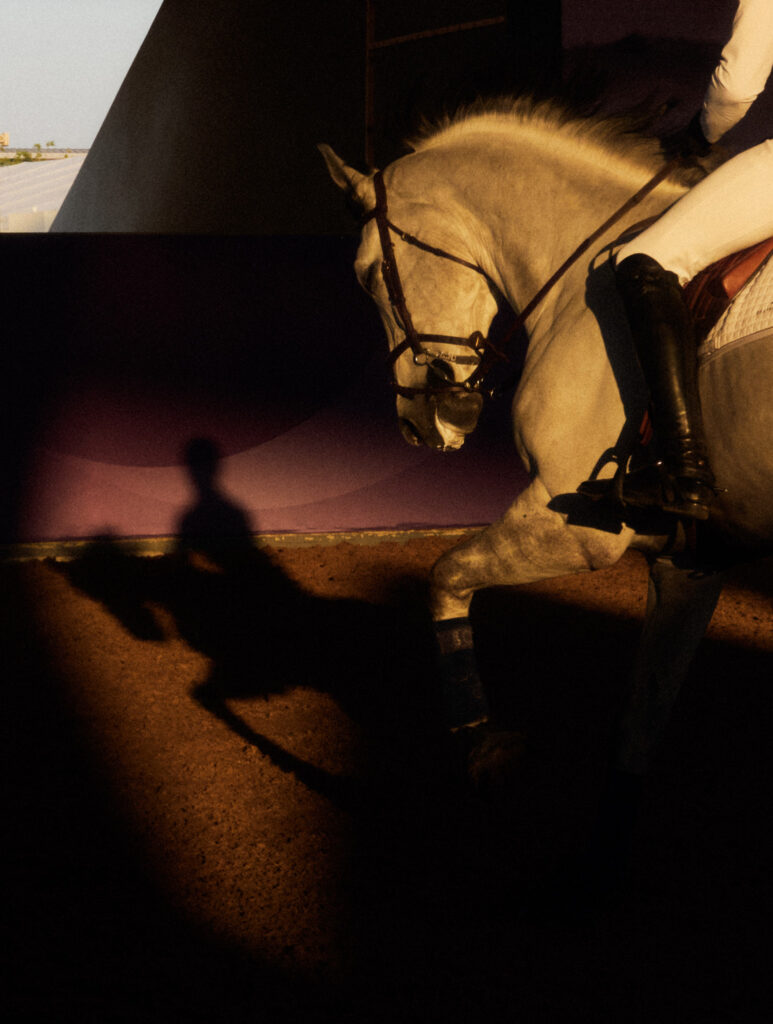
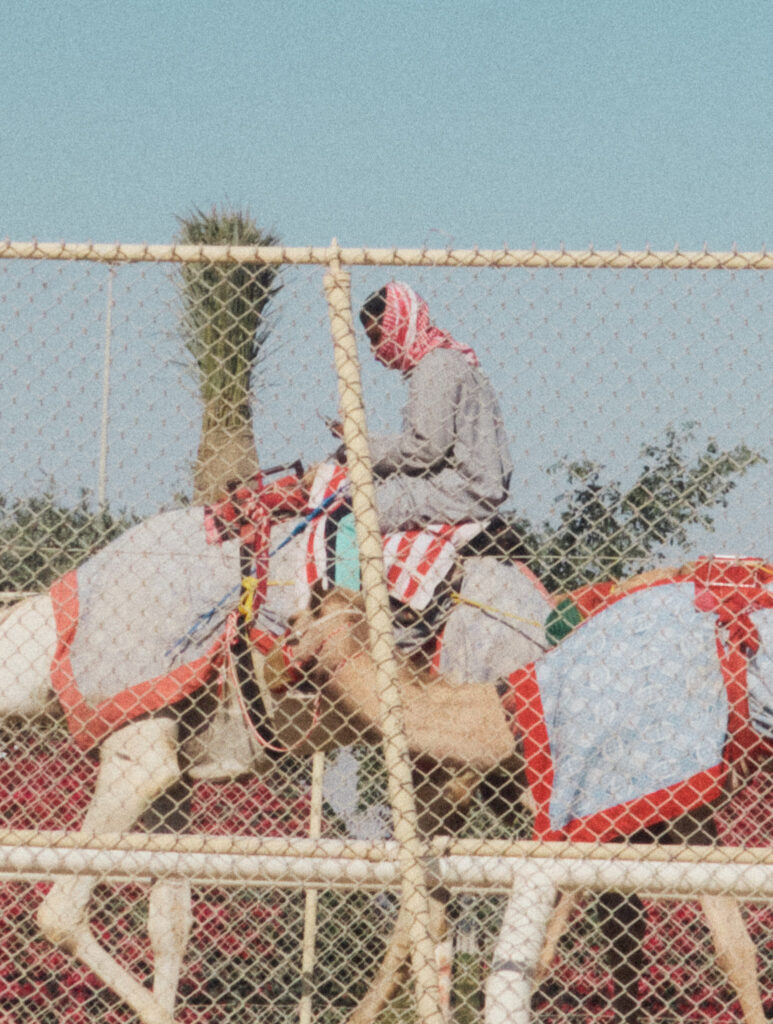
Travelers in search of sports that have been practiced in Qatar for ages will also find top-of-the-line facilities. The horseshoe-shaped Al Shaqab equestrian center is home to more than 700 Arabian horses, deeply valued here for the breed’s historic place in Bedouin culture and for their talents at the racetrack. Among its most celebrated residents is Marwan Al Shaqab, one of the most decorated Arabian stallions in history, whose sons and daughters have gone on to win championships across the globe — a symbol of Qatar’s commitment to preserving and elevating an ancient tradition.
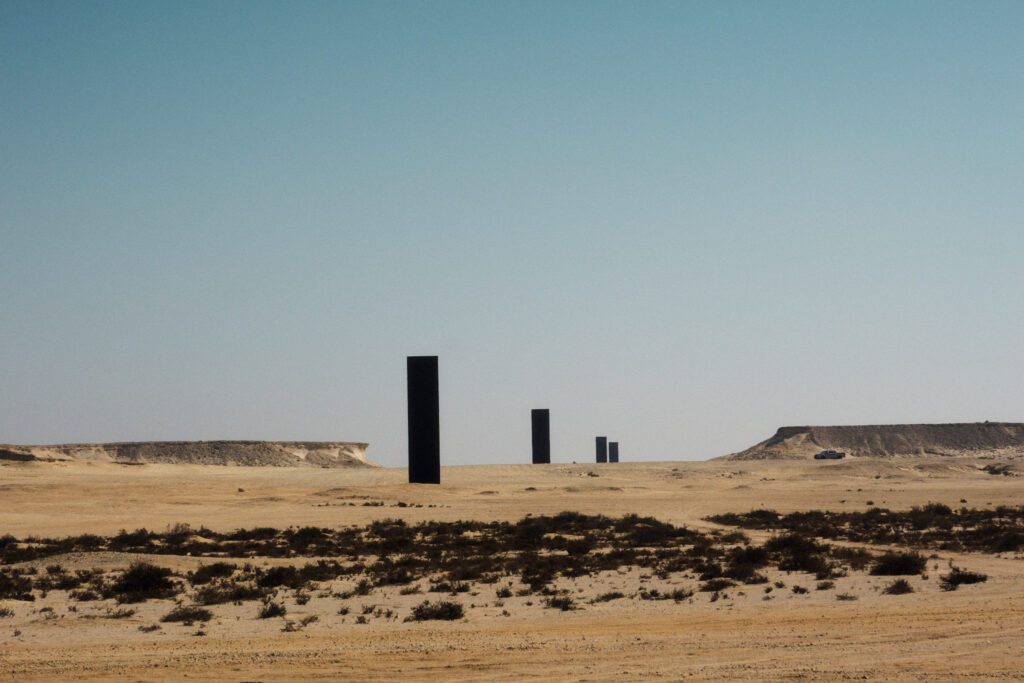
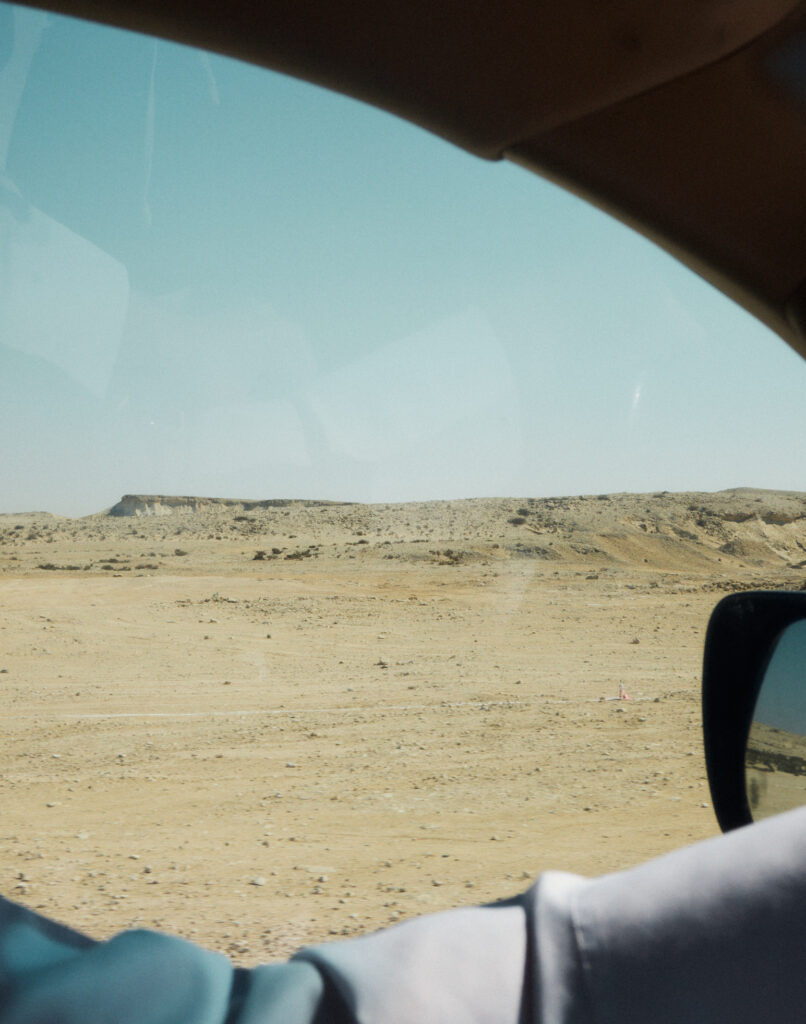
Those in search of a different sort of track may head further out, toward the Lusail International Circuit at the outskirts of the city, which will soon host the drivers taking part in the 2026 Formula 1 Grand Prix (the circuit’s first Grand Prix was held in 2021). And if they go beyond the breathtaking, high-speed corners of the track, visitors will encounter another awe-inspiring sight: the spread of the desert itself, seemingly a short distance from the sea but with the feeling of another world entirely.
Having passed through only some of the worlds Qatar encompasses, full of impressions and visions and perhaps looking forward, in the future, to visiting yet other cultural landmarks, a visitor would be well-served to pause and look back toward the city on the water. Seen from this distance, the lights of Qatar’s capital shimmer like a mirage, ready at any second to transform into another original yet somehow familiar configuration.