
Art Basel’s Qatar edition unfolds across the pedestrian grid of Msheireb Downtown in Doha, a master-planned district of mid-rise architecture and deliberate urban order. Without relying too heavily on the convention-center sprawl typical to many fairs, the event was distributed across M7, a design, fashion and entrepreneurial incubator, and the nearby Doha Design District, linked by walkable streets lined with cafés and restaurants.
The spatial organization established an immediate hierarchy. M7 — long positioned as Msheireb’s cultural anchor for startups in fashion, design and tech — housed the majority of blue-chip galleries, including Hauser & Wirth, Lia Rumma and Acquavella, alongside leading regional dealer The Third Line, from Dubai. Within steps of entering, visitors encounter institutional confidence and global alignment with the artwork of Jean-Michel Basquiat.
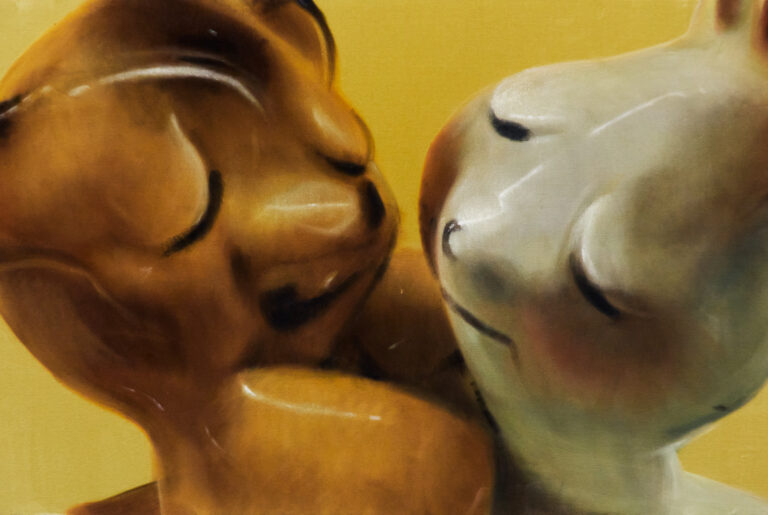
Doha Design District, by contrast, presented a broader mix of regional and international galleries and a more diffuse atmosphere. Whether by design or default, the division created a subtle gravitational pull toward M7, reinforcing it as the fair’s primary node.
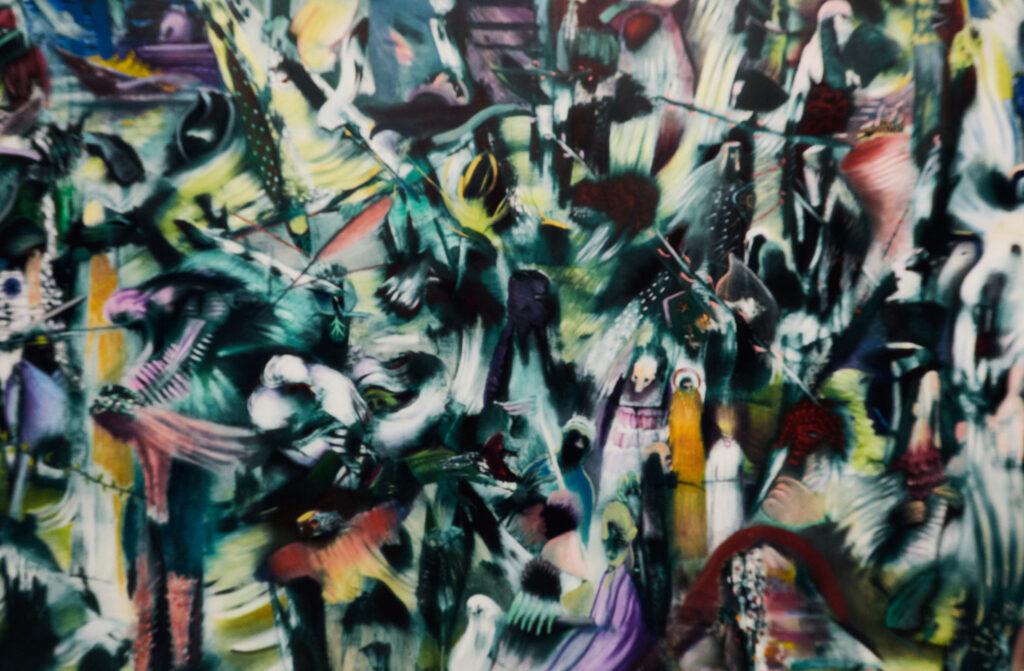
If the architecture projected control, much of the work on view leaned toward visual and psychological density. Several paintings favored tightly populated compositions reminiscent of Northern Renaissance allegory, where multiple narratives unfold within a single frame — a form of narrative compression associated with figures such as Hieronymus Bosch. Iranian-born American artist Ali Banisadr’s canvases exemplified this impulse. American painter Lucy Bull’s saturated abstractions carried similarly dark undertones, as did the work of South Korean artist Minouk Lim.
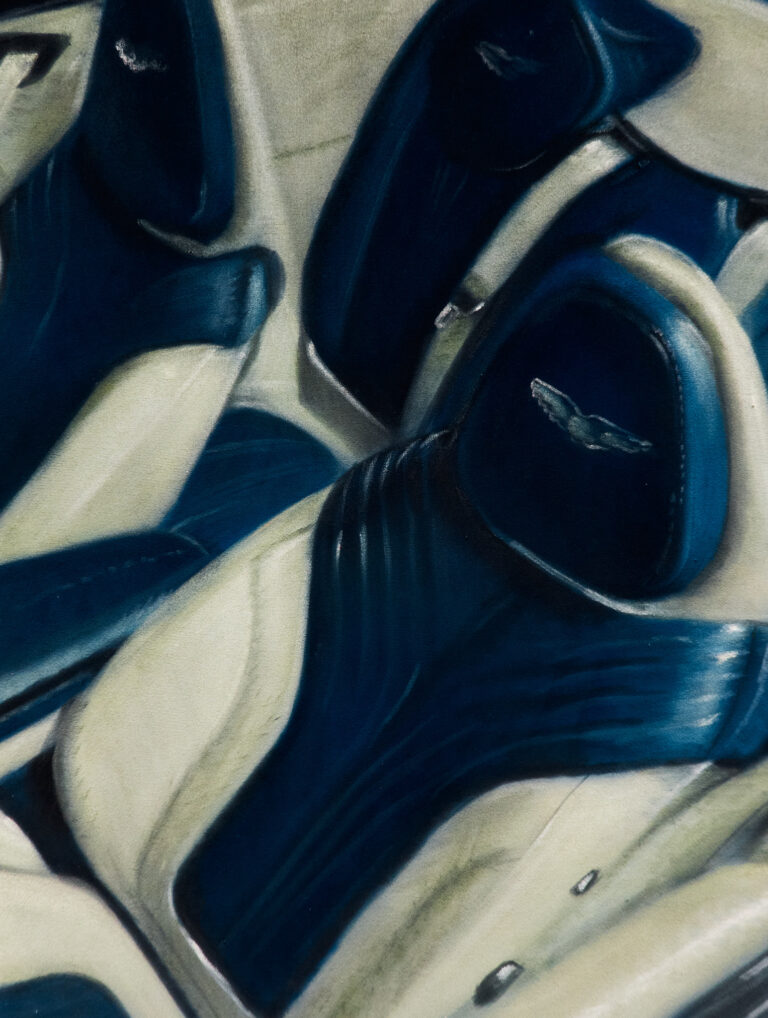
The late American painter Philip Guston’s brooding works resonated alongside those of contemporary artists such as Egyptian artist Souad Abdelrasoul, whose imagery also grappled with existential unease. Across the entire fair, motifs of fragility, conflict, mythology and psychic unrest recurred, which demanded prolonged viewing by default.
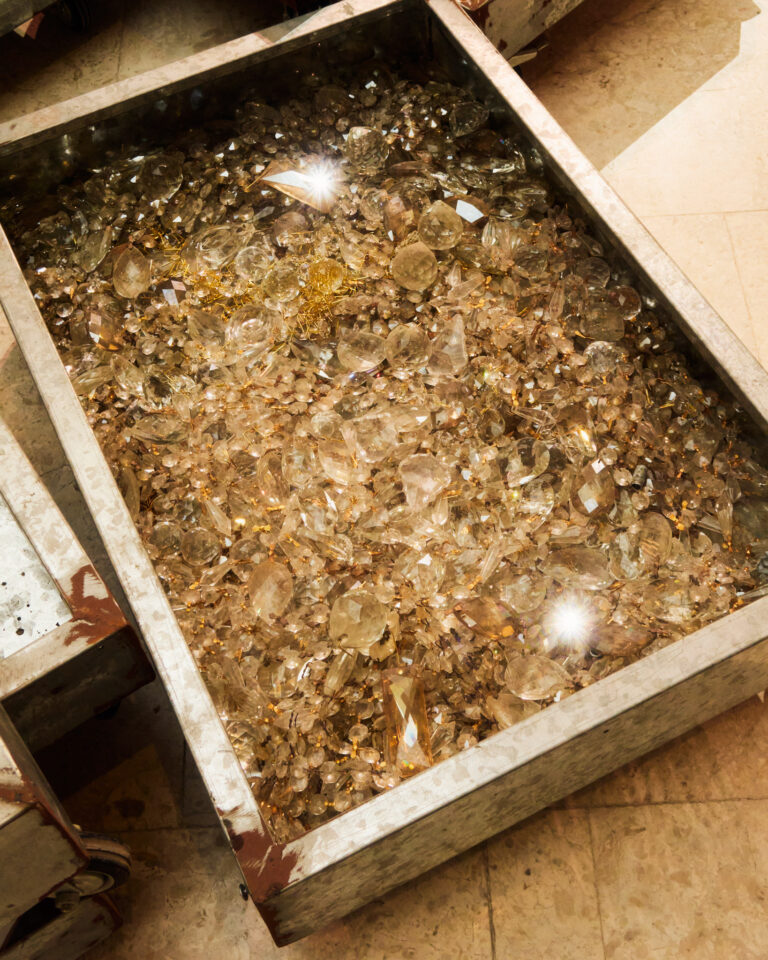
Material choices reinforced this gravity with the repeated appearance of metal, lending the fair a pronounced physical weight. Works by American artist Matt Mullican, Jamaican-born American artist Nari Ward, New York–based artist of German and Mongolian-Chinese descent Timur Si-Qin, and South Korean artist Yunchul Kim foregrounded industrial surfaces and hand-worked structures. The prominence of labor-intensive materials suggested an emphasis on physicality, counterbalancing the digital sheen that often dominates contemporary visual culture.
The overall atmosphere differed from the density typical of regional fairs, with a layout that allowed visitors to move without the compression that often defines high-traffic art events. Overall, across each location, the fair carried 87 international galleries presenting 84 artists, more than half from the region. As the curator, Wael Shawky, intended, each gallery featured just one artist, which gave the works room to be experienced thoughtfully, in a market-driven setting.
Notably, on the last day, transaction markers –– such as when items had been sold –– were not prominently displayed.
The dense, weighty themes, rendered in vivid color and substantial materials, may reflect broader shifts in the global art market. According to the 2025 “Art Basel and UBS Global Art Market Report,” global sales reached an estimated $57.5 billion in 2024, down roughly 12% year-on-year — the second consecutive year of decline since the post-pandemic peak. Yet despite this contraction, the number of transactions rose, highlighting continued activity at lower and mid-price levels. The high end, by contrast, was softer, with significantly fewer artworks selling at auction for over $10 million.
Within such a climate, the work on view in Doha appeared less calibrated toward purely decorative acquisition and more so with institutional ambition and cultural seriousness. Not all pieces felt destined for domestic interiors (not even Instagrammability); several carried the scale and conceptual weight typically associated with museum exhibitions.
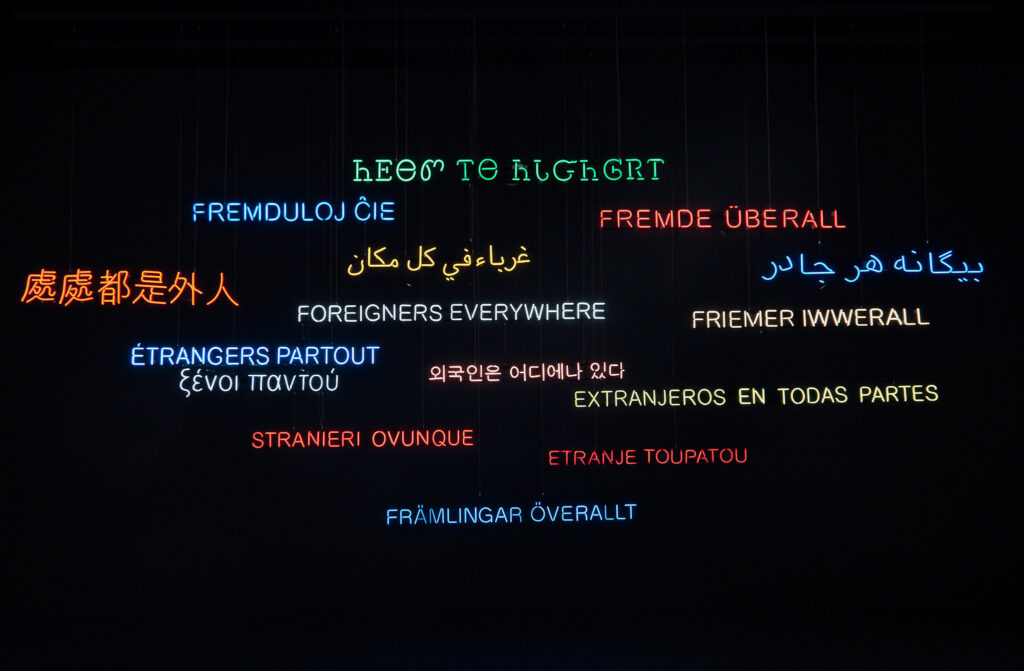
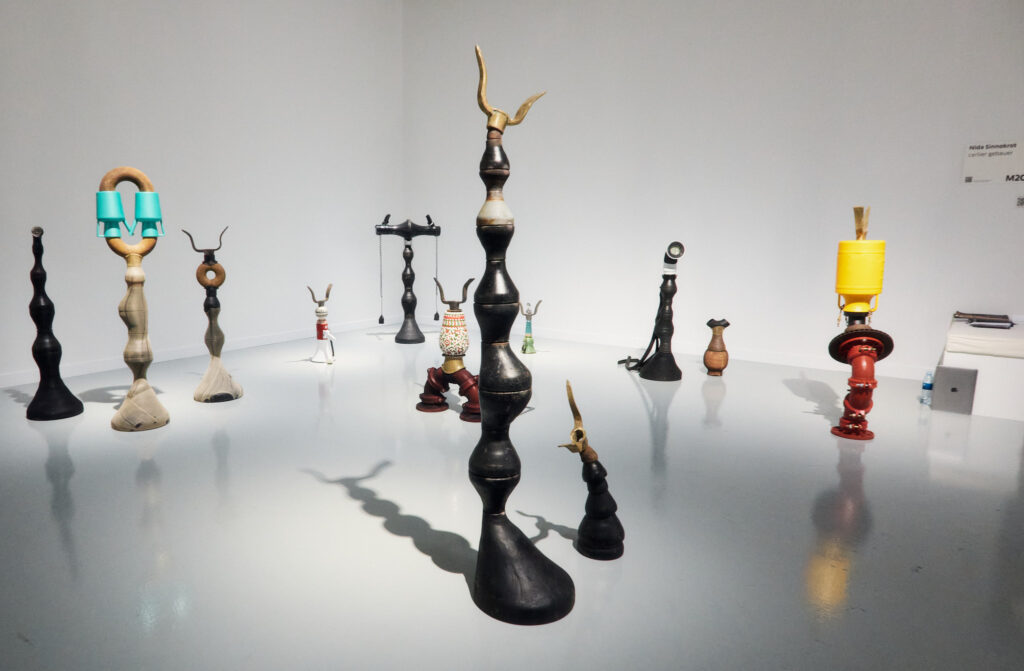
As Doha stakes its claim on the global cultural map, the fair’s curatorial choices signal a preference for structure. Yet within that order, the artwork speaks to a global mood marked by uncertainty and recalibration — asking the question, how does the market sustain momentum while confronting the darker textures of the present moment?